

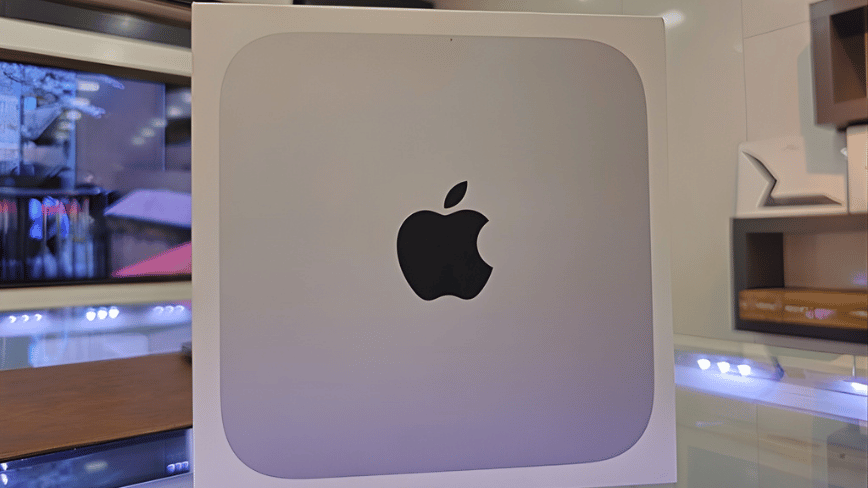
Summary: On April 11, 2026, several high-RAM configurations of Mac mini and Mac Studio became “currently unavailable” on Apple’s US online store, with no delivery estimate or ordering option. Affected models include Mac minis with 32GB or 64GB of RAM and Mac Studios with 128GB or 256GB of RAM. Apple hasn’t disclosed the cause. This may be due to the global DRAM shortage since early 2026 or may indicate an M5 Mac mini and Mac Studio refresh expected in mid-2026, as per Mark Gurman.
Unavailable Stock Details
On April 11, 2026, Mac mini configurations with 32GB and 64GB RAM and Mac Studio configurations with 128GB and 256GB RAM were marked as “currently unavailable” in Apple’s US online store, with no delivery estimate or ordering option. Available models face significant delays: a Mac mini with an M4 Pro chip and 64GB RAM has a 16-18 weeks shipping estimate, and a Mac Studio with an M3 Ultra chip and 256GB RAM quoted four to five months before going out of stock. Apple provided no comment regarding this situation.
This follows Apple’s March decision to remove the 512GB RAM option from the Mac Studio, now capped at 256GB with M3 Ultra, previously priced at $4,000. Concurrently, Apple raised the upgrade cost from 96GB to 256GB from $1,600 to $2,000, reflecting increased DRAM component costs.
Impact of the DRAM Shortage
Since early 2026, the global memory market has struggled due to AI infrastructure spending outpacing DRAM production capacity. TrendForce reported a 90-95% quarterly contract price increase for server DRAM, a record hike, and over 100% for PC DRAM. AI tasks require high-bandwidth memory exceeding DRAM wafer capacity growth of 10-15% annually.
TrendForce estimates AI consumed nearly 20% of global DRAM wafer capacity in 2026, with HBM taking 23% of the total output and needing four times the standard DRAM module capacity. Individual infrastructure announcements highlight the demand squeezing Apple’s supply chain. Anthropic’s Claude revenue reached a $30 billion run rate in April 2026, up from $9 billion in late 2025, prompting exploration of custom AI chips to reduce external reliance. CoreWeave secured a multi-year deal to run Claude workloads at production scale on April 10, 2026, coinciding with Anthropic’s chip disclosure, a day before Mac configurations went out of stock. These illustrate a significant shift in memory supply towards AI infrastructure, likely persisting into 2027.
OpenClaw’s Influence: Sudden Mac mini Demand Increase
The DRAM shortage is the likely reason for stock issues unless Mac mini and Mac Studio demand were higher than usual. They were not, as OpenClaw’s launch on January 25, 2026, made Apple’s high-memory desktops popular for localized large language models. Apple Silicon’s unified memory, where CPU, GPU, and Neural Engine share one pool without PCIe bottlenecks, allows a Mac mini with 64GB unified memory to run a 70-billion-parameter model better than comparable PCs, priced at around $2,000. This Mac mini became highly recommended for local inference in early 2026.
In March 2026, Nvidia introduced NemoClaw, an enterprise security layer, at GTC 2026, deploying Nemotron open models with privacy safeguards. OpenClaw began impacting enterprise IT procurement. In April 2026, Anthropic restricted OpenClaw on Claude Pro