

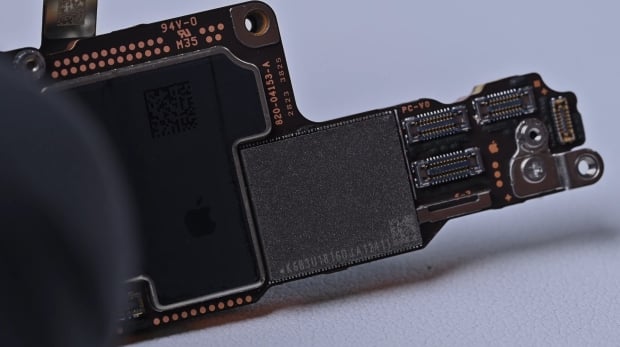
### The M5 Pro and M5 Max MacBook Pro: An Evolution in Chip Architecture
Apple’s newest MacBook Pro variants, the M5 Pro and M5 Max, signify a major shift in chip architecture when compared to the earlier M4 Pro and M4 Max models. This article examines the consequences of these alterations, focusing particularly on the revised core configurations and their effects on performance and battery longevity.
#### Modifications in Core Architecture
The M4 Pro chip boasted a mix of performance and efficiency cores, tailored to optimize power usage and battery duration. Specifically, the M4 Pro was offered in two setups: a 12-core CPU with eight performance cores and four efficiency cores, and a more advanced 14-core CPU that added two performance cores while keeping the four efficiency cores intact. The M4 Max provided a powerful 16-core CPU, consisting of 12 performance cores and four efficiency cores.
In contrast, the M5 Pro and M5 Max versions have completely removed the efficiency cores. Instead, Apple has rolled out a novel type of core that combines features of both performance and efficiency cores. This adjustment seeks to enhance processing performance while ensuring high-level output.
#### Effects on Battery Longevity
One might expect that the elimination of efficiency cores could adversely impact battery longevity. Nonetheless, the M5 Pro and M5 Max models retain the same maximum battery life ratings as their predecessors. As reported by Macworld, the battery life for the M5 Pro models is detailed as follows:
– **M5 Pro**
– 14-inch: 14 hours
– 16-inch: 17 hours
– **M5 Max**
– 14-inch: 13 hours
– 16-inch: 14 hours
These statistics refer to the relatively undemanding activity of wireless web browsing, suggesting users can anticipate similar durability from the new variants.
#### The Function of Fusion Architecture
The stability in battery life can likely be linked to Apple’s innovative Fusion architecture, which merges two dies into a singular system on a chip. This cutting-edge design is anticipated to boost power efficiency, enabling the MacBook Pro to achieve high performance without sacrificing battery lifespan.
### Conclusion
The M5 Pro and M5 Max MacBook Pro models signify a significant advancement in Apple’s chip design, departing from traditional efficiency cores to a contemporary hybrid core architecture. Despite these modifications, Apple has effectively preserved battery life, largely due to the innovations in Fusion architecture. As users increasingly seek powerful yet efficient computing options, these new MacBook Pro models are well-equipped to satisfy those requirements.