
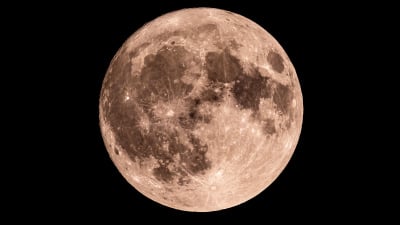

The Moon is nearly full, with most of its surface illuminated by the Sun. Throughout its cycle, the Moon transitions through eight phases, fluctuating from full darkness to total illumination before starting anew. Continue reading to discover how much is visible tonight.
What is today’s Moon phase?
On Tuesday, March 31, the Moon phase is Waxing Gibbous. According to NASA’s Daily Moon Guide, 97% of the Moon will be visible tonight.
Tonight, without any tools, you can observe the Kepler Crater, Mare Vaporum, and Mare Serenitatis. With binoculars, the Mare Nectaris, Alphonsus Crater, and Endymion Crater will be visible. Through a telescope, you may spot the Descartes Highlands, Caucasus Mountains, and Linne Crater.
When is the next Full Moon?
The next Full Moon in North America is predicted for April 1.
What are Moon phases?
NASA explains that the Moon takes approximately 29.5 days to orbit Earth, moving through eight distinct phases. While always seeing the same side from Earth, varying amounts of its surface are lit by the Sun, making it appear fully illuminated, partly lit, or as a thin crescent. These views are called lunar phases, with eight in total:
New Moon – The Moon is between Earth and the Sun, so the side we see is dark.
Waxing Crescent – A sliver of light appears on the right side (Northern Hemisphere).
First Quarter – Half of the Moon is lit on the right side, looking like a half-Moon.
Waxing Gibbous – More than half is lit up, but it’s not fully illuminated yet.
Full Moon – The entire face of the Moon is fully illuminated.
Waning Gibbous – Light starts fading on the right side.
Third Quarter (or Last Quarter) – Another half-Moon, now with the left side lit.
Waning Crescent – A thin sliver of light remains on the left side before going dark again.