

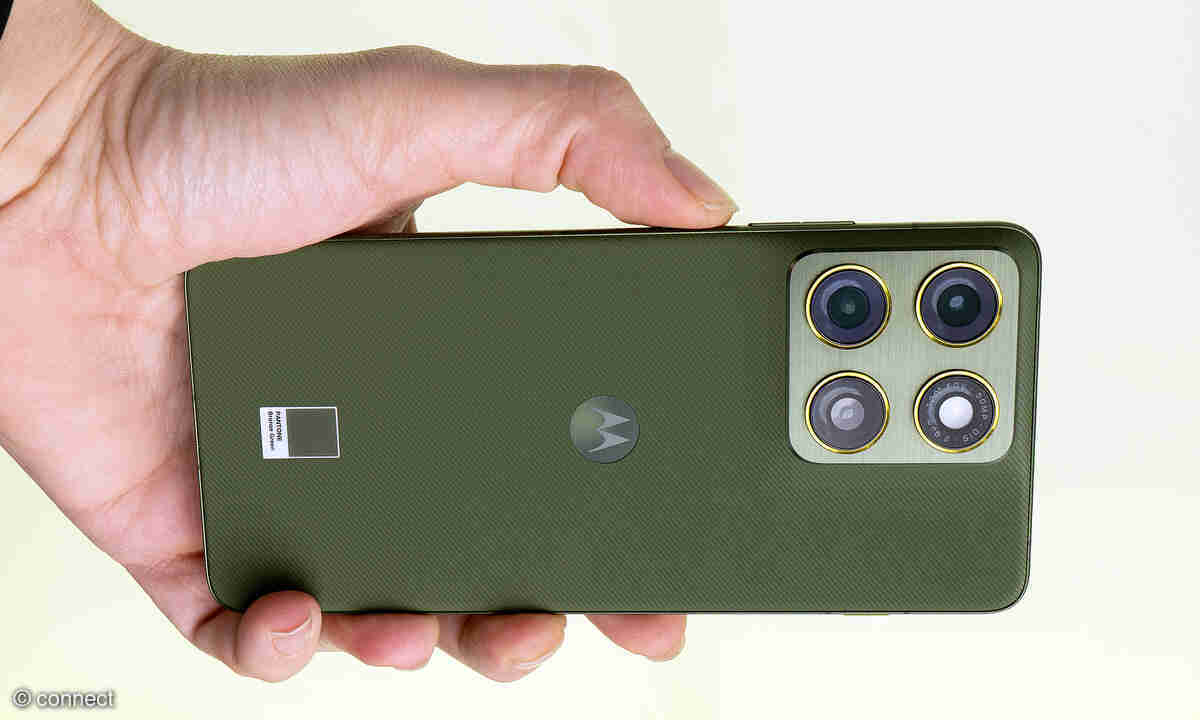
There’s undoubtedly much to appreciate about the Signature, but it won’t be available in the U.S.
While Motorola concentrates its efforts on foldable Razr models like the upcoming Razr Fold, it still provides a lot with its standard phones. Indeed, Motorola is poised to disrupt the norm with the Signature, a new line designed to compete with the OnePlus 15.
I had the chance to experience the Signature at CES 2026, and although I haven’t tried Motorola phones in a few years, I don’t recall the devices from this manufacturer being of such high quality. The comparison to OnePlus is fitting, as the Signature instantly brings to mind the earlier OnePlus models. The stylish frame, measuring only 6.9mm in thickness, along with the rectangular camera arrangement, reminds me of the OnePlus 10 Pro, and the feel in my hand is comparable as well. Although it features flat edges, the delicate bevels enhance the comfort during use, making it feel superior to the bulkier Vivo X300 and Find X9.
Naturally, this also relates to the fact that the Signature is equipped with a smaller 5,200mAh battery. Fortunately, Motorola employs silicon-carbon technology, which ensures improved density — resulting in a slimmer device — and greater resilience in adverse weather. I couldn’t put that to the test since I used the Signature in a pleasantly lit (though brightly colored) briefing area in Las Vegas, but given that it also possesses IP68 and IP69 ingress protection, it should withstand any harsh conditions just like other Android devices.
Motorola showcased the Signature in green and black options, and I prefer the green variant — it has a more striking appearance, and the brushed metal surrounding the camera array contrasts beautifully with the color. The Signature features a 6.8-inch AMOLED display, along with a full suite of extras typically found in premium smartphones.
What stands out to me about the Signature is its camera system; it boasts a 50MP Sony Lytia LYT-828 main camera with OIS, accompanied by a 50MP Sony Lytia LYT-600 3x zoom lens (also featuring OIS) and a 50MP wide-angle lens. The camera setup matches that of the Razr Fold, and the switch to Sony lenses should provide the Signature with a significant edge over previous Motorola models.
The Signature does not incorporate the latest hardware, as Motorola opted for the Snapdragon 8 Gen 5 instead of the Elite. While I would typically take issue with that, I don’t consider it a major drawback. The 8 Gen 5 possesses ample performance, and Motorola indicated that choosing this platform allowed for a reduction in the phone’s price, making it competitive with the OnePlus 15 (which utilizes the Elite).
In other aspects, it includes 12GB of LPDDR5X RAM and 256GB of UFS 4.1 storage, with an option to upgrade to 16GB/1TB for those who require additional space. The 5,200mAh battery supports Motorola’s standard 90W charging, and the phone has all the other additional features — it even includes UWB.
Motorola’s software policy concerning the Signature is notably refreshing, with a commitment to providing seven years of updates. I verified with Motorola that this covers seven Android OS upgrades, placing the phone on par with Google and Samsung devices in this respect, which is encouraging to see after the brand’s previous errors.
Ultimately, using the Signature convinced me that Motorola has an exceptional product at its disposal, and it has the prospects of being an alternative to the OnePlus 15 and Galaxy S25.
However, there’s one problem: Motorola will not be releasing the Signature in the U.S. The phone will be available in other global markets, starting at €999. It is set to launch in Latin America, India, and other significant regions where Motorola distributes its products, and I fail to understand why the brand decided against a U.S. release.
There’s a definite lack of quality smartphones in the U.S., and considering Motorola’s strong foothold in the area, the Signature would have been the perfect model to contest Samsung’s leading position. Yet, it appears that Motorola prefers to concentrate exclusively on Razr foldables in the high-end market within the U.S., consequently leaving consumers in the region missing out on another outstanding device.