

Private company defaults have surged to over 9.2%, prompting Lux Capital to urge AI-reliant firms to secure written commitments for compute capacity. Amidst this financial uncertainty in the AI supply chain, Lux emphasized that verbal agreements are insufficient. An alternative is to avoid external compute infrastructure entirely. Smaller AI models capable of running on user devices, without data centers, cloud providers, or counterparty risk, are becoming viable — a point highlighted by Multiverse Computing, a Spanish startup.
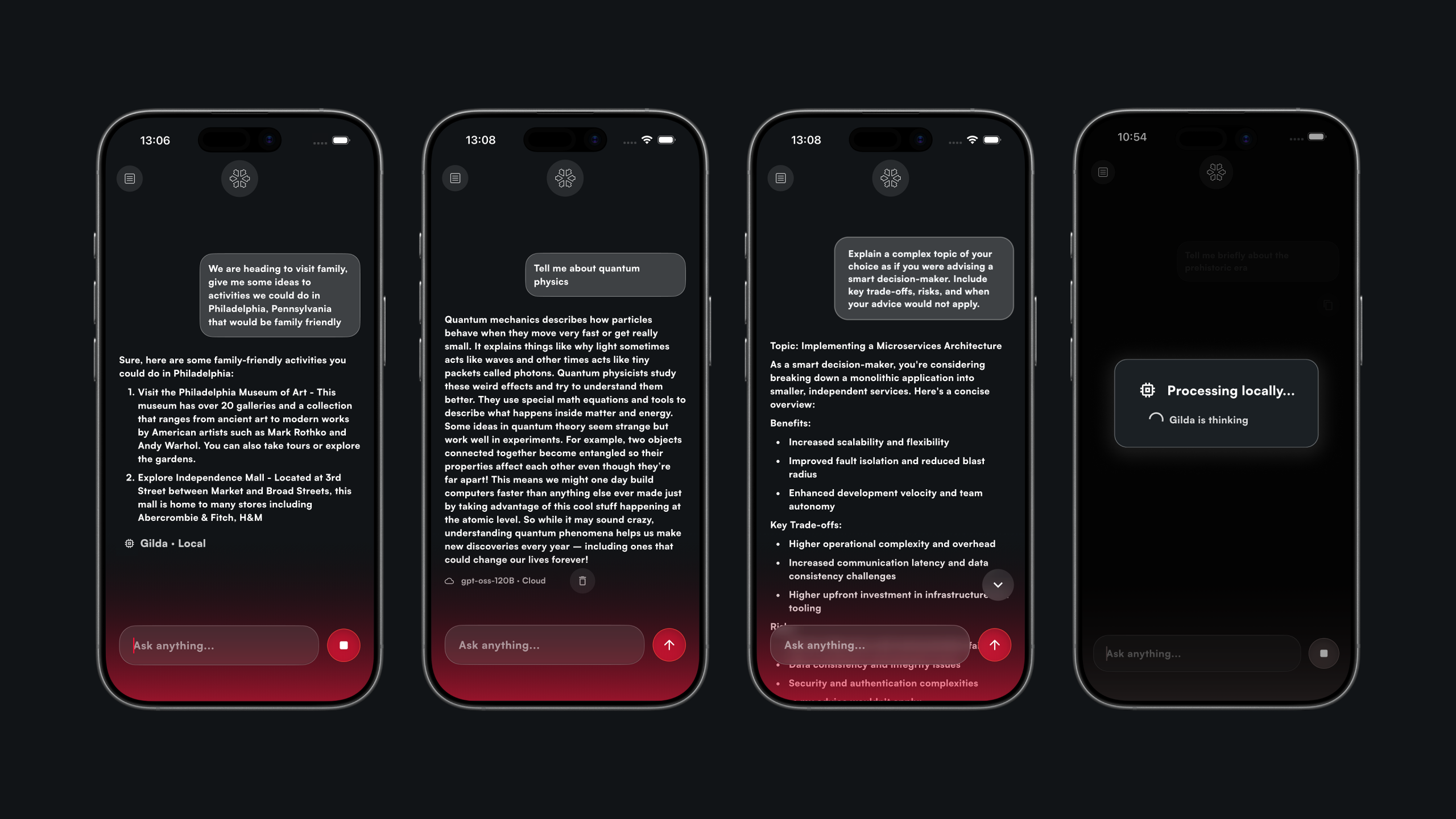
Although initially low-profile, Multiverse is gaining traction as AI efficiency demand rises. It has compressed models from major labs like OpenAI and Meta, launching an app and API portal to showcase and provide access to these models. The CompactifAI app, utilizing Multiverse’s compression tech, allows offline and local AI chat, embedding the compact Gilda model. This offers privacy by keeping data on user devices, provided they have sufficient RAM and storage. Otherwise, it reverts to cloud processing via the Ash Nazg system, reminiscent of the One Ring from “The Lord of the Rings.”
Despite limitations and fewer than 5,000 downloads last month, the app’s primary focus is businesses. Multiverse has launched a self-serve API portal for direct access to its models, bypassing AWS Marketplace. CEO Enrique Lizaso highlighted the transparency and control offered by this API. Enterprises are considering smaller models like Multiverse’s, not only for potential edge deployment benefits but also for reduced compute costs.
Mistral’s recent launch of Mistral Small 4 model exemplifies the progress in small models, suitable for general chat, coding, and reasoning. The company introduced Forge, allowing enterprises to tailor custom models. Multiverse’s HyperNova 60B 2602 model, based on OpenAI’s gpt-oss-120b, claims faster responses at a lower cost, benefitting complex coding tasks.
Creating models for mobile devices while retaining utility poses challenges. Apple Intelligence uses a blend of on-device and cloud models, while Multiverse’s CompactifAI app demonstrates the potential of local models like Gilda. For critical fields, locally running models enhance privacy and resilience, with potential applications in drones and satellites. Multiverse, serving clients like the Bank of Canada and Bosch, is reportedly seeking a new €500 million funding round at a valuation exceeding €1.5 billion, following a $215 million Series B last year.