

IDC Predicts Surge in AI Phones by 2026, Though Increasing Memory Costs May Complicate Upgrade Cycle
The year 2026 signifies the 20th anniversary of MWC in Barcelona, and rather than celebrating with a lavish cake, the mobile sector is confronting one of its most extraordinary challenges to date.
If you’re planning to attend Mobile World Congress 2026 in Barcelona with expectations of unveiling new Android models and dazzling presentations, your hopes will certainly be met. Yet, the underlying narrative is far more complex.
AI is increasingly becoming integral to Android devices, foldables are evolving into viable premium options, satellite connectivity is moving towards widespread acceptance, and a global shortage of memory is altering pricing, upgrade patterns, and the overall industry landscape.
Smartphone AI: Transitioning from Feature to Core
In 2024 and 2025, the smartphone market was characterized by a phase of “AI excitement.” Most announced devices were touted as AI-equipped, but despite the buzz, many felt experimental. In 2026, the significant transformation will be the shift of generative AI from a “neat” feature to a core aspect of the device architecture.
IDC predicts that GenAI-integrated smartphones will make up over 37% of total shipments in 2026, translating to a market valuation of $433 billion. This segment is anticipated to grow at an average annual rate of 32% over the next five years. Importantly, the accessibility of AI is finally reaching mid-range smartphones, allowing localized, personalized, proactive assistants to operate without relying on the cloud.
AI becomes integral. On Android, this transition is particularly notable as chipset manufacturers like Qualcomm and MediaTek, in conjunction with Google’s platform strategy, enhance on-device AI capabilities. An increasing number of GenAI functions are being processed locally instead of in the cloud.
Nevertheless, the more significant change is structural. AI is incorporated into the operating system itself, affecting app permissions, background tasks, and system-level processes. It is no longer just an added feature but a fundamental element of the user experience. This will be a critical message communicated by most OEMs when they introduce their latest flagship devices.
From a market viewpoint, AI has emerged as a key factor in maintaining premium pricing in a maturing smartphone landscape.
The Emergence of Agentic AI: Your Phone Acting for You
Chat about AI agents will take center stage at MWC. OEMs are anticipated to display on-device AI agents capable of independently tackling multi-step tasks like travel planning, coordinating calendars, and managing smart home setups. This promises to enhance user experiences compared to merely reacting to user prompts.
The technological groundwork is already seen in Apple Intelligence or Samsung Galaxy AI. For Android, this will translate to deeper Google Gemini integration, smoother inter-app collaboration, continuous contextual memory, and enhanced utilization of advanced NPUs in flagship chipsets.
Consumers will enjoy quicker, more fluid task execution, while smartphone manufacturers benefit from increased ecosystem loyalty.
However, agentic AI poses a strategic issue: trust. As devices start to act on behalf of the user, the importance of privacy, transparency, and user control escalates. The open nature of Android remains a competitive edge, but it also adds complexity in ensuring consistent and secure AI experiences across various manufacturers.
Foldables: Transitioning from Experimentation to a Strategic Asset
Foldables currently represent a single-digit percentage of total smartphone shipments (1.6% in 2025, as per IDC), yet within the Android ecosystem, they hold an outsized strategic significance, comprising 15% of the premium segment.
Samsung, Honor, Xiaomi, and others continue to refine foldable phones focusing on productivity rather than as mere novelties.
At MWC, we anticipate sleeker designs, enhanced hinge durability, and minimized display creasing to close the gap with traditional bar-style smartphones.
From a market perspective, foldables are not primarily about volume but about defending the high-end segment. In an environment where smartphone innovation seems incremental, foldables provide differentiation and margin preservation.
The pressing question isn’t if foldables will lead in shipments in 2026 — they will not. It’s whether they will emerge as the growth driver at the upper end of the market.
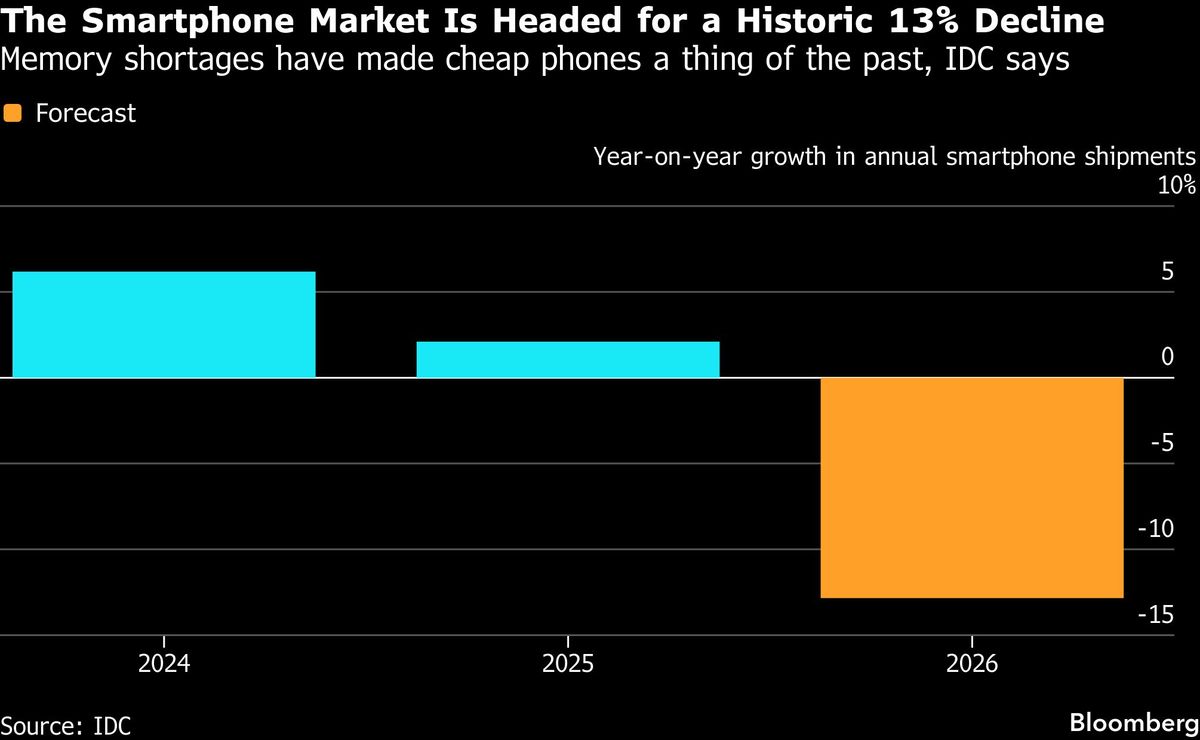
The Memory Crunch: Heightened Pricing Pressures
While AI grabs news headlines, supply chain dynamics are becoming increasingly significant.
Memory manufacturers are prioritizing