
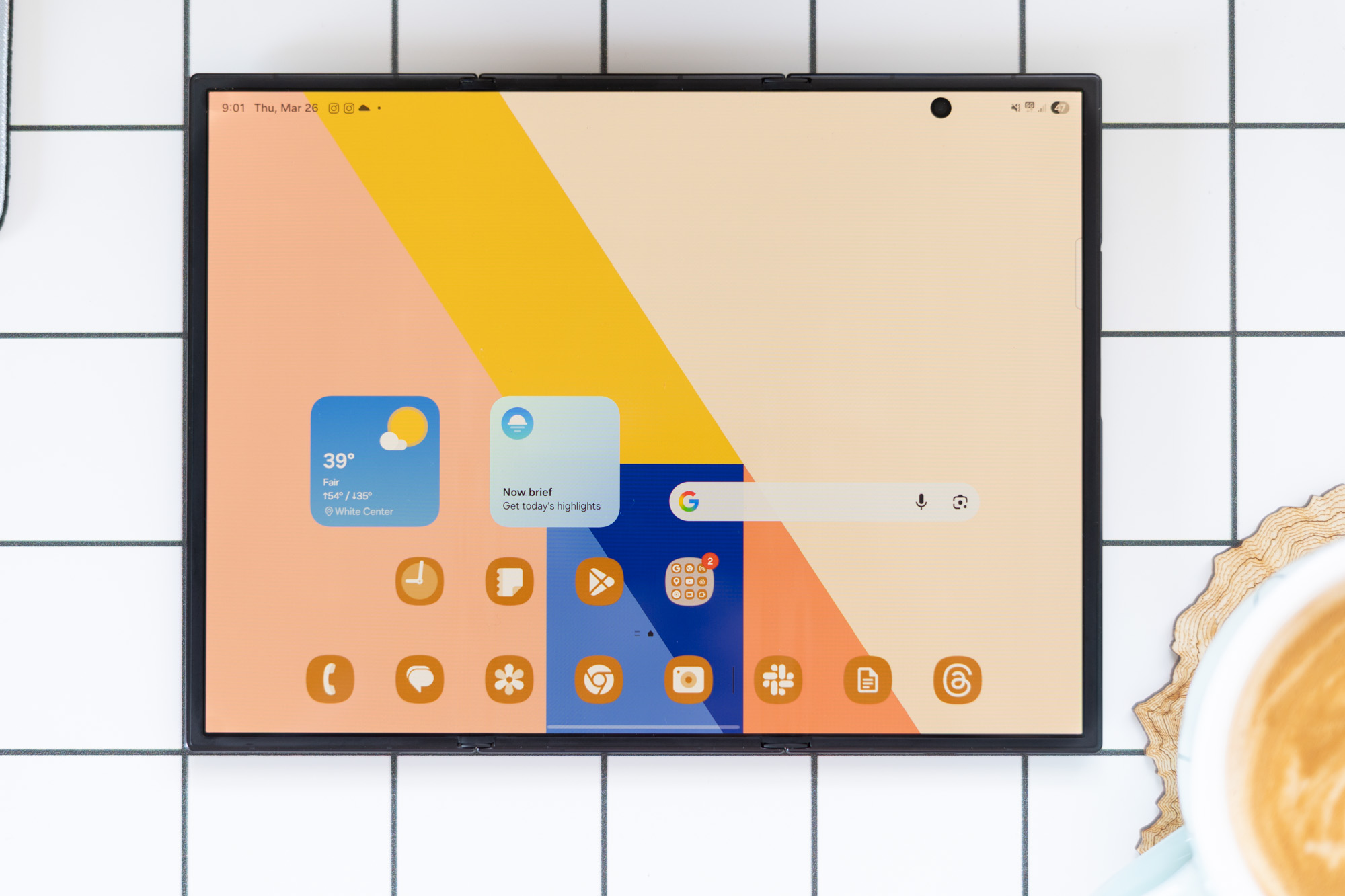

I’m beginning to understand why Samsung didn’t send me a TriFold for a review. Initially, I was inclined to return the Galaxy Z TriFold to the eBay seller who claimed it was the Taiwanese version. Instead, it arrived with a Chinese serial number, lacking Google services and filled with unfamiliar apps seeking sensitive permissions. My intention was to send it back and acquire the U.S. version, but then Samsung discontinued it.
Suddenly, the TriFold on my desk was no longer just an amusing mishap on the path to a legitimate TriFold. It became the only one I was likely to ever own. It was this or nothing.
Around this time, a reader directed us to instructions on the XDA forums for flashing Singapore ROM onto a Chinese TriFold, claiming the internals were similar, so it should function properly. Flashing a new ROM isn’t overly complicated, but carries the risk of bricking the phone. Despite my inexperience, it felt like my only shot at a proper TriFold experience. So, I decided to try it.
Four hours of setting up a Windows virtual machine on my MacBook to download necessary drivers and software, while reading unsettling terms like “soft brick,” paid off. The security risks were reduced, and gone were the intrusive apps. It was the same phone, yet entirely new. Mission accomplished! But… what exactly was it?
Most of the time, I feel I’m misusing it. The TriFold is enormous. When closed, engaging with the outer screen feels like I’m underutilizing the device. The expansive inner screen demands multitasking, leaving me overwhelmed, pushing me to fold it again, restarting the cycle.
I even considered Xbox Game Pass for gaming, but it lacked games with touchscreen controls, and using a Bluetooth controller defeated my couch-gaming dreams. Setting up a $3,000 phone with a keyboard and mouse just to play a game seemed excessive.
The cameras are decent but could be better for the price. While it has a 200-megapixel rear camera, the experience doesn’t justify the price. The interface is all or nothing; unlike Huawei’s Mate XTs, you can’t partially unfold the Z TriFold. It lacks a kickstand, and carrying it feels cumbersome.
On the brighter side, it fits snugly in the yoga pants pocket. For its price and heft, though, a standard foldable serves similar purposes better. It offers a bigger screen for productivity, yet doesn’t make up for its bulk, still behaving more like a phone than a computer. Dual Google profiles conflict, and the speakers aren’t impressive.
I haven’t abandoned the trifold dream. The more I use this version, the more I see merit in Huawei’s design. Samsung’s TriFold was primarily conceptual—it remained prohibitively expensive and impractical. Even though it’s now usable, I’ll stick with the Z Fold 7 for portable computing.