
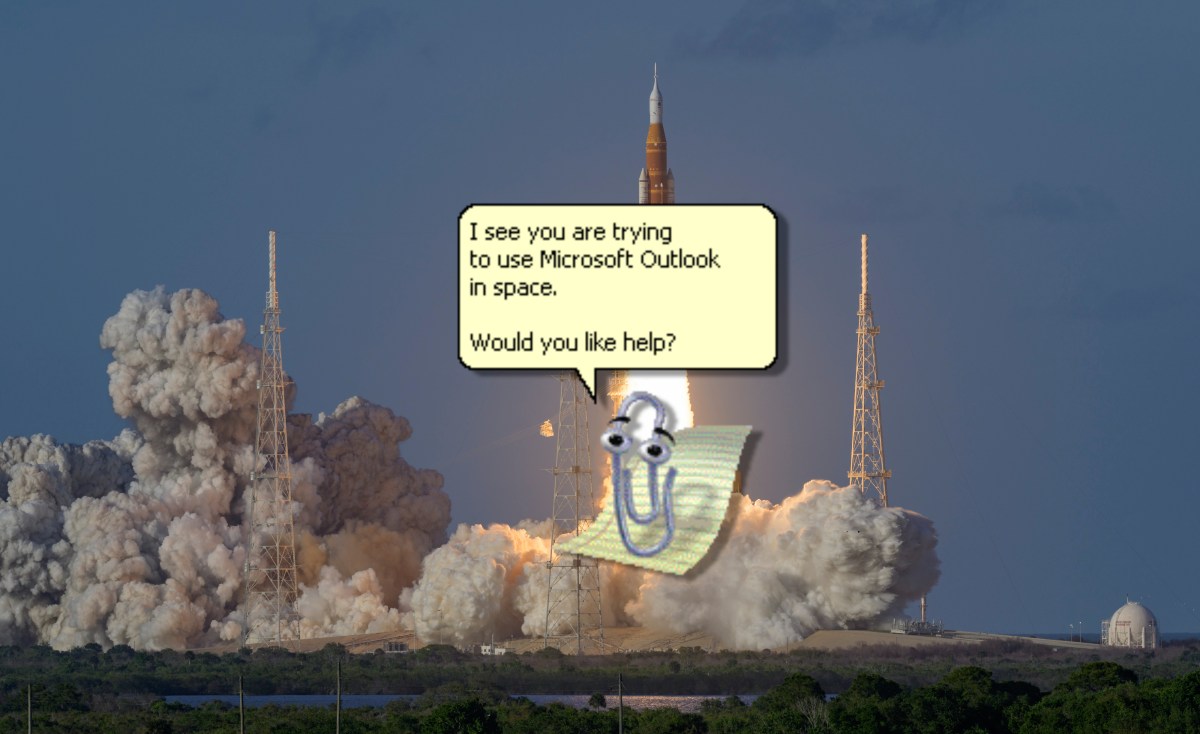

Before the Orion spacecraft even launched on Wednesday, NASA’s Artemis II moon mission — the first in 50 years — faced complex challenges such as hydrogen and helium leaks, a faulty heat shield, and technical issues with its safety system. Now in space, the four astronauts confront another hurdle: Microsoft Outlook.
On their first day in space, Artemis II Commander Reid Wiseman encountered trouble using Microsoft Outlook and contacted Mission Control for tech support, as shown in the launch communications livestream.
Initially, Wiseman faced issues with Optimus software but then reported a more basic problem: Two instances of Outlook were running on his Microsoft Surface Pro PCD.
“I also see that I have two Microsoft Outlooks, and neither one of those are working. If you want to remote in and check Optimus and those two Outlooks, that would be awesome,” Wiseman said.
Shortly after, Mission Control resolved the issues.
“We wanted to let Reid know we are done remoting into his PCD 1,” said a Mission Control official. “We resolved the issue with Optimus, and for Outlook, we got it open. It will show offline, which is expected.”
What do astronauts email about, anyway? Isn’t space travel a good reason for an out-of-office response?
This wasn’t the only challenge. After takeoff, their toilet malfunctioned.
“The toilet fan is reported to be jammed,” NASA spokesperson Gary Jordan stated. “Ground teams are providing instructions to revive the toilet for the mission.”
They had “backup waste management capabilities,” according to Jordan, providing relief. Worst-case scenario, astronauts wouldn’t have to deal with floating debris. Nonetheless, aerospace engineers fixed both the toilet trouble and Outlook issues. If they can do that, they can surely navigate the moon.
I’d ask NASA’s Mission Control for help with my own Outlook problems, but they are likely busy.
Neither NASA nor Microsoft responded to TechCrunch’s requests for comment.