

All eyes will be on Orion’s heat shield. By Elisha Sauers on April 9, 2026.
Orion will slam into Earth’s atmosphere at more than 30 times the speed of sound during the Artemis II moon mission. On landing day, the entry flight director Rick Henfling and his team will guide the 10-day spaceflight to its final stretch. The four astronauts will be briefed on weather conditions at their splashdown site and prepare to secure any loose gear before donning their pressure suits. A final adjustment will direct Orion to a specific spot in the Pacific Ocean, west of San Diego, where the Navy will be ready for retrieval. Backup flight software will ensure the capsule’s guidance continues if main systems fail.
Following the previous Artemis I mission, unexpected damage to Orion’s heat shield prompted NASA to alter the capsule’s atmospheric reentry path, opting for a gentler entry to avoid extreme temperatures. The Artemis II mission will see the spacecraft engage a “lofted” entry instead of the previous bounce approach. This change, approved after an independent review, aims to maintain gas-pressure within acceptable limits while shortening the distance to splashdown.
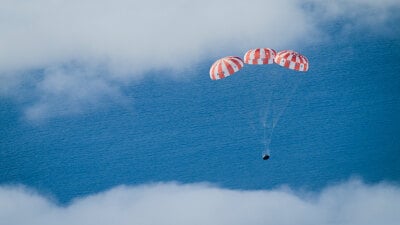
Pilot Victor Glover noted his anticipation for the fiery re-entry since his crew assignment in April 2023. He described the process of riding a “fireball” through the atmosphere as profound. Engineers redesigned Orion’s descent, where air friction causes temperatures to spike to 5,000 degrees Fahrenheit, enveloping the craft in plasma and potentially severing radio communication temporarily. During re-entry, the crew will undergo a gravitational force of around 3.9Gs. This stage brings a sense of competitive camaraderie among the astronauts, who jokingly noted any new reentry speed records. The parachute sequence will see Orion slowing gradually before hitting the ocean at a safe angle.
After splashdown, Orion will remain powered for study as it cools in the Pacific, offering valuable data even after the astronauts are recovered. Dan Flores, part of the recovery team, emphasized the pride in the task, highlighting the moment they bring astronauts back from space to their loved ones.
Topics: NASA