
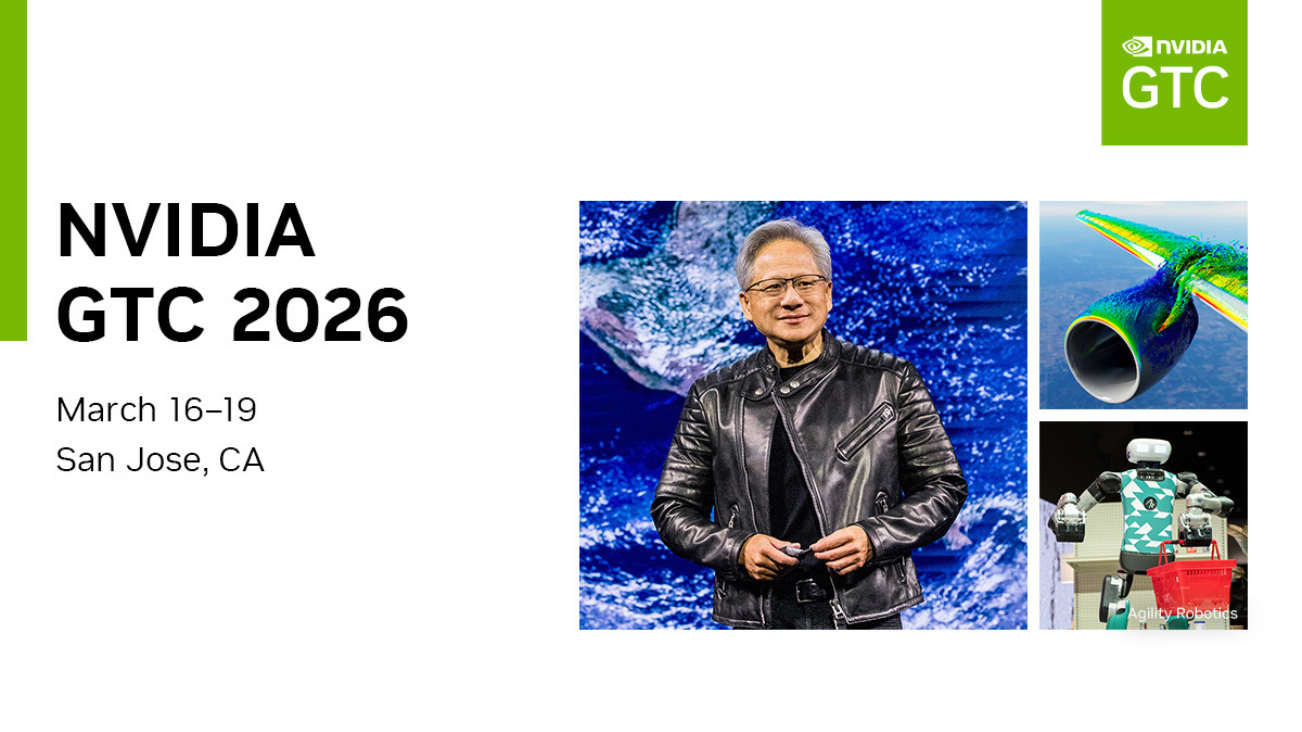

NVIDIA’s GTC 2026 begins in San Jose today with 30,000 attendees, a keynote at the SAP Center, and announcements that might alter AI infrastructure over the next two years, including enterprise platforms and a major deal with a new startup.
San Jose turns green each March as developers, research engineers, and technology buyers from 190 countries gather at the convention center.
The SAP Center, usually the home of the San Jose Sharks, transforms into a venue for a two-hour keynote event broadcasted to a large online audience.
NVIDIA GTC 2026 launches today, 16 March, running until 19 March. It’s a pivotal event in the technology sector as the stage where Jensen Huang, CEO of the biggest chipmaker, outlines AI’s future and identifies who will benefit from its development.
The company enters this week with strong momentum, reporting $68.1 billion in revenue for Q4 2025, a 73% year-on-year increase, with record revenue for several quarters.
Market conditions and geopolitical issues, like the Iran conflict affecting oil prices, have influenced NVIDIA’s valuation, but its position remains stable as a crucial supplier for AI development.
GTC underscores this reality. In a press release, Huang emphasized that AI now forms an integral part of infrastructure, not just applications or models.
“Every company will use it. Every nation will build it,” he stated. “Advancements occur across every layer, including energy, chips, infrastructure, models, and applications.”
Expected and known aspects create a detailed outlook.
The extensive program includes over 1,000 sessions across ten venues in downtown San Jose. A major focus is physical AI, featuring robotics, autonomous systems, digital twins, and simulation environments for training.
Speakers feature Ashok Elluswamy from Tesla, Raquel Urtasun of Waabi, Deepak Pathak of Skild AI, along with representatives from Johnson & Johnson, Disney Research Imagineering, and PhysicsX.
Disney’s session is particularly noted for showcasing how AI-driven physical robotics brings animated characters into real-world environments using NVIDIA technology.
On 17 March, Dario Gil from the US Department of Energy will discuss AI’s role in climate and energy research, highlighting AI’s power consumption as both a policy and technical issue. NVIDIA aims to illustrate how accelerated computing can offer solutions to these energy demands.
Quantum computing is addressed in a session titled “The Genesis of Accelerated Quantum Supercomputing,” targeting useful quantum supercomputers by 2028.
On 18 March, Huang will lead a panel on open frontier models with leaders from A16Z, AI2, Cursor, and Thinking Machines Lab.
Here you can find the entire list of speakers.
GTC is likened to major sports and cultural events, with analysts suggesting it as an investment opportunity. This year, the event becomes a setting for AI industry direction, not just observation.
What marks 2026 is the maturity of technology being discussed rather than the scale of announcements. NVIDIA’s achievements with Blackwell and Vera Rubin signal AI infrastructure growth. The industry now questions who will control this infrastructure and the associated costs.
NemoClaw, if realized, addresses the software layer, while the Thinking Machines partnership tackles the frontier lab and inference cost questions. These elements showcase NVIDIA’s pivotal role in shaping the AI landscape, a long-held argument by Jensen Huang, supported by solid evidence at GTC 2026.