
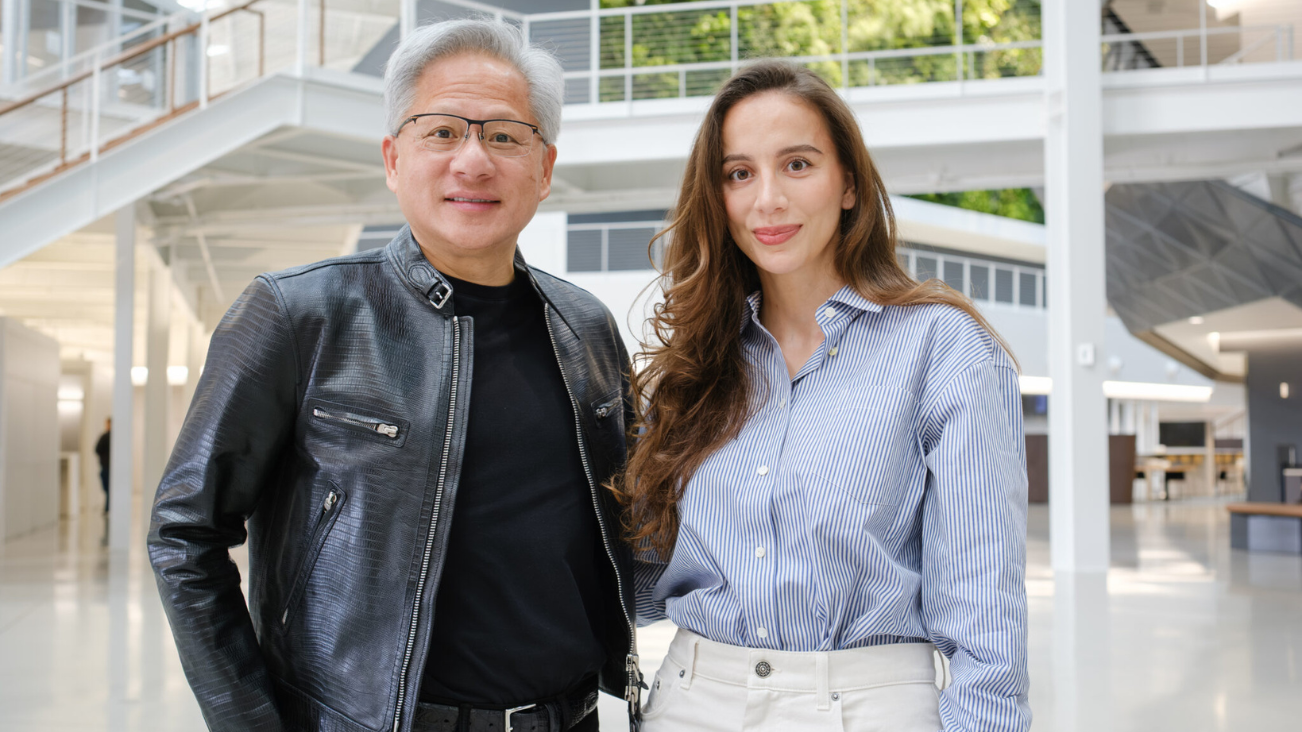

The agreement connects a leading chip company with an AI startup founded by OpenAI’s former CTO, with a compute commitment involving tens of billions of dollars.
When Mira Murati left OpenAI in September 2024, she was reserved about her next steps. Now, 18 months later, it’s evident she was crafting something ambitious, finding support in Nvidia, who’s backing her at a scale previously unimaginable.
On March 10, 2026, NVIDIA and Thinking Machines Lab revealed a multiyear strategic partnership where Murati’s startup will utilize over a gigawatt of NVIDIA’s cutting-edge Vera Rubin systems for model training.
NVIDIA has made a “significant investment” in Thinking Machines, though financial specifics remain undisclosed.
Per the Financial Times, the chip supply deal is valued at tens of billions of dollars. Nvidia CEO Jensen Huang has noted that an AI data center with one gigawatt capacity can cost up to $50 billion.
Thinking Machines Lab, established by Murati in February 2025, has accrued over $2 billion in funding. Backers encompass Andreessen Horowitz, Accel, NVIDIA, and notably, AMD’s venture arm, a chief NVIDIA competitor. The firm has expanded from 30 staff a year ago to approximately 120 now.
Thinking Machines aims to create AI systems that are, in its words, “more widely understood, customizable, and generally capable.” Emphasizing customizability, the company distinguishes itself from OpenAI and Anthropic by providing infrastructure adaptable to businesses’ and developers’ needs.
The partnership with NVIDIA involves technical collaboration alongside compute supply, particularly optimizing Thinking Machines’ products for NVIDIA’s hardware. Such close chip-level integration has historically been advantageous, being one of the reasons OpenAI could advance rapidly in the GPT era.
“NVIDIA’s technology is the foundation of the industry,” Murati stated. “This partnership enhances our ability to create AI that is customizable for individuals.”
Thinking Machines is not the only frontier lab forming gigawatt-scale compute agreements. The AI sector is racing to secure the infrastructure needed for next-generation model training, with current agreements reflecting confidence that early compute acquisition will confer lasting benefits.
For NVIDIA, the investment fulfills dual roles: generating revenue from chip sales while securing a stake in a lab seen as a potential long-term client and strategic ally. NVIDIA similarly invests in other AI firms, building an industry-leading portfolio.
Murati turned down an acquisition offer from Meta’s Mark Zuckerberg last year. The NVIDIA partnership indicates her intent to stay independent, armed with resources to support this stance. Whether a 120-person lab can truly compete with much larger organizations remains uncertain. However, she no longer lacks the compute to find out.