

Xinzhou Wu argues that beating Tesla in autonomous driving doesn’t require millions of miles of driving data, but rather the right sensors and an AI system capable of reasoning. Nvidia’s head of automotive occasionally takes CEO Jensen Huang on rides in vehicles using their hands-free system only when confident in its capabilities. Recently, they drove from Woodside to downtown San Francisco in a Mercedes with Nvidia-designed MB.Drive Assist Pro, enjoying a lighthearted atmosphere amidst heavy traffic.
Huang expressed confidence in the system, joking about feeling safer in autonomous mode. Nvidia’s system navigated everyday obstacles smoothly in a video provided to The Verge, with no disengagements reported. Wu mentions that Nvidia seeks a prominent role in autonomous driving, supplying chips and AI features to partners like Mercedes and Lucid, while launching Alpamayo for Level 4 autonomy, likened to being a “ChatGPT moment for physical AI.”
Nvidia uses an end-to-end AI model combined with a classical stack, providing a human-like driving style with safety grounded in traditional road rules. Other companies also use similar hybrid systems. Wu says end-to-end models handle driving tasks more naturally, akin to the confidence necessary for customer acceptance.
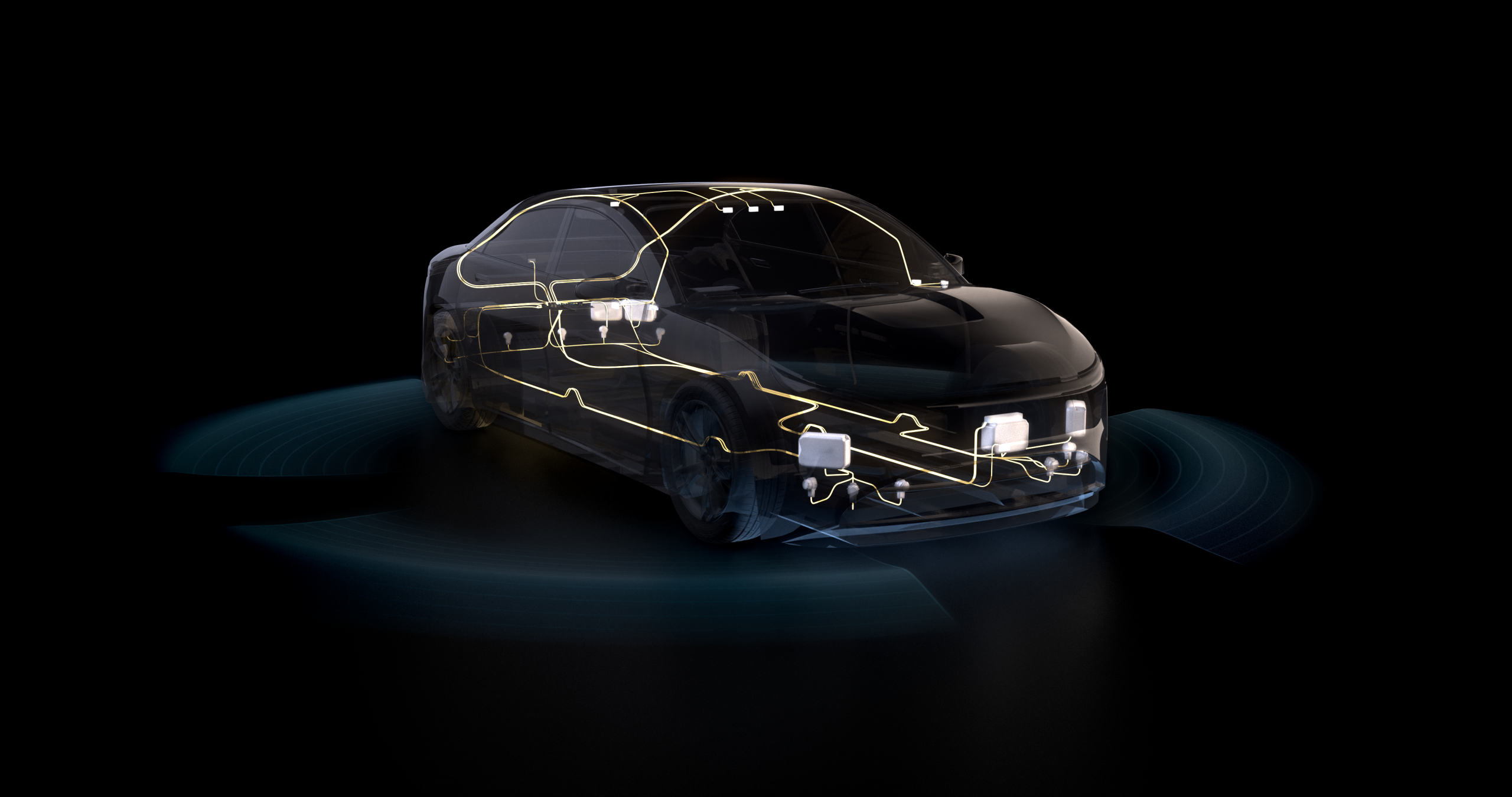
Discussing Tesla’s extensive real-world data, Nvidia differentiates itself with diverse sensors, including lidar, for higher safety levels, despite additional costs. Nvidia’s DRIVE Hyperion platform offers adaptable configurations for varying autonomy levels.
Nvidia relies on simulation to address its lack of extensive real-world data, using neural reconstruction and augmentation to explore different scenarios and edge cases. These methods allow Nvidia to train systems for challenging situations without solely relying on real-world data.
Wu emphasizes employing a system that uses reasoning to avoid problematic scenarios, working on a Vision Language Action model that integrates perception, language, and action. This approach aims to teach AI to drive with minimal data, akin to how new drivers learn with a rule book and limited practice.