

A San Francisco-based startup, Isara, which focuses on developing software to synchronize thousands of AI agents for complex analytical tasks, has secured $94 million in funding, valuing the company at $650 million. OpenAI is among the investors. Established nine months ago by two 23-year-olds, Isara currently has no product on the market.
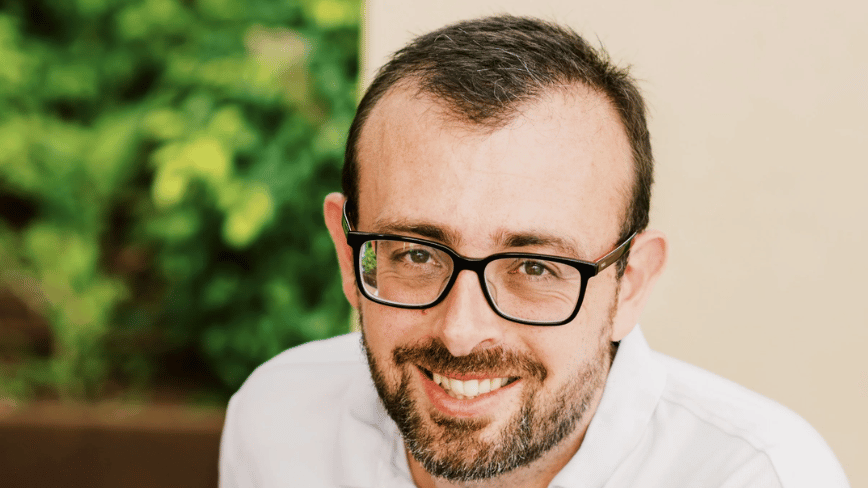
The funding round, initially covered by The Wall Street Journal, includes investors like Amity Ventures, former Creative Artists Agency chairman Michael Ovitz, and billionaire hedge fund manager Stanley Druckenmiller. OpenAI’s involvement is significant since one of Isara’s co-founders, Eddie Zhang, previously worked as an AI safety researcher at OpenAI. Zhang departed from OpenAI to co-found Isara in June 2025 with Henry Gasztowtt, a computer science student from the University of Oxford. They co-authored a paper at ICML 2024 on AI systems’ cooperation for improved policymaking, which forms the company’s theoretical basis.
Isara has since onboarded about a dozen additional researchers from companies like Google, Meta, and OpenAI itself.
Isara’s main focus is on large-scale multi-agent coordination. Instead of using a single AI model for a single task, Isara’s system allows numerous specialized agents to collaborate, share tasks, unify goals, and achieve a joint outcome. The founders view this as moving from isolated tools to team-oriented strategies.
The company’s current demonstration involves approximately 2,000 agents working together to predict gold prices. Initially, they are targeting investment firms for commercial purposes through predictive modeling software. Biotechnology and geopolitical analysis follow as secondary interests. Their long-term goal is to train agent swarms to monitor geopolitical developments and predict economic trends.
This presents a technical challenge as coordinating thousands of agents involves complexities such as avoiding cascading errors, conflicting objectives, or compounding hallucinations—a subject not extensively addressed in academic research. Existing multi-agent frameworks like LangChain, CrewAI, and AutoGen manage small numbers of agents for structured tasks, while Isara aims to direct thousands on open-ended analytical challenges.
Isara is part of a trend termed “neolabs” by The Information—AI startups heavily focused on research, founded by alumni of OpenAI, DeepMind, Anthropic, and Google Brain. These operate like private research institutions rather than typical companies. Investors have placed or discussed about $2.5 billion in similar startups within a month, and overall, more than $10 billion has been invested in neolabs, banking on innovative AI architectures diverging from current market-dominant large language models.
Typically in this pattern, a small group of high-credential researchers raises significant capital before demonstrating revenue. Investors see foundational research capability as the valuable asset. With companies like Cognition reaching a $10.2 billion valuation with $73 million in annual recurring revenue, the potential gains from breakthroughs in multi-agent coordination are significant.
However, foundational research carries inherent risks due to its uncertain nature. Many novel architectures, including diffusion models for reasoning, world models, and multi-agent swarms, are yet to be validated beyond controlled environments. There’s a major gap between demo-level coordination of 2,000 agents for gold price predictions and creating a production system trusted by investment firms for real financial decisions—one large enough to absorb a $94 million funding round.
OpenAI’s investment prompts a familiar question in the AI field: why would a leading lab back a startup from a former employee working on adjacent challenges? A plausible answer is strategic optionality. If multi-agent coordination becomes crucial, OpenAI benefits from insights into external developments. Investing $94 million in Isara is a minor expense compared to OpenAI’s scale, given its own valuation of $300 billion and its mission for artificial general intelligence. Supporting agent swarm research aligns with this objective.
Additionally, talent retention is at play. The AI industry’s most cherished asset is skilled researchers. By investing in Isara, OpenAI maintains connections with Zhang and his team, preventing their loss to industry competitors. This approach mirrors investments from Google, Microsoft, and Amazon in smaller AI firms—where retaining top researchers outweighs the investment costs.
For Isara, the key challenge lies in transforming their research ideas into reliable solutions for paying clients. The agentic AI market is expected to expand from $7.8 billion in 2025 to $52.6 billion by 2030, with prominent platforms like Anthropic’s Claude, Google’s Gemini, and Microsoft’s Copilot offering multi-agent features. Isara’s hypothesis is that coordinating thousands of agents necessitates an architecture fundamentally different from what these platforms provide. The coming 18 months will reveal whether Isara’s approach is valid or if existing models will incrementally solve the coordination issue as they scale.