Blog Posts

Blog Posts

Apple reportedly threatened to remove Grok from the App Store due to deepfake nudes.

A letter Apple sent to US senators, obtained by NBC News, reveals that Apple rejected an initial Grok update and warned the app could be removed unless xAI made further changes. Only a second submission passed. Apple privately threatened to remove Grok, xAI’s AI chatbot, from the App Store in January after Elon Musk’s company […]

This story continues at The Next Web

Android Phones Could Soon Get Improved Features for Identifying Spoofed Calls

Google’s Verified Caller Feature: A Response to Android’s Unknown Call Challenge

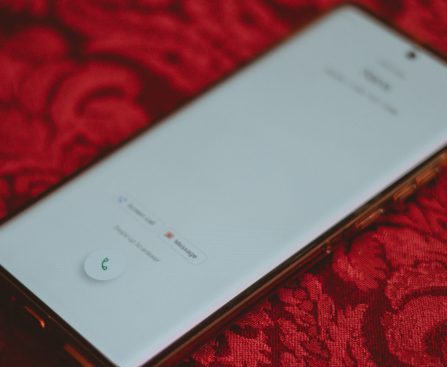
Google is making notable progress in resolving one of Android’s ongoing dilemmas: unidentified callers pretending to be real contacts. This new effort includes integrating Verified Caller safeguards directly into the Android operating system, removing the necessity for users to depend solely on the Google Phone app for call verification.

At the heart of this update is a system-level protective feature that verifies incoming calls against Do-Not-Originate (DNO) numbers. These numbers are generally utilized by banks and governmental organizations for receiving calls only and are not intended for outgoing calls. Scammers frequently spoof these numbers to seem legitimate, but with Google’s new tool, Android devices will have the ability to recognize and flag such spoofed calls before users respond to them.

This advancement is part of a larger initiative by Google to improve user security and privacy. By incorporating this feature into Google Play Services, the protection becomes an inherent aspect of the Android experience, offering users an extra layer of security without relying on third-party applications.

The inclusion of this feature into the Android system signifies a major leap forward in the battle against phone scams. It provides a more holistic solution by collaborating with existing applications and services, facilitating a more fluid and effective defense against fraudulent calls.

Although this feature is still being developed, its capacity to substantially lessen the number of successful phone scams is encouraging. As Google proceeds to enhance and broaden this capability, Android users can anticipate a more secure and reliable calling experience.

Opera Improves Browser Connector Functions for Opera One and Opera GX

**Opera Expands MCP Compatibility Beyond Neon**

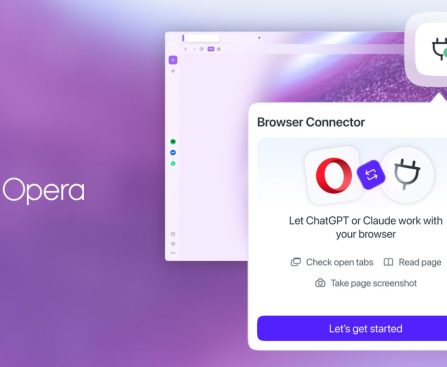
Following the recent introduction of MCP compatibility in Opera Neon, Opera is now incorporating its browser connector feature into Opera One and Opera GX. Here’s what that entails.

A few weeks back, Opera revealed that Opera Neon, its subscription-driven agentic browser, had achieved MCP compatibility, empowering users to link external AI tools directly to their ongoing browsing experiences. Essentially, this functionality allowed Opera Neon subscribers to permit chatbots and tools like ChatGPT, Claude, Lovable, n8n, and OpenClaw to access tabs, engage with pages, and perform actions on their behalf.

Today, Opera is broadening this MCP compatibility to include Opera One and Opera GX, meaning that the feature is no longer exclusive to Opera Neon subscribers.

MCP is an open standard that links AI models (such as ChatGPT, Gemini, and Claude) to external platforms (like Notion, Google Drive, Slack, GitHub, and Zapier).

Opera emphasizes that the launch of the Browser Connector on Opera One and Opera GX reinforces the company’s dedication to user choice, ensuring “users aren’t restricted to a single company’s ecosystem, but are instead free to mix the best tools for their individual requirements,” as stated by Mohamed Salah, Senior Director of Product at Opera.

To activate the Browser Connector feature, users can navigate to Settings, search for AI Services, install Browser Connector, and then link their preferred LLM.

YouTube Launches Feature to Turn Off Shorts Option

If Shorts have been dominating your feed (and consuming your time), this is a significant improvement.

Essential information:
– YouTube now allows you to set Shorts usage to zero minutes, effectively restricting access from the main home feed.
– This new setting is found under Time management and creates friction by blocking the Shorts tab once the limit is reached.
– Shorts are not completely eliminated, as they will still show up in subscriptions and can be accessed via shared links.

If YouTube Shorts have been consuming your time and dominating your home feed, YouTube is finally introducing a feature that allows you to conceal them, at least to some degree.

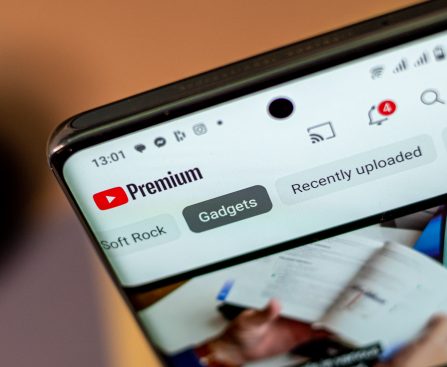
Last year, YouTube revealed a feature that enables users to set time restrictions on how long they engage with Shorts, and it appears it is finally being implemented. As noted (and confirmed) by The Verge, the YouTube app now offers an option to set the Shorts time limit to zero minutes.

Initially, YouTube stated the time limit would range from 15 minutes to two hours, but they have now included a zero minutes option as well, effectively allowing you to deactivate YouTube Shorts. The ‘zero minutes’ timer is confirmed to be active for parents and is currently being rolled out to all users.

To utilize this feature, access the YouTube app settings by tapping the profile icon in the bottom right and then the Settings (gear icon) in the upper right. From there, navigate to Time management settings and specify a daily limit for Shorts. Once activated, a prompt will ask you to select the duration, where you can now choose zero minutes.

After setting it to zero minutes, if you attempt to access the Shorts tab, a pop-up will inform you that you’ve reached your limit, providing options to go back or disregard it. While this doesn’t entirely eliminate Shorts from the app, it does introduce a layer of friction to its usage.

Android Central’s viewpoint:
This may not be a complete Shorts termination switch, but honestly, I’m in favor of it. Adding friction can sometimes be all that’s necessary to break a habit, and setting it to zero minutes might finally assist me in halting my endless scrolling.

It’s also important to highlight that Shorts will still display in your subscriptions feed, and you can open them through direct links. This setting primarily impacts the Shorts tab on the home page.

The feature is currently being rolled out, so you should expect to see it on your device shortly.

Musk Urges Chip Suppliers to Accelerate for Terafab AI

According to Bloomberg, teams from SpaceX and Tesla have approached Applied Materials, Tokyo Electron, Lam Research, and Samsung for price quotes and delivery times on chipmaking equipment.  Teams working for Elon Musk have reached out to major chip industry suppliers including Applied Materials, Tokyo Electron, and Lam Research, as well as chip manufacturing partner Samsung […]

This story continues at The Next Web