Blog Posts

Blog Posts

Smartphone Market Continues to Drop, But Apple’s Approach Remains Successful – IDC Report

The global smartphone industry witnessed a notable drop of over 4% year-on-year in the first quarter of this year, signaling the conclusion of 2.5 years of ongoing growth, as noted by market analysis firms. This decline is primarily linked to escalating component prices, especially memory, which have skyrocketed by 100% or more. Consequently, smartphone manufacturers are forced to transfer these expenses to consumers, resulting in reduced demand and lower shipment numbers.

As per IDC, global smartphone shipments decreased by 4.1% in the first quarter, and the forecast indicates that conditions may deteriorate further as memory supply issues persist in affecting the market. In developing markets, prices have allegedly surged by 40-50%, putting additional pressure on consumer demand. The report suggests that the present downturn is merely a precursor to more considerable obstacles ahead.

On the other hand, Apple and Samsung have succeeded in maintaining their market standings due to their capacity to absorb costs in their high-end devices. Both companies recorded increases in smartphone shipments, with Samsung seeing a 3.6% rise and Apple a 3.3% boost. However, Samsung recently elevated prices on several models, including premium smartphones and tablets, which may position Apple as the sole major contender to keep its prices unchanged. This approach might enable Apple to take advantage of the market’s downturn and sustain its growth pace.

Analysts propose that Apple may be focusing on growth rather than profit margins given the current technology environment, leveraging the opportunity created by rivals’ price increases. Despite the dependency on various metrics for shipment forecasts, inconsistencies in reports from firms like IDC and Counterpoint are prevalent, underscoring the challenges of accurately assessing market conditions.

In conclusion, the smartphone market is undergoing one of its most difficult phases, propelled by severe memory supply limitations and rising costs. While numerous brands face difficulties, Apple’s tactic of maintaining consistent prices may grant it a competitive advantage as the market continues to shift.

iOS 26.4 Brings New Widgets for iPhone’s Home Screen

### iOS 26.4 Brings New Ambient Music Widgets for iPhone

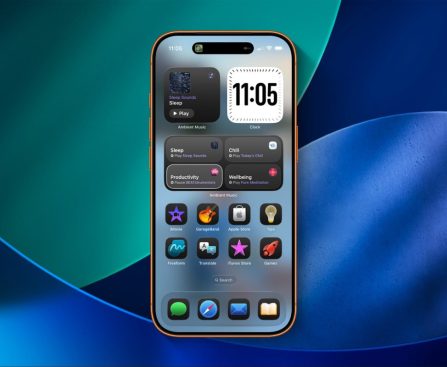
Apple’s most recent update, iOS 26.4, introduces a variety of new features, notably the launch of Ambient Music widgets. These widgets improve the user experience by enabling swift access to music that aligns with specific moods directly from the Home Screen of the iPhone.

#### Overview of Ambient Music Widgets

The Ambient Music widgets are crafted to offer users easy one-tap actions for initiating music playback. Two widget sizes are available: a smaller widget dedicated to a single playlist and a larger widget that grants access to multiple playlists.

– **Small Ambient Music Widget**: This widget lets users choose one playlist from a selection of mood options, including:
– Chill
– Productivity
– Sleep
– Wellbeing

– **Large Ambient Music Widget**: This larger version gives access to all four mood playlists, featuring one-tap play buttons for each, enabling users to easily transition between various music styles according to their current preferences.

#### Customization and Playlist Options

The Ambient Music widgets enhance the capability that was added to the Control Center last year. Users can tailor which playlists are linked to each mood. For example, under the Sleep category, users can select from default playlists like Sleep Sounds, Bedtime Beats, Sound Bath, and Piano Sleep.

For those seeking a more individualized experience, it’s possible to utilize custom playlists. Users just need to long-press on the widget, choose ‘Edit Widget,’ and assign their desired music for each mood.

#### Compatibility and Availability

The Ambient Music widgets are currently integrated with Apple Music, meaning that users of alternative streaming services, such as Spotify, will not be able to use these features. Apple Music is offered for a subscription price of $10.99 per month or as part of the Apple One bundle, which encompasses additional Apple services.

#### Conclusion

The addition of Ambient Music widgets in iOS 26.4 marks a notable upgrade to the music capabilities of the iPhone, allowing users to conveniently access mood-specific playlists. This feature not only enhances the device’s usability but also enriches the overall listening experience for Apple Music subscribers. For a full overview of all the new features in Apple Music with iOS 26.4, users can consult Apple’s official guides.

Apple Is Organizing a Multi-Week AI Coding Bootcamp for Siri Developers

Apple is making significant strides to bolster the abilities of its Siri team by sending a chosen group of engineers to a multi-week coding bootcamp centered on artificial intelligence (AI). This initiative, disclosed by The Information, involves fewer than 200 engineers from the broader Siri development team, which comprises hundreds of personnel. The bootcamp is designed to furnish these engineers with cutting-edge AI coding skills, signifying Apple’s acknowledgment of the swift progress in programming and AI technologies.

The choice to implement this bootcamp highlights Apple’s dedication to enhancing Siri’s performance and adaptability in a competitive realm where AI coding instruments, such as Anthropic’s Claude Code and OpenAI’s Codex, have revolutionized software development methodologies. These tools have empowered developers to generate code more effectively, prompting Apple to ensure its Siri engineers are proficient in these emerging technologies.

AI coding instruments have already gained momentum within other sectors of Apple, especially in software engineering, where teams have dedicated significant budgets for AI resources. This trend aligns with wider industry movements, as indicated by reports showing that companies like Uber have swiftly utilized their AI budgets, illustrating the increasing reliance on AI in technology development.

The bootcamp will retain roughly 60 members of the core Siri development team, while another 60 will concentrate on assessing Siri’s performance and compliance with Apple’s safety protocols. This restructuring coincides with a pivotal moment, just prior to the Worldwide Developers Conference (WWDC) 2026, where Apple is expected to debut a revamped, AI-enhanced version of Siri, utilizing Google’s Gemini models.

This initiative comes in response to a series of obstacles in Apple’s AI strategy, which led to a reorganization of its AI-related divisions, including Apple Intelligence and Siri. The recent exit of John Giannandrea, Apple’s former AI head, along with the appointment of Amar Subramanya, a veteran from Google, as the new VP of AI, constitutes part of this strategic realignment. Furthermore, the Siri team has been placed under the direction of Mike Rockwell, recognized for his successful management of intricate projects like the Apple Vision Pro.

While the specifics of the bootcamp’s framework are not entirely clear, including whether it will occur internally or in partnership with external entities, it signifies a proactive effort by Apple to upgrade the expertise of its engineers in light of changing technological requirements.

For more information, readers can consult the complete report from The Information.