frequent Wi-Fi error nearly everyone commits. Mesh routers tackle that issue and aid in removing dead zones on the property by distributing coverage between a primary router and satellite units.
How many antennas does your router require
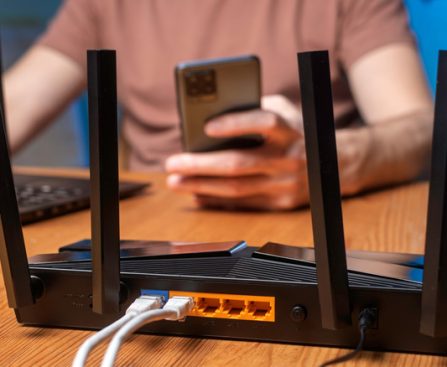

frequent Wi-Fi error nearly everyone commits. Mesh routers tackle that issue and aid in removing dead zones on the property by distributing coverage between a primary router and satellite units.
Native Union’s Weighter is a premium answer to a straightforward dilemma, and I appreciate it greatly.
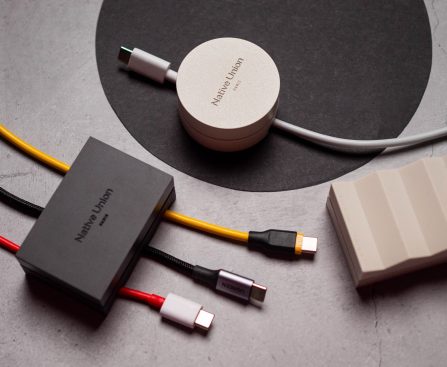
The Weighter is as uncomplicated as they come; it serves as a weighted block that keeps your cables in place without slipping off your desk’s edge. That’s all there is to it. It lacks any extra features or AI — it’s simply a chunk of metal and silicone crafted to tackle a very specific issue.
And I appreciate it greatly. The 3-cable Weighter retails for $29 on Amazon and Native Union’s website, available in both black and sandstone. Additionally, a single-cable variant is priced at $19 for those who don’t require the larger model.
You can find any cable management product on Amazon, often at a much lower price than the Weighter. My primary concern with these alternatives is that they are adhesive-based, and I wasn’t keen on the idea of affixing something to the nightstand. In the past, I used Sugru’s moldable glue and Ikea’s charming cable weights, but we relocated last year, and while the nightstand arrived at the new home intact, the glue did not survive. As for the Ikea weights, I’m at a complete loss as to where to search for them.
In any case, the Weighter is essentially a weighted base that secures your cables while exuding elegance. Weighing in at 172g, it is sufficiently heavy to remain stationary, featuring a top made of metal and a silicone base with cutouts for cable management. It may be an over-engineered approach to a problem, but I admire its appearance, and it fulfills its purpose effectively.
My sole complaint is the prominent Native Union branding and the Paris label below it, but that didn’t stop me from utilizing the Weighter. I placed the single-cable version on my desk while the 3-cable version sits on my nightstand and my dedicated charging station in my office. After three months of use, I haven’t had to contend with cables hanging off the edge of my desk or the side table where my UGREEN Nexode 500W charging station resides. It functions equally well with USB-C cables, barrel plugs, and MagSafe connectors.
Most crucially, I didn’t have to rummage for a cable in the middle of the night when my Galaxy S26 Ultra ran out of power, and for that, I’m grateful the Weighter was created. Yes, numerous other options are available, many costing only a fraction of the Weighter’s price. I’m not suggesting you should purchase it, but if you’re seeking a refined solution for cable management, it’s one of the more aesthetically pleasing options available.
### The Viral iPhone Fold Unboxing Video: A Study of Its Veracity
Recently, an unboxing clip purporting to reveal the eagerly awaited iPhone Fold has gained significant attention online. Initially, the video seems authentic, devoid of the usual signs of being an AI-generated counterfeit. Nonetheless, upon closer examination, several hints indicate that the video may not be what it claims.
#### The Basis for Doubt
Indie developer Victor Saralev, who published the video, conveyed his belief that it is indeed a fabrication. He remarked, “I’m certain this video is fake, but this is the one that went viral throughout the internet.” This skepticism mirrors the opinions of many viewers who have pointed out discrepancies in the video.
#### How Fabricated Unboxing Videos Are Made
There are three main techniques through which fake unboxing videos can be created:
1. **3D-Printed Replica Devices**: Certain Chinese smartphone companies are infamous for imitating the designs of new iPhone models. Additionally, a niche industry exists in China focused on producing realistic replicas of forthcoming Apple devices. These 3D-printed replicas frequently boast high-quality finishes and packaging, making them appear genuine.
2. **Artificial Intelligence**: Although AI-generated content is becoming increasingly advanced, the quality of this particular video appears too high to be solely attributable to AI. It lacks the usual indicators typically associated with AI-generated content.
3. **Digital Creation by Designers**: A skilled designer could have utilized sophisticated 3D rendering software to make the video. This technique allows for a high level of realism and detail, which might account for the believable nature of the footage.
#### Principal Signs of Inauthenticity
The most evident sign that the video is not genuine lies in the inconsistency of the device’s screen layout. From the front, the screen seems seamless, while the rear view shows a noticeable gap between the sides. This discrepancy raises doubts about the device’s physicality, implying that it is likely a digital creation rather than a physical replica. Moreover, the video refrains from displaying the device being flipped over, which would typically occur during an unboxing.
#### Conclusion
Considering the discrepancies in the video and the potential for digital manipulation, it appears plausible that a proficient visual artist, probably with some AI support, is responsible for the creation of the iPhone Fold unboxing video. As the technology for generating realistic digital content progresses, distinguishing the authenticity of such videos becomes more challenging. The viral aspect of this video highlights the necessity of critical assessment in an era where visual media can be easily distorted.
For more insights, you can delve into the original conversation on platforms like CNET.
### The Advancement of AI Wearables: An In-Depth Examination of the Button
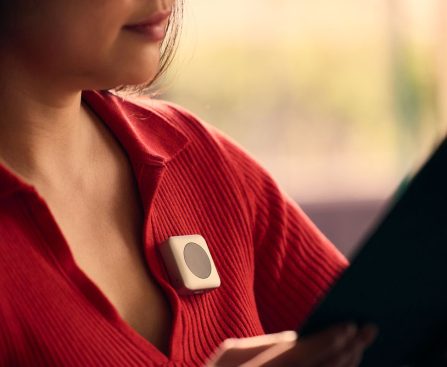
In recent times, the notion of AI hardware devices has attracted considerable interest, with numerous specialists drawing comparisons between these advancements and the progression of portable music players. Two former Apple engineers, Chris Nolet and Ryan Burgoyne, have launched a novel AI wearable named “Button,” which closely resembles the iPod Shuffle. This article delves into the ramifications of this innovative device, its design, and the wider context of AI wearables.
#### The Idea of AI Wearables
AI wearables have encountered doubt since their beginnings. Earlier endeavors, like the Humane AI pin and the Rabbit R1, received predominantly negative feedback, with critics deeming them as impractical and badly designed. Marques Brownlee, a well-known tech reviewer, referred to the Humane AI pin as the worst product he had ever assessed, summarizing the prevailing opinion surrounding these gadgets.
The central argument against specific AI hardware is that most users already possess powerful smartphones capable of running AI applications. The comparison to the iPod is fitting; while the iPod was groundbreaking in its era, the rise of smartphones made it unnecessary for many users. The same reasoning pertains to AI wearables today—if smartphones were nonexistent, these devices might be intriguing, but their necessity is doubtful in a realm where robust apps are easily accessible.
#### Presenting the Button
The Button, created by Nolet and Burgoyne, is a small device designed to enable interactions with a generative AI chatbot. The gadget is deliberately crafted to look like the iPod Shuffle, featuring a straightforward button interface. Users can press the button to engage the chatbot, which can listen, respond to queries, and perform commands. The device can deliver audio replies or connect to earbuds and smart glasses via Bluetooth, addressing some privacy issues linked with always-on devices.
In spite of its innovative stance on privacy, the Button prompts an essential question: why is it necessary as an independent device instead of an application on current smartphones? Nolet contends that while AI can be accessed on computers and phones, the Button presents a unique interaction that is “better.” However, he does not clarify what distinguishes the Button from current smartphone applications.
#### The Prospects of AI Wearables
As the Button makes its entry into the market, it signifies a larger trend in the tech sector towards dedicated AI hardware. While the device seeks to tackle privacy challenges and deliver a distinct user experience, it must surmount the doubt surrounding AI wearables. The hurdle lies in persuading consumers that a dedicated device is a worthwhile investment when powerful alternatives are available on their smartphones.
In summary, the Button illustrates the ongoing investigation of AI wearables and their potential impact on our lives. As technology continues to advance, the success of such devices will hinge on their capability to provide unique benefits over current solutions. The discussion surrounding AI hardware is far from concluded, and the Button might just mark the start of a new era in wearable technology.
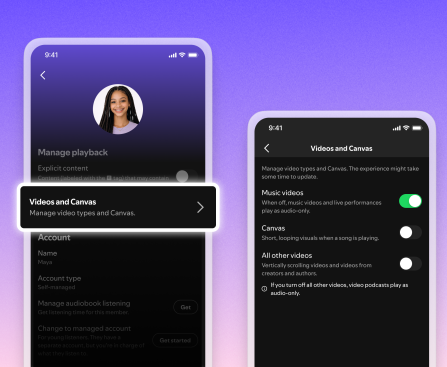
Spotify is adding new toggles to stop any and all video from playing inside the app, for both music and podcasts. The controls are rolling out worldwide, work across all platforms and devices, and can be used by managers of Family Plans to limit video content for every member on the subscription. The new controls […]
YouTube Shorts is rolling out a new AI-powered feature giving creators an easy way to realistically clone themselves on camera. The launch, hinted at earlier this year, reflects the platform’s fraught relationship with AI-generated content, adding more generative features while struggling to contain AI slop, deepfake scams, and impersonations. YouTube says the new tool will […]

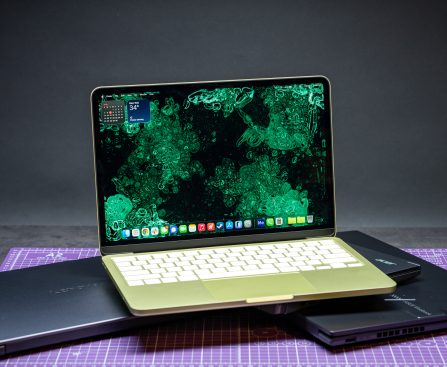
When the MacBook Neo arrived last month, I knew Windows laptop makers were in trouble. For $599, the Neo offers fantastic build quality and solid performance in a sleek and ultra-portable package. Windows laptops in this price range tend to be ugly, cheap-feeling, and a little slow. Despite years of rumors, the MacBook Neo still […]
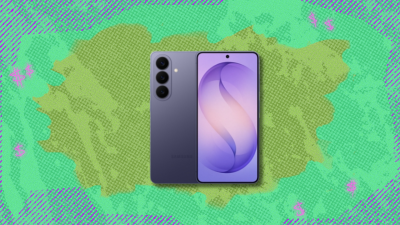
Score the Samsung Galaxy S26 for under $100 at T-Mobile. Here’s how to claim your heavily discounted handset.
Get the best TV deal. Save 27% on the Sony Bravia 5 65-inch at Amazon.
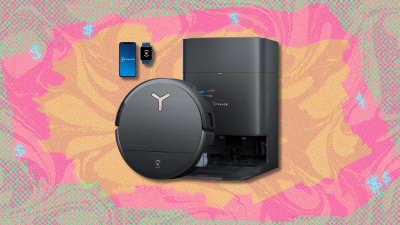
Find the best robot vacuum deal. Save 48% on the Ecovacs Deebot X9 Pro Omni at Amazon.