Blog Posts

Blog Posts

Martin Scorsese Engages Another A-List Star for Anticipated Apple TV Production

**Martin Scorsese’s “What Happens At Night” Incorporates Jared Harris into Its Star-Studded Ensemble**

Martin Scorsese’s forthcoming film, “What Happens At Night,” has recently invited Jared Harris to join its remarkable cast. This addition further enriches a lineup that already features prominent actors such as Leonardo DiCaprio, Jennifer Lawrence, Patricia Clarkson, and Mads Mikkelsen.

**Scorsese and Apple Collaborating Once More**

Per Deadline, Jared Harris, recognized for his performance in the Apple TV series “Foundation,” will be alongside the aforementioned stars in this Apple Original Films endeavor. The film draws inspiration from Peter Cameron’s 2020 novel of the same name and was originally scheduled to commence production last month.

The story revolves around an American couple who journey to a wintry European city to adopt a child. Their adventure takes them to the Borgarfjaroasysla Grand Imperial Hotel, a sprawling and hauntingly empty venue where the bar remains ever open, and the restaurant offers extravagant thirteen-course meals reminiscent of bygone eras.

“What Happens At Night” signifies yet another partnership between Scorsese and Apple, following the critically lauded “Killers of the Flower Moon,” which garnered ten Academy Award nominations, in addition to the captivating five-part documentary “Mr. Scorsese.” Scorsese has also featured in various Apple productions, including a comedic role in “The Studio” and a marketing campaign for the iPhone 4S showcasing Siri.

**Apple TV Subscription Information**

Apple TV is accessible for $12.99 per month and offers a range of popular shows and films, including “F1 The Movie,” “Pluribus,” “Severance,” “The Morning Show,” “Shrinking,” and “Silo.”

As excitement heightens for “What Happens At Night,” enthusiasts of Scorsese and the star-packed cast are keen to witness how this captivating narrative unfolds on screen.

Guide for Moving from 1Password to Apple Passwords

# The Transition to Apple Passwords: A New Chapter in Password Management

A password manager once stood as one of the most essential third-party applications available. It was the resource that made it feasible to maintain strong, individualized passwords for every app, website, and online service we utilized. However, with the introduction of Apple Passwords, the password management scene has started to evolve, prompting many users to rethink their dependence on paid applications and subscriptions.

## A Password Manager Is Necessary

In the initial stages of online services, it was typical for individuals to rely on a single password across several platforms. Typically, this password was weak and easily guessed, placing users at considerable risk. Alarmingly, many individuals who are not technically savvy still engage in this precarious habit today. This is worrisome because the security of all online services is only as robust as the least-secure site accessed. When data breaches transpire, hackers can take advantage of these feeble passwords, seeking to infiltrate high-stakes targets such as financial services and Apple accounts.

Utilizing a password manager to generate robust, unique passwords for each online service is vital in today’s digital realm. This recommendation has been promoted for over a decade and is now viewed as a core element of online security.

## An Increase in Users Transitioning to Apple Passwords

Apple has long included a built-in password manager via Keychain, which has progressed into iCloud Keychain. While it functioned adequately, third-party password managers frequently provided more functionalities and user-friendly designs. This shifted last year when Apple rolled out a specific Passwords app, improving the feature set and usability to rival paid third-party applications. Many users, myself included, have made the transition and have discovered it to be a seamless experience.

Recently, 1Password declared substantial price increases, with individual subscriptions jumping from $35.88 to $47.88 annually and family plans going from $59.88 to $71.88. This increase in cost has led many users to contemplate switching to Apple Passwords, as shown by numerous comments from readers indicating their plans to terminate their subscriptions.

## Steps to Switch

Transitioning from a third-party password manager to Apple Passwords is simple, even for 1Password users. The procedure includes exporting your database from 1Password and importing it into Apple Passwords. Below are the instructions tailored for Mac users, although the process can also be executed on iPhone.

### Export Your Passwords from 1Password

1. Launch and unlock the 1Password application on your Mac.
2. From the menubar, click on **File > Export** and select the account you wish to export.
3. Input your account password.
4. When asked to select a format, choose **CSV** and hit **Export Data**.
5. Designate a location to save your 1Password data and click **Open**.

### Import Your Passwords into Apple Passwords

1. Open the Passwords app and verify your identity.
2. From the menubar, click on **File > Import passwords from file**.
3. Select the CSV file you exported from 1Password.

### Securely Remove the CSV File

Following the importation of your passwords, it is essential to delete the CSV file immediately to safeguard your sensitive data. If you possess anything in your trash that you might want to retrieve, it is advisable to empty it at once.

In summary, the move to Apple Passwords marks a noteworthy transformation in password management, driven by the demand for improved security and the increasing expenses of third-party services. With its strong capabilities and user-friendly design, Apple Passwords is destined to become the preferred solution for numerous users aiming to protect their online accounts.

Apple Encounters Rising Component Expenses in Affordable MacBook Manufacturing

### Apple’s Upcoming Budget-Friendly MacBook is Close

Apple is set to introduce a new budget-friendly MacBook, with mass shipments projected to commence in March 2026. This reveal is part of a lineup of product releases slated for next week, culminating in a unique “Apple Experience” occasion for the media.

As per a report from Digitimes, Apple is making concerted efforts to address production setbacks that have delayed the mass manufacturing of the new MacBook from late 2025 to the early months of 2026. Notwithstanding these hurdles, supply chain insiders predict that Apple intends to dispatch between 15 to 16 million units of the product within the initial two years.

The report points out that Apple, similar to many other entities in the tech sector, is confronted with escalating component expenses, chiefly in memory and battery costs. This scenario prompts concerns about the pricing of the new MacBook, which was first speculated to be around $599. Nonetheless, current projections indicate a price range of $699 to $749.

The forthcoming budget-friendly MacBook is anticipated to incorporate the A18 Pro chip and will sport a 12.9-inch screen, making it the smallest laptop in Apple’s offerings, outstripping the MacBook Air’s 13.6-inch display. Apple has allegedly tested the MacBook in multiple shades, including light yellow, light green, blue, pink, classic silver, and dark gray.

As excitement mounts for this more accessible option, inquiries emerge regarding its possible effects on the MacBook Air and whether it will appeal to consumers in search of economical choices.

Essential Dashboard Devices to Upgrade Your Antiquated Vehicle

car dashboard accessories that keep your items safe and accessible while on the go. The anti-slip rubber mat from BLAU GRUN is sized at 10.63 by 5.91 inches and boasts an outstanding 4.3-star rating from 3,000 reviews on Amazon. It securely grips lightweight objects, making sure they stay in place even on rough roads, tight corners, or abrupt stops.

Users appreciate the ease of use

Princess Nourah bint Abdulrahman University Selects Medad Admission Platform | Naseej for Technology

Princess Nourah bint Abdulrahman University has partnered with Naseej for Technology to implement Medad Admission Platform, a cloud-based Saas platform that integrates with internal and external entities, fully automating the admission process at the Deanship of Admission and Registration.

The post Princess Nourah bint Abdulrahman University Chooses Medad Admission Platform appeared first on Naseej For Technology.

Saudi Arabian Drilling Academy Chooses Medad Cloud to Transform Workforce Development | Naseej For Technology

Saudi Arabian Drilling Academy partners with Naseej to implement Medad Cloud platforms. The collaboration aims to modernize digital learning, strengthen training operations, and enhance institutional performance through a unified, cloud-native ecosystem.

The post Saudi Arabian Drilling Academy “SADA” Chooses Medad Cloud to Redefine Workforce Development appeared first on Naseej For Technology.

Al-Baha University and Naseej: Modernizing the Academic Ecosystem to “Banner 9” | Naseej For Technology

Al-Baha University has signed a strategic agreement with Naseej for Technology to modernize its academic information ecosystem through the upgrade to Ellucian Banner 9. Complemented by Ellucian Experience and Ellucian Insights, this transformation is part of its broader institutional modernization journey toward a more agile, efficient, and future-ready digital environment.

The post Al-Baha University and Naseej for Technology: A Journey to Modernize the Academic Ecosystem to “Banner 9”   appeared first on Naseej For Technology.

Apple Confronts Penalties in Brazil for Marketing iPhones Lacking Supplied Chargers

Consumer protection authorities in the Brazilian state of Alagoas have imposed a fine of R$101,627.50 (around $20,000) on Apple for offering iPhones devoid of what they considered an “essential item for normal use of the product.” This penalty underscores persistent worries about consumer rights and product availability in Brazil.

The controversy arises from Apple’s choice to eliminate the power adapter from the iPhone packaging, a decision that regulators claim violates Brazil’s Consumer Defense Code. As per Procon-AL, the consumer protection agency in the state, this approach transfers the burden of acquiring necessary accessories to consumers, violating the principles of good faith, transparency, and consumer vulnerability.

At first, the fine was approximately $12,000, but it was subsequently raised to around $20,000 due to aggravating factors in Brazilian law and Apple’s inadequate response to the grievances. This is not the first time Apple has faced fines in Brazil concerning this matter. In 2022, the Brazilian Ministry of Justice mandated a halt on iPhone sales in the country over the same issue, following a prior penalty of about $2 million in 2020 for failing to include the charger.

Following the recent decision, Apple’s subsidiary in Brazil has a period of 20 days to contest the ruling. If the appeal fails, the fine will be modified according to Brazil’s IPCA-E inflation index, potentially heightening the financial implications for the company.

This ongoing situation highlights the significance of consumer protection in Brazil and the expectations for companies to deliver complete products that fulfill consumer requirements without imposing extra expenses for essential accessories.

Experts Evaluate macOS 26 Even with Acclaim for Mac Hardware

### Apple’s Annual Evaluation: A Diverse Review on Hardware and Software

Jason Snell’s yearly Apple evaluation has been published, offering insights into the corporation’s performance as perceived by 56 key commentators, including Chance Miller, the editor-in-chief of 9to5Mac. This year’s findings illustrate a striking contrast in the views of Apple’s hardware compared to its software, especially regarding the Mac.

#### Summary of the Evaluation

The Six Colors evaluation seeks to capture the overall sentiment surrounding Apple’s performance over the previous year. Participants score Apple on various criteria using a scale from one to five, with five indicating the highest level of satisfaction. The results show a notable division between hardware and software quality.

– **Hardware Dependability**: 4.5
– **Apple OS Standard**: 2.7

This gap is particularly evident in relation to the Mac, where hardware is commended while software faces criticism.

#### Hardware Performance: A Nod to Monotony

The general opinion on Mac hardware is exceedingly favorable, with numerous respondents describing the devices as exceptionally dependable and efficient. Shahid Kamal Ahmad captured this perspective by stating that his M4 Pro MacBook Pro is “boring” in a positive sense, emphasizing its dependability, quiet operation, and remarkable display quality.

#### Software Performance: An Unsatisfactory Experience

In contrast, the reception of macOS 26, also referred to as Tahoe, has been predominantly adverse. John Siracusa, a well-known reviewer, condemned it as the “least favorable user interface update in the history of the Mac,” noting that the modifications were poorly implemented and lacked ambition. Christina Warren from Mashable echoed this viewpoint, mentioning she would avoid using macOS Tahoe if not necessary for work.

#### 9to5Mac’s Viewpoint

9to5Mac concurs with the evaluation of Mac hardware, highlighting its outstanding performance and efficiency. Nevertheless, the quality of Apple’s software is perceived as considerably deficient, with issues such as window resizing glitches being particularly exasperating. Despite these critiques, there is acknowledgment of some positive features of macOS 26, including enhancements in functionalities like Live Activities and Spotlight.

#### Final Thoughts

The annual evaluation acts as a reflection of the current condition of Apple’s offerings, emphasizing the strengths of its hardware while highlighting the necessity for enhancements in its software. As Apple persists in innovating, the hope remains that upcoming updates will tackle these issues and improve the overall user experience.

Reasons Your Blu-Ray Player Could Be Using a Wrong HDMI Cable

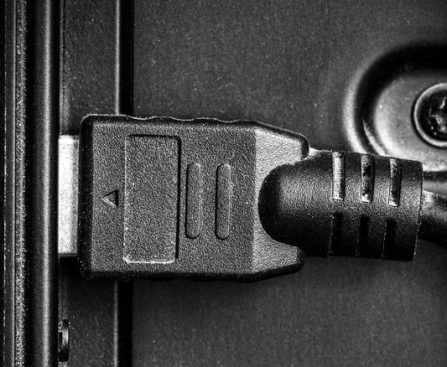
the finest Blu-ray players that guarantee breathtaking visuals and sound, but this holds true only if you’re utilizing the right HDMI cable. With an improper cord, you risk missing out on HDR and Dolby Vision functionality. Many individuals attribute these quality problems to the TV or the player, when in reality, the cable is to blame. It can be surprisingly easy to mistakenly use the wrong HDMI cable, as numerous Blu-ray players don’t come with one, forcing you to source the appropriate cord on your own.

The top HDMI cables available on Amazon and other online stores vary in price, starting as low as $10 and reaching up to $3,000. In terms of effectiveness and dependability, even the more affordable choices typically perform well, but it ultimately boils down to your setup, specifically the combination of the Blu-ray player and TV you own. Ultimately, the HDMI cable ought not to restrict the transmission bandwidth, an issue often encountered with older HDMI versions, particularly if your Blu-ray player is compatible with HDR, Dolby Vision, or Dolby TrueHD.

Not every HDMI cable is identical