Blog Posts

Blog Posts

Tenways Almost Perfects the Shareable City E-Bike

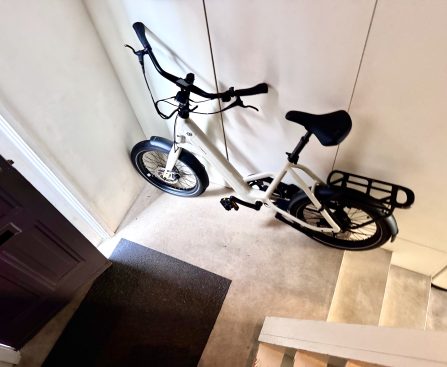
Good electric bikes are expensive. So why not buy one and share it? That’s the idea behind the Tenways CGO Compact e-bike I’ve been sharing with my wife and teenage daughter for the last two weeks. It adapts in seconds without any tools to comfortably fit riders of varying heights thanks to its low-entry frame, […]
Undesirable ’80s Electronics Currently Commanding Elevated Prices

The ’80s Gadgets That Were Unwanted But Now Command Serious Money

When you envision legendary electronics, specific ’80s devices such as the Sony Walkman, Nintendo Entertainment System, and a variety of VCRs and boomboxes immediately come to mind. These products characterized daily life during that remarkable decade and continue to be revered for their nostalgia and utility. While collectors are ready to pay a premium for these treasured items, some lesser-known gadgets from the ’80s, once deemed “rubbish,” have also turned out to be quite valuable. These products, frequently ignored due to their outdated nature or initial lack of popularity, can now yield impressive amounts if discovered in attics, storage spaces, or thrift stores.

Atari 2600 Video Game Console

The Atari 2600, launched in 1977, was a groundbreaking entity in the gaming industry with its plug-and-play cartridges. Despite its early prominence, it was eclipsed by the Nintendo Entertainment System’s debut in 1985. Once regarded as playthings, these consoles were often thrown away. Nowadays, gaming aficionados value an average Atari 2600 at up to $60, while rare bundles and models can reach $500. The true gems are the games, with uncommon cartridges like “Red Sea Crossing” and “Air Raid” fetching thousands.

Sony Discman D-50 Compact Disc Player

After the triumph of the Walkman, Sony rolled out the D-50 portable CD player. Even though its audio quality surpassed that of cassettes, the D-50’s size and requirement for an external power source curtailed its popularity. Despite being succeeded by more streamlined versions, collectors currently shell out $100–$400 for this historic piece.

Polaroid OneStep Instant Camera

The Polaroid OneStep, unveiled in 1977, became a symbol of the ’80s for its ability to develop photos instantly. However, the emergence of digital photography in the ’90s caused instant cameras to fade. Presently, retro fans are willing to spend up to $150 to rekindle the magic of instant photography.

Sinclair ZX80 Home Computer

The Sinclair ZX80, introduced in 1980, was an economical home computer that welcomed many into the world of software programming. It was soon eclipsed by the Commodore 64 and Apple Macintosh 128K. Despite its obscurity, an original ZX80 can now command up to $800 at auction.

National Ambience RX-7200 Boombox

The RX-7200 boombox, featuring four speakers and exceptional build quality, was a premium model released exclusively in Japan. Its scarcity and craftsmanship make it highly desirable, with prices ranging from $1,000 to over $2,000.

These overlooked ’80s gadgets, previously unwanted, have transformed into valuable collectibles, showcasing that one individual’s trash can indeed become another’s treasure.

ESP32-C5 Bug Advisory Addresses PSRAM and Sleep Coexistence Issues

ESP32-C5 Bug Advisory

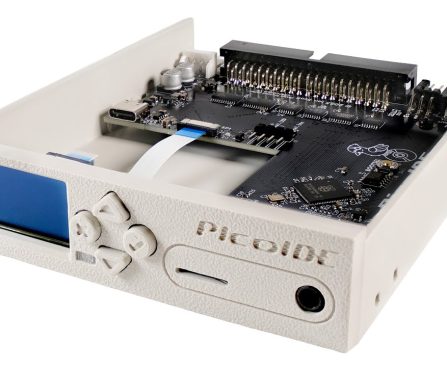
Espressif  Systems has just published a bug advisory for ESP32-C5 chips that identifies and fixes three bugs related to PSRAM and sleep coexistence stability. New microcontrollers often have issues when they are first released, leading companies to issue errata listing bugs and potential fixes, as we’ve previously seen with the Raspberry Pi RP2350 A4 stepping, which fixes the E9 GPIO Erratum with a new revision of the silicon. Espressif identified three issues with the ESP32-C5: PSRAM Reset Hang – When ESP32-C5 series chips run ESP-IDF v5.5.1 with PSRAM enabled, CPU or digital reset operations may hang. This triggers a secondary RTC WDT reset. If the rollback feature (CONFIG_BOOTLOADER_APP_ROLLBACK_ENABLE, disabled by default) is enabled, this sequence may result in an OTA rollback. AES and SHA Access to PSRAM – When ESP32-C5 chips run ESP-IDF v5.5.1, PSRAM data may be corrupted when AES or SHA hardware accesses buffers that are not aligned […]

The post ESP32-C5 bug advisory identifies and fixes PSRAM and sleep coexistence issues appeared first on CNX Software – Embedded Systems News.

Four Valuable Substitutes for Ring Cameras

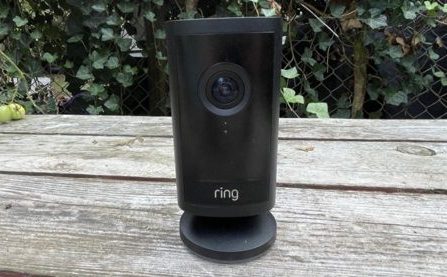
essential intelligent home device. Ring has significantly influenced the popularity of video doorbells, as its range provides various price tiers and features. It has established standards such as two-way communication, motion sensing, and the capability to monitor your entranceway from anywhere through a mobile application. However, some Ring users are returning their devices, and the Amazon-owned brand has also launched a subscription model necessary to access certain functionalities.

The industry has evolved greatly over the years, and Ring is no longer the sole option to consider for a video doorbell. Features like local storage, integration with popular smart home ecosystems like Google Home and Apple HomeKit, and the ability to utilize a camera’s complete capabilities without a recurring subscription are available from Ring’s competitors. Numerous affordable alternatives have also surfaced. By considering expert and consumer feedback, we have evaluated them all. Therefore, if you’re looking to enhance your smart home, let’s investigate some viable Ring camera substitutes to consider.

Google Nest Doorbell (3rd Gen)

Google ranks among the leading names in consumer technology, and its Nest Doorbell series has much to offer. There are Google Nest Doorbell Battery and <a href="https://r.bttn.io?btn_ref=org-225e4e0aac880b8f&btn_url=https%3A%2F%2Fwww.amazon.com%2Fdp%2FB0FN7GC1TJ%2F%3Ftag%3Dstaticmedia-bgr-custom

Top Instant Cameras to Buy Today

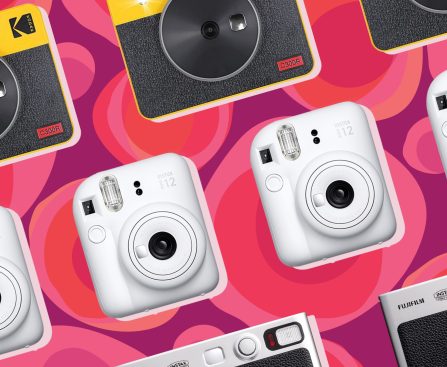
Even with the ability to take excellent photos with our phones and instantly share them across the world, there’s something magical about the old-school instant camera. With just a click of a button, you can capture a moment in a photo that you can see and touch almost immediately. Images captured by an instant camera […]

Artificial Skin Allows Robots to Perceive Pain Sensation

Research from City University of Hong Kong has unveiled how a new type of electronic skin enables robots to perceive pain and injury actively. Although robots do not possess the ability to feel pain or sustain injuries like humans, this groundbreaking technology allows the robot to simulate an awareness of pain, preventing potential harm or destruction to their components and detecting damage to the skin itself.

The study titled “A neuromorphic robotic electronic skin with active pain and injury perception” was published last year and complements other advanced robotic sensing technologies currently under development. For instance, the Chinese firm XPENG has launched its eighth generation humanoid robots equipped with synthetic skin, which enhances their warmth and intimacy. Concurrently, skin-sensing technology is crucial for the robot’s environmental awareness.

In this instance, the researchers developed a neuromorphic robotic electronic skin (NRE-skin) that surpasses simple pressure sensitivity. It operates similarly to a basic nervous system by sending a “pain” signal to the robot in response to increasing or sustained pressure. This innovation could assist in recognizing physical damage and initiating reflexive responses without relying on central processing constantly.

Reasons Why Robot Pain Represents a Significant Advancement

Two Affordable Accessories for the iPhone 17 Pro to Think About

### Safeguarding Your iPhone 17 Pro: Accessories to Consider

Though many individuals choose to use their iPhones without cases or screen protectors, the iPhone 17 Pro features that make it wise to think about both options. The launch of Ceramic Shield glass five years ago greatly enhanced drop performance, and the newest version, Ceramic Shield 2, promises to deliver improved scratch resistance. Nevertheless, worries about deep scratches persist, urging users to consider protective accessories.

#### Improved Scratch Resistance with Ceramic Shield 2

Apple’s Ceramic Shield 2 front cover asserts that it offers three times better scratch resistance in comparison to its predecessor. Despite this progress, numerous users still face scratches after a year’s use. To reduce this risk, employing a screen protector could be a sensible decision.

#### Matte Glass Screen Protector

One product worth considering is the [Mothca matte glass screen protector](https://amzn.to/4025Kha). This screen protector provides protection against scratches and features a matte finish that diminishes glare. Although it may not reach the same level of anti-glare as the nano texture available on iPad Pro and MacBook Pro, it is an affordable choice, priced between $9 and $14.

#### Slim Case for Occasional Use

For cases, a slim design is perfect for those who do not intend to use one regularly. For activities like kayaking or attaching the iPhone to motorcycle handlebars, a case can offer crucial protection. The [Spigen Thin Fit case](https://amzn.to/3MUXtsj) is an excellent option, available in several colors including black, gunmetal, and abyss green. Priced at about $34.99 on Amazon, it provides MagSafe compatibility along with a sleek design that enhances the iPhone’s visual appeal.

#### Main Features of the Spigen Thin Fit Case

– **MagSafe Compatibility**: Guarantees efficient use with battery packs and magnetic mounts.
– **Camera Protection**: Shields the camera area, tackling durability issues.
– **Visual Appeal**: The design of the case presents a pleasing look that pairs nicely with the iPhone’s cosmic orange finish.

#### Conclusion

For those aiming to safeguard their iPhone 17 Pro, the Mothca screen protector and Spigen Thin Fit case represent two budget-friendly accessories that improve durability without sacrificing style. Whether concerned about scratches or simply wishing to protect your device during activities, these products offer a practical solution.