It’s Artemis II moon flyby day. Here’s how to watch the flyby live and witness history being made.


It’s Artemis II moon flyby day. Here’s how to watch the flyby live and witness history being made.
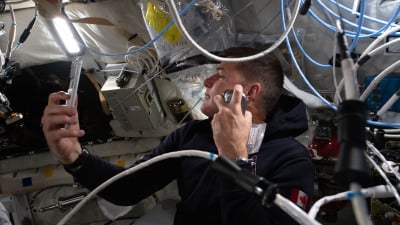
NASA’s Artemis II crew is going viral in space thanks to iPhone selfies, Instagram Reels, and a “Full House”-inspired video.
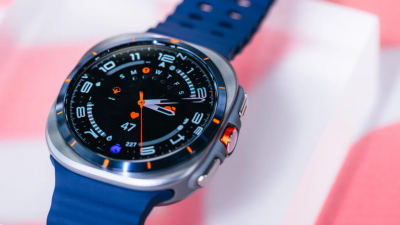
As of April 6, you can get the Samsung Galaxy Watch 8 for $289.99 at Amazon, down from $349.99.
Shop the new 50-inch Hisense CanvasTV at Amazon for $1,299.99.

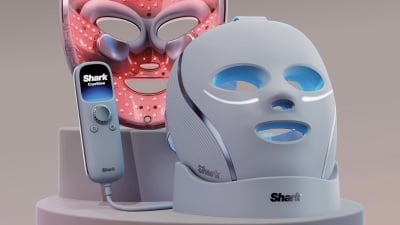
The Shark CryoGlow LED face mask and charging stand are on sale on Shark’s website, saving you $39.99.
Netflix has made family-friendly titles a key part of its current games strategy, and now it’s pushing a little harder with the launch of a new app. Called Netflix Playground, the app is focused on games aimed at kids aged eight and under, and, like the rest of Netflix’s gaming lineup, Playground games are included […]

Humans havenât stepped foot on the Moon since NASAâs Apollo 17 mission in 1972. Now, the space agency is racing to get back to the lunar surface under the umbrella of its Artemis program â a nod to the Greek goddess and twin sister of Apollo, whose name was given to NASAâs first program to […]

### The Role of Apple Products in Space Missions
It’s hardly surprising that the iPhone is behind the memorable image of Earth captured during NASA’s Artemis II lunar flyby mission. Nonetheless, the iPhone isn’t the sole Apple device being employed by astronauts in space.
#### AirPods Observed on the International Space Station
As a four-member crew ventures further into space than any human has before, all attention is focused on NASA. NASA astronaut Jessica Meir, currently residing on the International Space Station (ISS), recently posted an interesting workout video that emphasizes the distinctive difficulties of exercising in microgravity.
In her tweet, Meir discussed the significance of regular exercise on the ISS to avert considerable muscle mass and bone density loss, which occurs due to the absence of gravitational forces acting on the body. She referred to the Advanced Resistive Exercise Device (ARED), utilized for strength training in space.
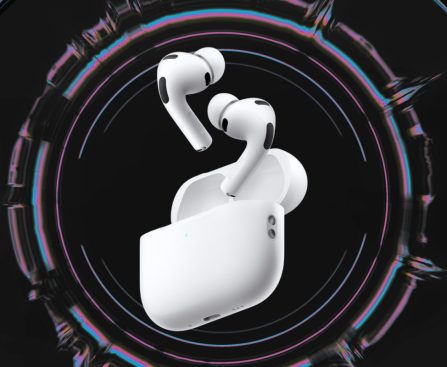
Notably, AirPods have emerged as the preferred headphones for astronauts during their workouts, even while orbiting the Earth at 17,500 mph. The practicality and wireless design of AirPods render them suitable for usage in the limited space of the ISS.
Consider the difficulty of misplacing an AirPod in space; however, the zero-gravity setting might actually lessen the distance they could travel if accidentally tossed, as gravity is what usually causes them to roll away on Earth.
Apple devices, including the iPhone and AirPods, are demonstrating their worth as essential tools for astronauts, improving their communication and workout experiences in the extraordinary environment of space.
**Google AI Edge Eloquent: A Revolutionary Shift in Voice Dictation on iOS**
Google has unveiled an exciting new app on iOS named [Google AI Edge Eloquent](https://apps.apple.com/us/app/google-ai-edge-eloquent/id6756505519). This application acts as a connection between an experimental feature and an intuitive tool, aimed at improving the way users transform spoken language into written text.
### Main Features of Google AI Edge Eloquent
The core capability of Google AI Edge Eloquent is to convert “disorganized speech into polished text.” As users start speaking, the app delivers real-time transcription along with a visual waveform, facilitating a fluid dictation process. Users have the option to pause their speech anytime, and upon completion, hitting the stop button causes the app to refine the text. This refined text is subsequently copied to the clipboard automatically, simplifying the process of pasting it into other apps.
### Improved Usability
The application provides multiple features to enhance the transcription experience. Users can see key points presented as bullet points and modify the text’s tone to be more formal, brief, or detailed. Moreover, the app offers usage analytics, including word count and words per minute, assisting users in monitoring their dictation effectiveness.
A standout feature is the “completely offline” mode, which guarantees that conversations stay on the device, bolstering privacy. In addition, activating the Gemini feature allows for superior text refinement, giving users a more polished final product.
### History and Personalization
Google AI Edge Eloquent includes a History tab where users can review all their transcriptions and remove entries as required. The app also contains a Dictionaries section, enabling users to add commonly used names or phrases to enhance transcription precision. Users can log in with their Google Account to import specific terms from their Gmail correspondence, further customizing the app’s functionality.
### Accessibility and Release
Google highlights that this app offers “voice dictation without subscription fees” and promotes “unlimited usage,” making it an attractive option for those looking for a budget-friendly choice. The “AI Edge” label underscores Google’s dedication to on-device AI experiences, with Eloquent joining the current Google AI Edge Gallery, which features other applications aimed at improving user engagement with AI.
At present, Google AI Edge Eloquent seems to be available solely on iOS, as it has not been observed in the Play Store for Android devices. This exclusivity raises inquiries regarding its potential release on other platforms.
### Summary
Google AI Edge Eloquent signifies a major leap forward in voice dictation technology, blending real-time transcription with intuitive features and customization capabilities. As users increasingly depend on voice-to-text solutions, this app might become a crucial asset for boosting productivity and communication. With its pioneering method and dedication to user privacy, Google AI Edge Eloquent is set to leave a significant mark in the field of digital communication.

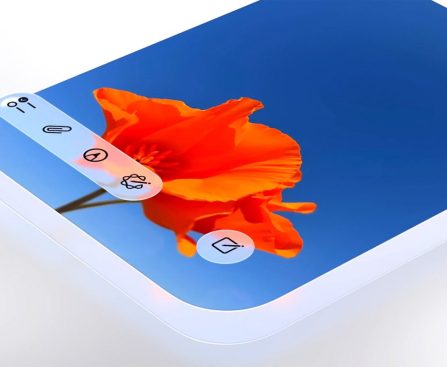
Apple has recently revamped its developer website to highlight third-party applications that utilize Liquid Glass, a design language focused on creating natural and adaptive experiences throughout its platforms. This update signifies the second version of Apple’s design gallery for Liquid Glass, following its original debut in November 2025. Since then, a variety of apps have adopted this cutting-edge design technique, with both developers and Apple enhancing its application.
In this latest version of the design gallery, Apple showcases how teams of different sizes are utilizing Liquid Glass to improve user experiences. Among the highlighted applications is Carrot Weather, a distinctive weather app recognized for its witty robot personality. The app has received a visual update, particularly evident in the Radar tab, where the map panning feature has been enhanced. Developer Brian Mueller has optimized the app by minimizing the number of tabs in the bottom toolbar, leading to a more streamlined interface.
Another app gaining attention is Denim, a popular choice for generating playlist art for Apple Music. The app incorporates Liquid Glass design features seamlessly, with toolbar controls that integrate into the dark background. Improvements include upgraded undo and redo buttons and refreshed text labels on the cover art.
Other applications showcased in the Liquid Glass design gallery include Tasks, GoodLinks, AllTrails, and Fantastical, among others. Users can visit Apple’s website to explore the complete design gallery and see how these apps are implementing the Liquid Glass design language.
This initiative underscores Apple’s dedication to nurturing creativity and innovation among developers, encouraging them to embrace contemporary design principles that enhance user engagement across its ecosystem.