
Blog Posts

Blog Posts

Meta Halts AI Data Work Following Breach That Jeopardizes Training Secrets

In short: Meta has suspended its collaboration with Mercor, a $10 billion AI data startup, after a supply chain attack exposed what may be the AI industry’s most closely guarded secrets: not just personal data, but the training methodologies that power the world’s leading large language models. The breach, carried out via a poisoned version of […]

This story continues at The Next Web

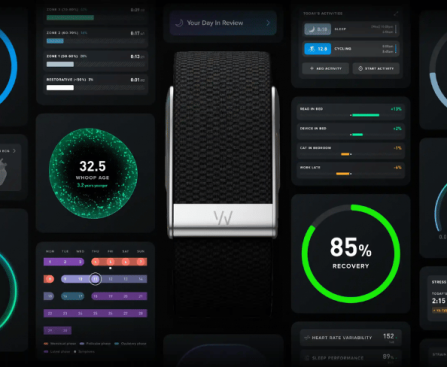
WHOOP Secures $575M at $10.1B Valuation, Hints at Upcoming IPO

In short: WHOOP has raised $575 million in a Series G round that values the screenless health wearable company at $10.1 billion — nearly three times its 2021 valuation. Backed by sovereign wealth funds, leading medical institutions, and a roster of celebrity athletes, the Boston-based startup is positioning itself for an IPO. Its founder and CEO […]

This story continues at The Next Web
MIT Robotics Initiative Employs Wristband for Energy

As technology advances, researchers gradually close the distance between prosthetics and natural limbs: Experts have created a prosthetic hand that enables users to perceive temperatures and bionic legs that operate via brain impulses. Now, a recent innovation advances robotic hands closer to replicating the complex movements of the palm and fingers.

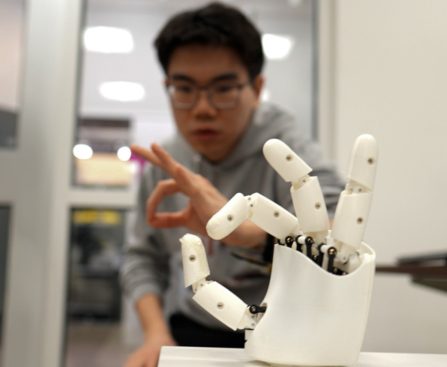
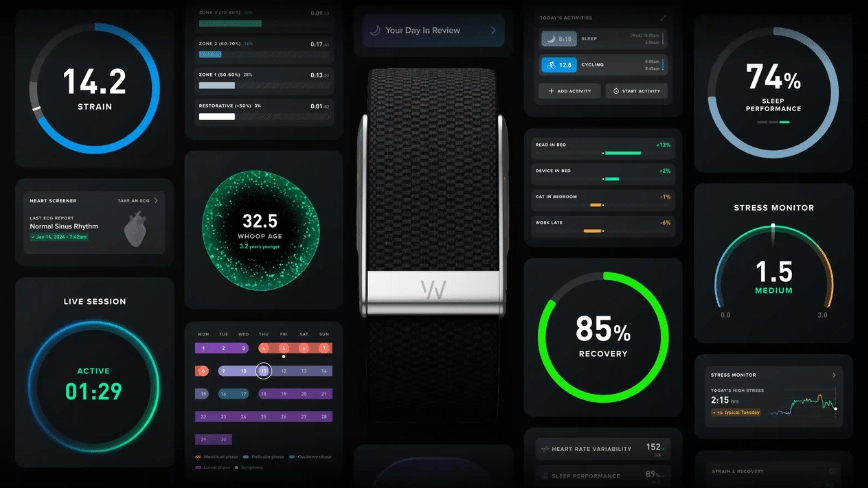
In March, a group of engineers at MIT disclosed a unique wristband that monitors muscle movements and sends signals that enable a robotic hand to replicate the user’s actions. This groundbreaking device utilizes ultrasound technology to track muscles, tendons, and ligaments in the wrist and employs an AI algorithm to convert those signals for a robotic hand in less than 120 milliseconds. This technological pairing is said to be proficient enough for a human to make a commercially available robotic prosthetic play the piano and adapt to the user’s hand movements.

The wristband’s capabilities extend beyond the physical realm. Researchers indicate that this device can link to a virtual setting and utilize hand motions for in-app operations. For example, an individual can enlarge and reduce virtual items simply by pinching and releasing their fingers, mimicking the action of zooming in and out on a tablet screen. Envision a future where, instead of using controllers, you simply wear advanced wristbands to navigate various VR applications and games. It sounds quite immersive.

The wristband can act as a training tool for robots

The ultrasound wristband that interacts with the robotic hand is based on technology that, despite being compact, isn’t featherlight. Users need to bear the combined weight of a smartwatch and a smartphone on their wrist, and researchers aspire to miniaturize the device in the future. Nonetheless, they aim to promote it beyond just individuals who have lost their hands or seek novel ways to engage with virtual items.

The MIT team that developed the wristband believes the device could serve as an essential resource in the humanoid robotics sector. They think the AI and wristband could assist in training these robots for various tasks requiring fine motor skills, like surgical operations. To realize this ambition, researchers would need to compile an extensive library of scans featuring diverse hand sizes and finger shapes executing a range of gestures.

Some individuals predict that the future will bring humanoid robots that coexist with our smart homes, and while many of these could be operated remotely by unfamiliar individuals, MIT’s wristband could play a crucial role in both situations. If the robots are autonomous, training data from the wristbands could ensure that caregiver androids interact with your property delicately, and if they are operated remotely, the wristbands could provide real-time hand accuracy.

Three Reasons the Amazon Fire Kids Tablet is More Secure Than Other Android Alternatives

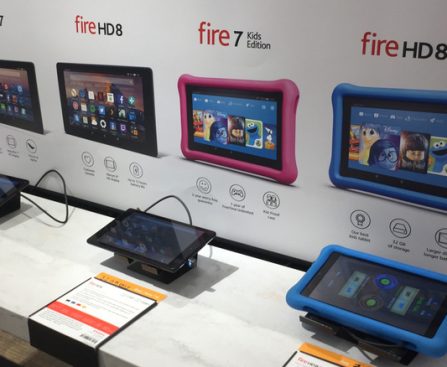
Amazon Fire tablets are typically quite affordable as well. For children, entry-level options such as the Amazon Fire 7 Kids will cost around $100 (you can often find it for less during sales). You can use it yourself since the hardware is identical to a regular Amazon Fire tablet — you simply need to set up an adult profile that removes the kid-safe limitations. You might notice the storage is somewhat limited (16GB or 32GB), but luckily, this device offers expandable storage via a microSD card. Additionally, Amazon Fire Kids tablets include a durable case and a built-in kickstand, making them an even safer choice for the entire family.

It includes free content suitable for kids

<div class="columns-holder" readability="29.767343

Apple’s Latest Purchase Suggests Upcoming Strategic Path

**Apple’s Purchase of MotionVFX: A Change in Software Approach**

Last month, Apple captured attention by acquiring MotionVFX, a prominent creator of plugins for Final Cut Pro. This acquisition comes shortly after the debut of Apple Creator Studio, sparking speculation about how Apple might incorporate MotionVFX’s templates and effects into its new platform. While the immediate effects of this acquisition are captivating, the wider implications may shed light on Apple’s current strategic trajectory.

### A Sign of Apple’s Revived Commitment to Pro Software

For numerous Apple fans, the company’s recent path has been disheartening, especially concerning software quality. Traditionally, Apple has been at the forefront of software innovation, but recent years have experienced a plateau in this aspect. Features often seem to be reactive rather than proactive, with Apple lagging behind industry trends instead of leading them. The introduction of Apple Intelligence, for example, has been particularly sluggish, particularly considering the company’s capability to spearhead personal AI technology.

Apple’s investment strategy seems to rely on clear avenues to profitability. This shortsightedness is surprising, given the company’s considerable financial means. Nonetheless, the acquisition of MotionVFX indicates a revived interest in bolstering its professional software offerings, particularly with the potential of a subscription model. The question persists: can this strategy scale successfully?

### Potential for iMessage as an AI Platform

For users of Apple’s Messages app, the experience has frequently been hindered by bugs and glitches. Problems such as group chat errors and syncing issues diminish the app’s potential. There is a belief that iMessage could develop into a next-generation AI platform, contingent on Apple’s ability to monetize it effectively. If successful, this could result in a more dependable and feature-rich messaging experience.

### The Future of Apple Intelligence and Subscription Models

Looking forward, there are uncertainties about whether Apple’s forthcoming AI initiatives, such as the expected enhancements to Siri, will necessitate a subscription model. While it may not be an outright requirement, it is conceivable that features utilizing Private Cloud Compute could be connected to an iCloud+ subscription. This trend has already been noted with the Apple Invites app, which limits event creation and sharing to iCloud+ subscribers.

### Conclusion

Apple’s recent actions in the software domain, particularly the acquisition of MotionVFX, indicate a potential shift in focus toward enhancing its professional software offerings. As the company manages the balance between innovation and profitability, the tech community observes closely to see how these developments will progress. The future of Apple’s software strategy could transform user experiences across its platforms, but only time will reveal if this renewed focus will result in the groundbreaking advancements that many anticipate.

Five Techniques for Reducing Expenses on Electronic Acquisitions

2026 is indicating it could become the priciest year for technology acquisitions; therefore, you ought to avoid impulsively purchasing a product—especially now that common items are gradually increasing in price as a result of the AI surge.

For instance, the Samsung Galaxy S26 series has experienced an uptick in price when compared to earlier models, with certain configurations priced up to $180 higher. We’ve also observed the launch of the Nothing Phone 4(a) at greater prices than its predecessor.

Thankfully, in spite of the negativity surrounding the costs of electronics, you can still conserve some money on your purchases by mastering the art of budget-friendly shopping. If you’re looking to acquire any electronic device without paying the full price, apply the five recommendations below. You’ll maximize your savings when shopping for your next gadget.

Purchase used electronics

The Future Engine Confronts a Major Unsettled Issue

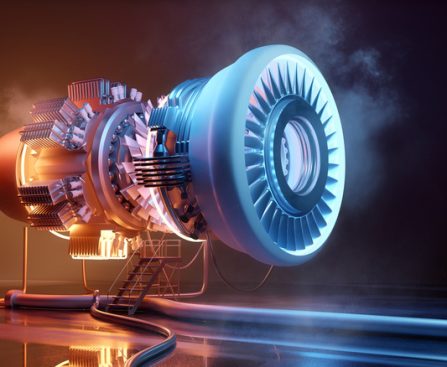
In the ceaseless quest for quicker, more efficient travel, engineers have been developing various innovative forms of propulsion. Among the most fascinating to arise in the past decade is the electric plasma jet engine, a battery-driven thruster that employs superheated plasma and compressed air to achieve speed outputs of up to 20 kilometers per second. If this technology could be refined, it would offer an unparalleled advantage for travel innovation, but a persistent obstacle remains: the cumbersome size and weight of the batteries required to operate the engines.

To produce the extreme heat and volume of plasma needed for a plasma jet engine to operate, vast amounts of power are necessary. For an aircraft fitted with these engines to ascend, it would also need to have an immense dedicated power source attached to it, which, if a suitable place could even be found for such a component, would render the aircraft far too heavy to consider taking off. Ongoing research continues to explore new, smaller battery technologies, but currently, plasma-powered travel is still elusive.

A conventional jet engine operates by combusting a mixture of compressed air and petroleum-derived jet fuel. A plasma jet engine adheres to the same fundamental principles, but with a vital distinction: it replaces jet fuel with plasma, generated from superheated air particles. With a similar level of explosive force, a plasma jet engine could theoretically produce the necessary thrust for takeoff.

The challenge lies in the fact that plasma only exists in extremely hot, highly charged conditions, such as the core of a collapsing star or near a lightning strike. As one might anticipate from such a comparison, considerable energy is required to make it functional. It’s not unfeasible with the appropriate setup; a group of researchers from Wuhan University successfully created a working plasma jet engine using a specially-designed quartz tube containing low-temperature plasma and a magnetron emitter, akin to an enhanced microwave.

Sadly, this process demands substantial, consistent power, and at least for now, there is no means to generate that level of power on an aircraft. Whether deploying several smaller plasma-based thrusters or a single large one, it would necessitate a power source of extraordinary size and weight. On a positive note, intriguing research in this arena is taking place in space, where a plasma engine could transport astronauts to Mars in merely 30 days. However, for those on Earth, it will probably take some time before a battery small and light enough to energize plasma jet engines is developed.