A day after Elon Musk lost his lawsuit that threatened OpenAI’s structure, leadership and finances, OpenAI is reportedly back to prepping for its IPO.


A day after Elon Musk lost his lawsuit that threatened OpenAI’s structure, leadership and finances, OpenAI is reportedly back to prepping for its IPO.
EV sales have surged worldwide in every region but the U.S., posing risks for legacy and startup automakers.

Airbnb will soon let you book luggage storage and car rental services on its app

Most AI agent frameworks are backend-focused and written in Python, which introduces complexity when building full-stack AI applications with JavaScript or TypeScript frontends. This gap makes it harder for frontend developers to prototype, integrate, and iterate on AI-powered features. Mastra is an open-source TypeScript framework focused on building AI agents and has primitives such as
The post Building AI Agents on the Frontend with Sam Bhagwat and Abhi Aiyer appeared first on Software Engineering Daily.

SED News is a monthly podcast from Software Engineering Daily where hosts Gregor Vand and Sean Falconer unpack the biggest stories shaping software engineering, Silicon Valley, and the broader tech industry. In this episode, they cover the $1.7B acquisition of Security AI, LangChainâs massive valuation, and the surprise $300M fundingâ round for Periodic Labs. They
The post SED News: AMDâs Big OpenAI Deal, Intelâs Struggles, and Appleâs AI Long Game appeared first on Software Engineering Daily.

The modern internet is a vast web of independent networks bound together by billions of routing decisions made every second. Itâs an architecture so reliable we mostly take it for granted, but behind the scenes it represents one of humanityâs greatest engineering achievements. Todayâs internet is also dramatically more complex and capable than in its
The post The Architecture of the Internet with Erik Seidel appeared first on Software Engineering Daily.
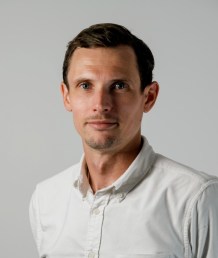
Byran Huang is a full stack developer who recently made headlines in the hacker space when he created the anyon_e, which is a highly integrated, open source laptop. The effort was a massive undertaking and showcased great design, hardware, and software. In this episode, Byran joins the show with Gregor Vand to talk about his
The post Building an Open-Source Laptop with Byran Huang appeared first on Software Engineering Daily.
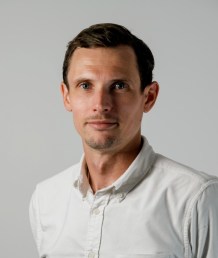
The Stack Overflow Developer Survey is an annual survey conducted by Stack Overflow that gathers comprehensive insights from developers around the world. It offers a valuable snapshot of the global developer community, covering a wide range of topics such as preferred programming languages, tools, and technologies. Jody Bailey is the Chief Product and Technology Officer
The post The 2025 Stack Overflow Developer Survey with Jody Bailey and Erin Yepis appeared first on Software Engineering Daily.

Radix UI is an open-source library of React components. Its âheadlessâ primitives handle the complex logic and accessibility concernsâlike dialogs, dropdowns, and tabsâwhile leaving styling completely up to the developer. The project emphasizes usability, accessibility, and composability and has become a vital part of modern web dev, in part because it forms the foundation of
The post Radix UI with Chance Strickland appeared first on Software Engineering Daily.
Simon Shuster is a journalist who has reported on Russia and Ukraine for over 15 years, most of that time as a staff correspondent for TIME Magazine. He was born in Moscow, and he and his family came to the United States as refugees from the Soviet Union when he was six years old. After
The post Drone Warfare in Ukraine with Simon Shuster appeared first on Software Engineering Daily.