Blog Posts

Blog Posts

Rare Nintendo System Showcased in Texas for Collectors

The National Videogame Museum has announced its acquisition of a much-talked-about and iconic piece of video game heritage — the Nintendo PlayStation console, also known as the Sony MSF-1. This is the earliest known model of the collaborative console and, at present, the only unit believed to exist. It’s a bulky, unappealing device that bears little resemblance to what one would anticipate from a contemporary console. To comprehend the background, we need to travel back in time.

The original Sony PlayStation transformed the gaming landscape in 1994-1995 and set the foundation for modern gaming. It was the first to offer real-time rendering of intricate 3D environments and transitioned from cartridge-based game distribution to compact discs. However, a lesser-known aspect of the console’s early concepts, or rather its initial design, is that it was a joint effort between Nintendo and Sony. At that time, the industry was largely controlled by Nintendo and Sega, making a collaboration with Nintendo quite logical. As part of this partnership, the Sony console under development would have accommodated both the company’s soon-to-be hallmark CDs and Nintendo-style cartridges, while significantly enhancing the SNES’s processing power. Nintendo eventually withdrew from the agreement, and Sony proceeded to create the console known today as the PlayStation.

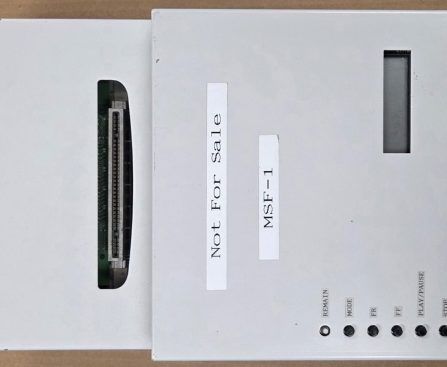
The Sony MSF-1 is an early prototype of the Super Nintendo CD add-on, which never reached final production nor underwent a more consumer-friendly design update. The National Videogame Museum now displays it at its facility in Texas, where those interested can view it up close. Additionally, the museum boasts the incredibly rare Atari Cosmos console, paired with a vast assortment of renowned video game displays.

The Sony MSF-1 is technically not a console

One of the first things you might notice, especially from the side angle, is that the MSF-1 oddly does not resemble a console at all, although it could align with the form and style of a traditional Nintendo console, like the SNES. This is due to the fact that it was initially intended to be an attachment. In the side view, you can spot a connector that likely would have plugged into the console’s cartridge port. On top of the MSF-1 is an additional cartridge port, alongside a separate compact disc slot at the front. This unit would have been referred to as the “Play Station,” or the SNES-CD.

Naturally, it boasts a completely different design than the Nintendo PlayStation Superdisc, or the original prototype held by one of the PlayStation co-creators, which was auctioned for $200,000. Consumer electronics often undergo numerous prototype stages to refine and test designs before their official launch. Interestingly, you can observe the various phases of this process in the early models of the Nintendo PlayStation, from the add-on for SNES to the operational console prototypes that are equally rare. It indeed raises questions about how circumstances might have unfolded if the Sony and Nintendo partnership had succeeded. The fallout of the collaboration is frequently cited as a catalyst for Norio Ohga, President of Sony, and Ken Kutaragi, Sony’s lead engineer, to significantly accelerate the development of the Sony PlayStation project. This is particularly noteworthy considering that the Sony PlayStation 5 has now sold over 50 million units and achieved tremendous success.
Amazon’s Prime Video Unveils Ad-Free Feature at Nearly Twice the Price – Updated Pricing Information

In 2023, Amazon revealed major modifications to its Prime Video service. Once free of ads for Prime members, the service will now display advertisements unless users choose an ad-free add-on. This add-on, initially set at $2.99 per month, will rise to $4.99 starting April 10. Amazon attributes the price increase to the necessity for considerable investment in premium features. The service will be renamed Prime Video Ultra, providing advantages such as enhanced offline downloads and the ability to stream on multiple devices simultaneously. However, standard Prime members will forfeit access to 4K streaming and Dolby Atmos support unless they switch to the Ultra plan. These changes indicate Amazon’s dedication to original content and AI-driven features, in line with current trends in the streaming landscape.

“Presenting the Nothing Headphone (a) featuring an Impressive Five-Day Battery Life”

Nothing Headphone (a) launches today featuring 135 hours of battery life and no touch controls.

Essential information

  • Nothing Headphone (a) is now available for purchase at nothing.tech, Amazon in the U.S., and Best Buy in Canada, with sales on TikTok Shop starting March 19.
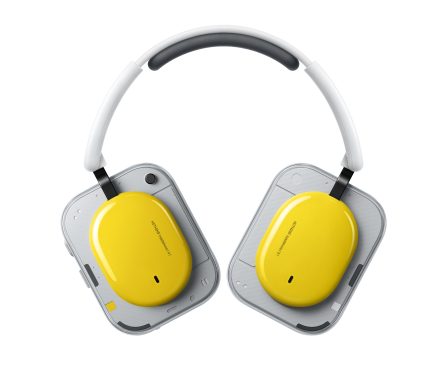
  • The over-ear headphones retail for $199 (£149 / €159) and are offered in black, white, and pink, with a special yellow edition launching on April 6.
  • The prominent feature is battery life, offering up to 135 hours of audio playback (approximately five days) with ANC turned off.

Following the debut of Nothing’s vibrant new over-ear headphones last week, they are now officially for sale on the company’s website and other major retailers.

You can purchase the headphones from nothing.tech, along with Amazon in the U.S. and Best Buy in Canada. TikTok Shop in the U.S. will begin offering them on March 19. The price for the Headphone (a) is $199 (£149 / €159).

Nothing is recognized for its striking designs, and the Headphone (a) adheres to this concept. The headphones are available in black, white, and pink, with a limited-edition yellow model set for release on April 6.

The design maintains Nothing’s signature aesthetic while incorporating brighter hues that distinguish themselves in a market typically dominated by darker and neutral tones.

The headset has a weight of 310 grams and includes breathable memory foam ear cushions for extended comfort during long listening periods. It also has an IP52 rating, providing protection against dust and light splashes.

Five days of playback on a single charge

Battery endurance is the key feature. Nothing claims the headphones can achieve up to 135 hours of playback with noise cancellation disabled, equating to around five days on one charge.

If the battery depletes, the quick-charge option comes to the rescue. A mere five minutes of charging provides roughly five hours of listening time, sufficient for a commute or workout.

Another notable design decision is that Nothing forwent the swipe touch panels commonly found on many popular headphones. Instead, the Headphone (a)

China’s AI Technology Improves Pancreatic Cancer Detection Beyond Conventional Medical Approaches

AI advancement capable of identifying endometrial cancer.

Scientists have introduced a novel system known as pancreatic cancer detection with artificial intelligence (PANDA) that can recognize pancreatic lesions utilizing standard CT imaging. In trials, the AI surpassed the typical radiologist, detecting cancer with superior sensitivity and exceptional accuracy. The researchers are optimistic that PANDA could eventually assist physicians in rapidly and effectively screening vast populations for pancreatic cancer.

The research was published in the Nature Medicine journal under the title “Large-scale pancreatic cancer detection via non-contrast CT and deep learning”. It assembled a collective of experts from institutions such as the Shanghai Institution of Pancreatic Disease, Hupan Laboratory, Johns Hopkins University, and others to enhance pancreatic cancer detection.

The AI investigation conducted in this research

Average Selling Price of iPads Hit $583 Last Quarter, According to Report

### Apple Mitigates Tablet Market Decline with Rise in iPad Average Selling Price

As per a recent study conducted by Counterpoint Research, worldwide tablet shipments saw a decrease of 3% quarter-over-quarter and 4% year-over-year in Q4 2025. This downturn signifies a shift into a more established phase of the tablet market. The fall follows a strong Q3 and a high benchmark from the previous year, when Q4 2024 shipments had surged nearly 8% year-over-year, propelled by prominent OEMs like Apple and Samsung resuming regular launch schedules, in addition to the swift growth of Chinese OEMs.

Diverging from the general market trend, Apple noted a notable rise in the average selling price of its iPad, climbing from $527 in Q3 2025 to $583 in Q4 2025. This roughly 10% surge helped cushion the broader market slowdown while solidifying Apple’s position in the premium tablet sector. The report implies that this commanding stance may offer Apple an edge over Android manufacturers, especially as increasing memory costs pressure lower and mid-tier devices.

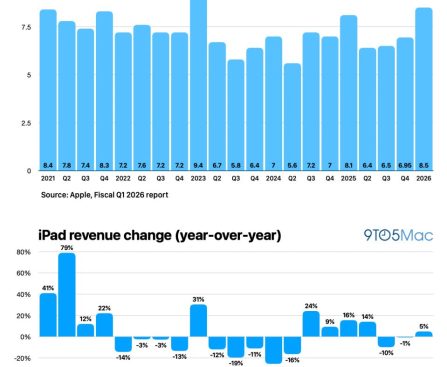
Apple’s Q1 2026 earnings, corresponding to sales for the quarter concluding December 27, revealed a 5% year-over-year increase in iPad revenue, amounting to $8.5 billion. During the post-earnings conference call, CEO Tim Cook and CFO Kevan Parekh pointed out that the quarter also set a record for iPad upgraders, with over 50% of iPad purchasers being first-time buyers of the product.

The Counterpoint report indicated that the tablet market remained in the mid-100-million-unit range for the entire year, indicating a transition towards a more stable, replacement-driven trajectory. Additionally, tablet shipments are anticipated to expand through 2029, with year-over-year growth projected to stay positive until 2028, followed by a slight decline in 2029 and 2030.

For more detailed insights, you can access the full report [here](https://counterpointresearch.com/en/insights/global-tablet-shipments-decline-3-percent-qoq-in-q4-2025).