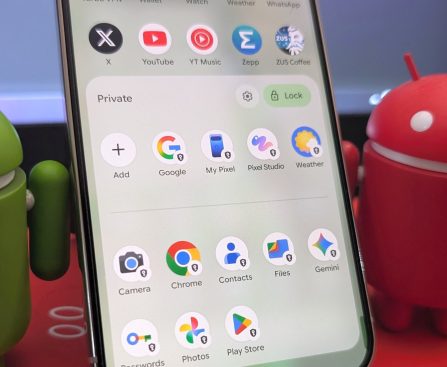
Find the best robot vacuum deal. Save 40% on the Mova Z60 robot vacuum at Amazon.
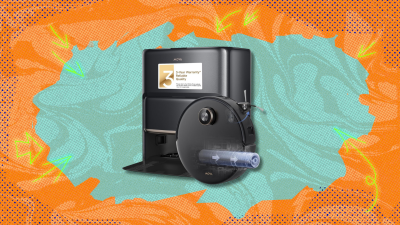

Find the best robot vacuum deal. Save 40% on the Mova Z60 robot vacuum at Amazon.
See the Moon phase expected for April 9, 2026 as well as when the next Full Moon is expected.

Donald Trump has announced a “double-sided ceasefire” with Iran, and Stephen Colbert had thoughts on the term during “The Late Show.”

As of April 9, the Roborock Q10 S5+ robot vacuum and mop has dropped to $279.99 at Amazon, 44% off its list price of $499.99.
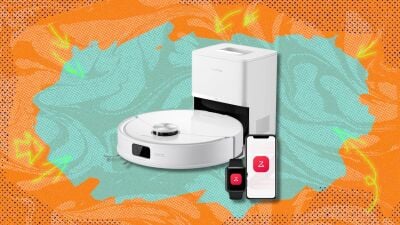
NASA has released a tracker website and app for people to follow the Artemis II mission, a 10-day test flight around the moon and back.
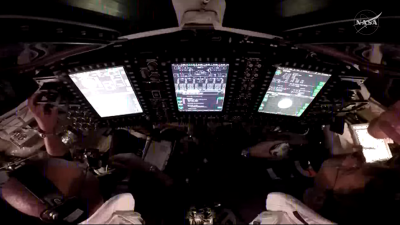
Answers to each clue for the April 9, 2026 edition of NYT’s The Mini crossword puzzle.

Connections: Sports Edition is a New York Times word game about finding common sports threads between words. How to solve the day’s puzzle.
CNN reports that the National Supercomputing Center (NSCC) in Tianjin, which is operated by the state, is thought to have been compromised by a group known as FlamingChina, who shared a sample of the pilfered data on Telegram on February 6. This information has not been independently corroborated by journalists or acknowledged by the Chinese authorities, yet cybersecurity specialists who have examined the samples—which feature documents labeled Secret and missile designs—indicate they seem authentic.
FlamingChina asserts that the data encompasses over 10 petabytes (equivalent to 10,000 TB) of “research spanning various domains including aerospace engineering, military studies, bioinformatics, fusion simulation, and more” from entities such as the Aviation Industry Corporation of China, the Commercial Aircraft Corporation of China, and the National University of Defense Technology. Specialists note that the hacker is pricing portions of the data at thousands of dollars and full access at hundreds of thousands, all to be transacted in cryptocurrency.
Considering the nature of the information involved, the stolen data is likely to attract the attention of China’s rivals. As cybersecurity expert Marc Hofer highlighted, only government intelligence agencies are likely equipped with the resources necessary to sift through such a high volume of information to uncover valuable secrets. Conversely, cybersecurity consultant Dakota Cary raised doubts about the data’s worth, suggesting that interested governments might already possess the intelligence in question.

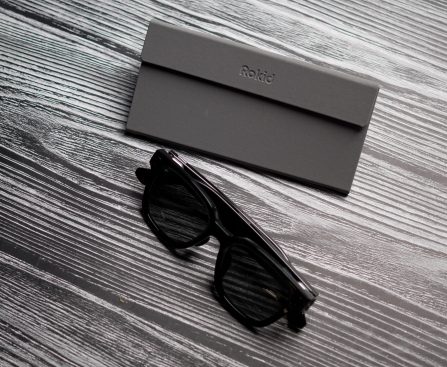
Rokid is making notable advancements in the smart glasses market by establishing a robust software ecosystem around its offerings. The company’s AI Glasses Style, which I’ve had the chance to utilize thoroughly, serves as an economical counterpart to Meta’s Ray-Ban glasses. A standout aspect of these glasses is their connection with Gemini, a strategy that distinguishes Rokid from its rivals. This connection enables users to choose from different AI models, fostering an open ecosystem grounded in global standards.
Degang Xu, Rokid’s product lead, highlighted the significance of this adaptability, indicating that it gives users the power to select their chosen AI model. The brand’s dedication to an open ecosystem is clear in its initiatives to adopt global standards, enhancing its products’ versatility and user-friendliness.
Although the AI Glasses Style presents great value, they are currently available in just one variant, unlike the broader selections from Meta. Xu noted that there are plans to broaden the variety of styles and colors. The choice to forgo a charging case was made to keep the pricing around $300, although this decision has sparked debate due to the inconvenience compared to competitors such as Meta Ray-Bans.
Rokid is also investigating cutting-edge features like gesture controls and a possible QR code payment system, which could improve the capabilities of future products. Furthermore, the company is developing native music integration, enabling users to manage services like Spotify directly from their glasses.
Battery life continues to be a hurdle in the smart glasses industry. Rokid is contemplating the addition of a low-power chipset to manage basic functions, akin to smartwatches, to prolong battery performance. Nevertheless, the practicality of this strategy remains uncertain because of the limited space within smart glasses.
In summary, Rokid’s emphasis on software distinction is a promising approach in a landscape where hardware functionalities are increasingly alike. By improving the software experience, Rokid seeks to provide a competitive advantage over its peers, offering consumers appealing alternatives to existing products from brands like Meta.
The April update provides a crucial stability enhancement for Pixel phones.
The thrill of a new operating system can quickly diminish when your preferred app fails or your settings menu disappears. If Android 16 has been causing you issues, Google is providing some support with the April 2026 security update for Pixel devices.
Essentially, this update feels like Google correcting its own mistakes after submitting it prematurely.
While new features generally draw the spotlight, this update is centered on upkeep. If your Pixel has been misbehaving recently, these fixes are designed with you in mind.
update primarily targets app reliability. Users with almost any recent Pixel, from the 6 series to the latest Pixel 10a, have encountered crashes involving banking and third-party applications. This patch includes a solution to help mitigate those crashes.
Article continues below