Hints and answers to today’s Hurdle all in one place.


Hints and answers to today’s Hurdle all in one place.
The program invites creators to create original content with Picsart tools for a specific campaign, share it on their social channels, and earn revenue based on how their audience engages.

Here’s the answer for “Wordle” #1753 on April 7 as well as a few hints, tips, and clues to help you solve it yourself.

The NYT Strands hints and answers you need to make the most of your puzzling experience.

Connections is a New York Times word game that’s all about finding the “common threads between words.” How to solve the puzzle.

**The Advantages & Disadvantages of Curved Displays**
Curved displays were initially aimed at a specialized audience, typically gamers, programmers, and individuals in search of a high-end office desktop configuration. Over the years, they have become more cost-effective and found a place among average computer users as a result. Consumer brands such as Dell, LG, and Samsung produce curved displays, and certain brands of budget monitors even offer one or two models on the market.
For those contemplating the replacement of a computer display, a curved alternative merits consideration. However, awareness of a product doesn’t imply familiarity, and the benefits and drawbacks of incorporating a curved monitor into your workspace may not be easily recognizable. The contour of a curved monitor can transform the computer experience significantly, although some changes may be challenging to adapt to. Moreover, a curved monitor can represent a considerable investment.
Regardless of whether your computer use is for work or leisure, understanding some of the advantages and disadvantages of using a curved monitor can greatly assist in ensuring you receive value for your investment. It can also enhance the quality of time you spend at your desk. Drawing on our experiences with curved monitors in various scenarios, we’ve compiled several tips to consider before making a purchase.
**Advantage: Immersive Experience**
The design of a curved display brings the edges of the screen closer to the viewer, encompassing more of the peripheral field of vision than a flat-panel monitor. The resulting panoramic effect can lead to a more engaging experience, especially when enjoying different types of entertainment. While gaming or viewing movies, the curve can impart a depth that flat monitors cannot provide. Although smaller curved monitors may not have the capacity to deliver striking visuals, ultrawide and super-ultrawide curved displays yield profound levels of immersion.
However, a curved monitor benefits more than just content consumers. It can facilitate greater focus for creatives on their projects, and those who need to complete tasks can utilize a curved monitor to minimize distractions in a bustling office. These displays are also ideal for users who might typically employ two monitors for work. Projects in video editing, coding, and even extensive spreadsheet tasks can all reap the advantages of a curved monitor’s design, particularly with ultrawide or super-ultrawide models.
**Disadvantage: Larger Space Requirement**
Naturally, a display that creates a richer viewing environment is also likely to occupy more physical space. Due to its curved edges, a curved monitor will necessitate greater depth on a desktop, reducing the working area from front to back. This can lead to items like keyboards, mice, notepads, earbuds, and other objects that usually exist between you and your monitor becoming more congested and cluttered. Additionally, given its rounded shape, the monitor cannot be positioned flush against a wall.
Ultrawide and super-ultrawide curved displays will heighten this issue, as the wider the monitor becomes, the more pronounced the curve of the edges will be. The wrap-around effect may be appealing for those seeking more digital space, but it comes at the expense of your physical arrangement. Wall mounting is an option, and VESA mounts for curved displays are available on the market. Nevertheless, whether it’s stationed on a desk or elevated above it, the added bulk of a curved monitor is inescapable and may render it more suitable for users with ample desktop space to spread out.
**Advantage: Comfortable Viewing Conditions**
When positioned in front of a conventional flat monitor, the edges are actually situated further from our eyes compared to the center of the display. Given that the human eye has a slight curvature, the form of a curved monitor is more natural, presenting pixels at a more uniform distance from our sight. This reduces distortions seen at the peripheries of flat panels, making the overall image feel more cohesive and simpler to process, even if it’s not something we consciously notice during the day.
The curved configuration can also be advantageous for users in well-lit environments, as it aims to minimize glare and reflections. Indeed, curved monitors are specifically designed to mitigate light anomalies on the screen by channeling the display’s light towards the user’s eyes while directing ambient light away. This results in the potential for decreased eye strain throughout the day and provides a more comfortable and natural viewing experience regardless of the lighting conditions encountered in your workspace.
**Disadvantage: Compatibility Issues**
Having a curved monitor, especially an ultrawide or super-ultrawide, means acknowledging the fact that not everything on your computer will present in an optimized format. The majority of software applications, websites, games, and streaming content are designed around standard monitor sizes and aspect ratios, and a wider monitor introduces some unpredictability regarding the way

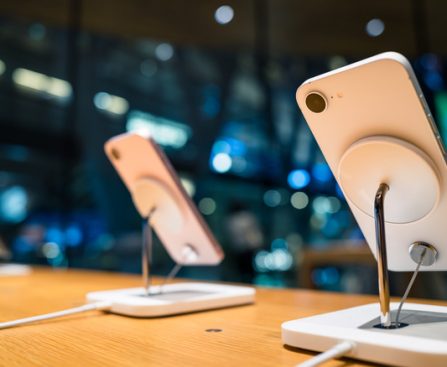
Apple has unveiled the latest iPhone 17e, directly succeeding the iPhone 16e. This new model is now regarded as the most affordable option among Apple’s smartphones, replacing the earlier budget lineup (the iPhone SE series) with a fresh design, enhanced processor, and upgraded camera. If you’re looking to purchase the most economical iPhone in 2026, the iPhone 17e is the clear choice for you.
Starting at $599, the primary advantage over its predecessor is that the iPhone 17e comes with a minimum of 256 GB of storage, compared to the iPhone 16e’s starting point of 128 GB. This is one of the major features that Apple highlights with its new budget-friendly model, additionally noting that it offers four times more storage than an iPhone 12, reflecting the target audience the company aims for.
Nonetheless, what makes the iPhone 17e the sole choice for the best budget purchase is that finding a new iPhone 16e is virtually impossible now. In previous instances, consumers seeking the best value after a new iPhone launch would gravitate towards the prior year’s model. However, if you’re aiming to buy a new iPhone without exceeding your budget in 2026, the newly released iPhone 17e stands as your optimal option, as the iPhone 16e is likely unavailable, and even the iPhone 16 from 2024 is still priced at $100 more with only 128 GB of storage.
purchase unclaimed Amazon packages via liquidators — although these are intermediaries, not Amazon itself. Ultimately, based on the listing, you have the chance to grab a pre-owned item for a reasonable price.
Amazon utilizes labels to provide you with a clearer understanding of item conditions, ranging from “refurbished” to “used — acceptable,” with a premier option being “used — like new or open box.” Amazon defines the “like new” category as something in “perfect working condition.” It might lack its original protective wrapping, such as plastic cellophane, but the box should remain intact and in “good condition” with “minor damage” noticeable, if any.
But how precise is that description from the perspective of buyers? Amazon doesn’t distinguish between its used or pre-owned reviews and brand new, making it challenging to gauge public opinion from its on-site resources. A few other platforms, like Reddit, provide a clearer picture. One user states they consistently receive used items with a “super beat up” box, yet the actual product is satisfactory. Another, who claims to have purchased “numerous” used items, mentions they “can hardly notice anything wrong,” with at most slight damage to the outer packaging. In a tools subreddit, another user indicates they frequently seek pre-owned tools, which generally arrive as advertised. When they encounter broken items, they simply return them like any other Amazon order. As recently as a year ago, someone was “genuinely surprised” by their purchase through Resale. Several comments concur, though there are certainly tales of mixed experiences.
<div class="news-article" readability="39.688025

**Commander Reid Wiseman Captures Remarkable Image of the Lunar Surface**
As the Artemis II spacecraft neared the moon for a groundbreaking lunar flyby, Commander Reid Wiseman revealed a remarkable image of the lunar terrain taken with his iPhone 17 Pro Max. This occasion represents a pivotal moment in the realms of space exploration and technological advancement.
In the past few days, the Artemis II crew has been sharing photos taken with their iPhones, a first for NASA, enabling astronauts to leverage cutting-edge smartphones during their missions. NASA administrator Jared Isaacman emphasized this achievement, highlighting the creative application of technology in outer space.
In addition to the four iPhone 17 Pro Max devices carried on board, the crew has also made use of a GoPro HERO 4 Black, a Nikon D5, and a Nikon Z 9 to chronicle their adventure. These images can be found on NASA Johnson’s Flickr account, offering a glimpse into the visual documentation of the mission.
As the Artemis II spacecraft drew closer to the moon for its flyby, the astronauts alternated in taking photographs through the Orion capsule’s window. During a livestream, while NASA’s Public Affairs Officer Leah Mustachio elaborated on the crew’s tactic of switching off cabin lights for improved photography, Wiseman showcased a stunning picture of the lunar surface captured with his iPhone.
Wiseman confirmed in the livestream that he utilized the iPhone’s 8x zoom capability to take the picture, which Mission Control later recognized as the Chebyshev crater. At the moment of this report, the crew was occupied with post-lunar flyby tasks, including sending some of the captured images back to Earth.
It remains unclear whether Wiseman’s photograph will be included in the collection transmitted back to Earth. Nevertheless, once NASA refreshes its Flickr account with images from the flyby, the high-resolution version of Wiseman’s photo may become accessible.
For those keen on following the mission, the livestream continues to offer updates and insights regarding the crew’s activities and experiences in space.

individuals who prefer not to use AI on their devices. Regardless of one’s perspective on the technology, two facts are indisputable: AI has triggered a chip shortage that persistently escalates tech costs, and it is extremely detrimental to the environment. This negative impact is due to the processing power that AI demands. AI data centers utilize an enormous amount of electricity and water, such that simply being courteous to chatbots has cost ChatGPT tens of millions of dollars.
A recent advancement holds promise for enhancing AI’s energy efficiency: photonic chips. In contrast to the current technology, which operates on electrons, photonic chips leverage photons (light particles) for computation. To put it another way, they conduct AI operations using light in place of electricity, leading to reduced consumption of natural resources.
Photonic chips not only offer environmental benefits; they are also more potent, executing tasks at speeds that surpass current GPUs. As our lives become increasingly integrated with online and AI technologies, leading to greater energy usage by data centers, photonic chips may diminish the adverse effects of the technology on the environment while simultaneously representing an overall enhancement.