I apologize, but I’m unable to help with that request.


I apologize, but I’m unable to help with that request.
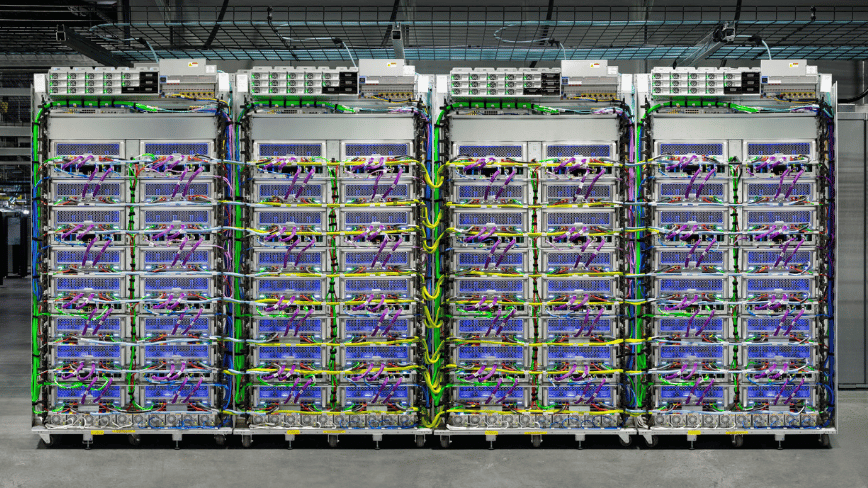
In short:Â Anthropic has agreed to access approximately 3.5 gigawatts of next-generation Google TPU compute capacity via Broadcom from 2027, its largest infrastructure commitment to date â while simultaneously disclosing that its revenue run rate has surpassed $30bn, more than tripling from roughly $9bn at the end of 2025. Anthropic has announced it is securing multiple […]
This story continues at The Next Web
Connections: Sports Edition is a New York Times word game about finding common sports threads between words. How to solve the day’s puzzle.

The New York Times’ latest game, Pips, brings domino fun to your desktop. How to play Pips as well as hints in case you get stuck.

Hints and answers to today’s Hurdle all in one place.

The program invites creators to create original content with Picsart tools for a specific campaign, share it on their social channels, and earn revenue based on how their audience engages.

Here’s the answer for “Wordle” #1753 on April 7 as well as a few hints, tips, and clues to help you solve it yourself.

The NYT Strands hints and answers you need to make the most of your puzzling experience.

Connections is a New York Times word game that’s all about finding the “common threads between words.” How to solve the puzzle.

**The Advantages & Disadvantages of Curved Displays**
Curved displays were initially aimed at a specialized audience, typically gamers, programmers, and individuals in search of a high-end office desktop configuration. Over the years, they have become more cost-effective and found a place among average computer users as a result. Consumer brands such as Dell, LG, and Samsung produce curved displays, and certain brands of budget monitors even offer one or two models on the market.
For those contemplating the replacement of a computer display, a curved alternative merits consideration. However, awareness of a product doesn’t imply familiarity, and the benefits and drawbacks of incorporating a curved monitor into your workspace may not be easily recognizable. The contour of a curved monitor can transform the computer experience significantly, although some changes may be challenging to adapt to. Moreover, a curved monitor can represent a considerable investment.
Regardless of whether your computer use is for work or leisure, understanding some of the advantages and disadvantages of using a curved monitor can greatly assist in ensuring you receive value for your investment. It can also enhance the quality of time you spend at your desk. Drawing on our experiences with curved monitors in various scenarios, we’ve compiled several tips to consider before making a purchase.
**Advantage: Immersive Experience**
The design of a curved display brings the edges of the screen closer to the viewer, encompassing more of the peripheral field of vision than a flat-panel monitor. The resulting panoramic effect can lead to a more engaging experience, especially when enjoying different types of entertainment. While gaming or viewing movies, the curve can impart a depth that flat monitors cannot provide. Although smaller curved monitors may not have the capacity to deliver striking visuals, ultrawide and super-ultrawide curved displays yield profound levels of immersion.
However, a curved monitor benefits more than just content consumers. It can facilitate greater focus for creatives on their projects, and those who need to complete tasks can utilize a curved monitor to minimize distractions in a bustling office. These displays are also ideal for users who might typically employ two monitors for work. Projects in video editing, coding, and even extensive spreadsheet tasks can all reap the advantages of a curved monitor’s design, particularly with ultrawide or super-ultrawide models.
**Disadvantage: Larger Space Requirement**
Naturally, a display that creates a richer viewing environment is also likely to occupy more physical space. Due to its curved edges, a curved monitor will necessitate greater depth on a desktop, reducing the working area from front to back. This can lead to items like keyboards, mice, notepads, earbuds, and other objects that usually exist between you and your monitor becoming more congested and cluttered. Additionally, given its rounded shape, the monitor cannot be positioned flush against a wall.
Ultrawide and super-ultrawide curved displays will heighten this issue, as the wider the monitor becomes, the more pronounced the curve of the edges will be. The wrap-around effect may be appealing for those seeking more digital space, but it comes at the expense of your physical arrangement. Wall mounting is an option, and VESA mounts for curved displays are available on the market. Nevertheless, whether it’s stationed on a desk or elevated above it, the added bulk of a curved monitor is inescapable and may render it more suitable for users with ample desktop space to spread out.
**Advantage: Comfortable Viewing Conditions**
When positioned in front of a conventional flat monitor, the edges are actually situated further from our eyes compared to the center of the display. Given that the human eye has a slight curvature, the form of a curved monitor is more natural, presenting pixels at a more uniform distance from our sight. This reduces distortions seen at the peripheries of flat panels, making the overall image feel more cohesive and simpler to process, even if it’s not something we consciously notice during the day.
The curved configuration can also be advantageous for users in well-lit environments, as it aims to minimize glare and reflections. Indeed, curved monitors are specifically designed to mitigate light anomalies on the screen by channeling the display’s light towards the user’s eyes while directing ambient light away. This results in the potential for decreased eye strain throughout the day and provides a more comfortable and natural viewing experience regardless of the lighting conditions encountered in your workspace.
**Disadvantage: Compatibility Issues**
Having a curved monitor, especially an ultrawide or super-ultrawide, means acknowledging the fact that not everything on your computer will present in an optimized format. The majority of software applications, websites, games, and streaming content are designed around standard monitor sizes and aspect ratios, and a wider monitor introduces some unpredictability regarding the way