Blog

Grasping the Occurrence of a Supermoon

A supermoon is a breathtaking lunar spectacle that graces the sky every few months, and it’s among my top natural wonders. In basic terms, a supermoon occurs when the full moon aligns with its nearest position to Earth in its orbit — a phase known to astronomers as perigee. During this event, the moon can present itself up to 14% bigger and 30% brighter than when it’s at its farthest distance (apogee). To the unaided eye, that variation may not seem significant, but it’s sufficient to make the moon look incredibly vivid against the night sky. Supermoons are not particularly uncommon, yet they are still events to look out for. They usually attract photographers, stargazers, and anyone who enjoys witnessing the universe at its most vibrant.

Depending on your location, they can even transform your nighttime scenery to resemble daylight. Supermoons emit a natural luminosity that’s perfect for a quick photo opportunity or an evening stroll. Astronomers generally categorize several full moons each year as “super,” but just one or two are particularly close to Earth. While they do not induce remarkable physical effects, they act as a reminder of how dynamic and vibrant our solar system truly is. Therefore, the next time you hear about a supermoon brightening the sky, it’s not merely sensationalism; it’s the cosmos offering you a front-row view to one of the most brilliant lunar displays.

The optimal way to experience a supermoon does not necessitate a special telescope (the James Webb Space Telescope would be excessive) or any specific equipment. You simply need to be in a place with clear skies at the right moment. Since a supermoon is fundamentally a full moon at its closest point to Earth, it rises around sunset and sets around sunrise, providing ample time to appreciate the lunar spectacle. The prime moment to observe a supermoon is just after moonrise, when it is still low on the horizon. That’s when the “moon illusion” comes into play, making it appear even larger and more striking as it floats just above the landscape. If you’re aiming to capture a photo, seek out a location without light pollution hindering the skies, like a park, a beach, or a hill on the outskirts of the city. I reside in the Los Angeles area and enjoy venturing to the desert to photograph the supermoon. The darker your environment, the more radiant and sharp the moon will seem.

You can utilize a smartphone camera, but switch to night mode or employ a tripod to prevent motion blur for optimal results. If you have binoculars or a zoom lens, you’ll be able to see surface features like craters and the lunar maria (the darker plains) up close. The weather significantly influences the ability to view a supermoon. Check your local forecast or an astronomy application for viewing conditions, as even a thin veil of clouds can diminish the effect. If you want to delve deeper, set up an Astroberry server with an extra Raspberry Pi. Ultimately, witnessing a supermoon is all about timing and patience. When everything comes together, it ranks as one of my favorite awe-inspiring celestial events you can easily observe from your backyard. The next supermoon will rise on December 4th, so prepare yourself!

Read More

Samsung Hints at Exynos 2600: An Enhanced Chip for Upcoming Galaxy Gadgets

The excitement around Samsung’s Exynos 2600 chip is escalating as the company starts to hint at its newest internal creation. In a concise 30-second YouTube teaser, Samsung suggests notable advancements, asserting that the chip has been “refined” and “optimized” in response to consumer insights. This initiative seems aimed at bolstering its competitiveness against major players like Qualcomm and Apple.

Although specific information is limited, speculation indicates that the Exynos 2600 will provide improved performance, potentially positioning it as a strong rival in the smartphone arena. Rumors suggest the chip is manufactured using Samsung’s 2nm technology, a leap forward compared to TSMC’s 3nm process for Qualcomm’s Snapdragon. Furthermore, Samsung is allegedly concentrating on incorporating sophisticated AI functionalities, with the goal of outpacing Apple’s capabilities.

The Exynos 2600 is anticipated to launch alongside the forthcoming Galaxy S26 series, with possible price reductions in select areas. Nonetheless, apprehensions persist regarding its genuine performance potential, particularly considering previous difficulties encountered with the Exynos 2500 series. Regardless of these doubts, Samsung’s new chip might represent a crucial advancement in its continuous endeavor to strengthen its standing in the worldwide smartphone industry.

Read More
Australian Adolescents Losing YouTube Access Because of New Age Limit Legislation

Teens in Australia are facing restrictions on their YouTube accounts due to a recent policy change. Beginning December 10, YouTube will automatically sign out all users under 16 in Australia to adhere to the new Social Media Minimum Age Act. As a result, teenagers will lose access to all account functionalities, such as subscriptions, commenting, uploading, and parental controls. Google has cautioned that this prohibition could compromise teen safety, while the Australian government emphasizes that it is YouTube’s duty to resolve these issues.

Following talks between representatives in Silicon Valley and Canberra, YouTube announced its decision to comply with Australia’s social media restrictions on teens. Initially aimed at social media platforms, the ban has now expanded to include YouTube, despite Google’s contention that YouTube functions differently than platforms like Facebook and Instagram. This decision has taken many parents, teens, and creators by surprise, as YouTube has served as a source of entertainment and education for numerous Australians.

Teens will be relegated to a restricted YouTube experience where they can view videos but will be unable to interact with the platform through likes, subscriptions, comments, or uploads. Parental controls will not be accessible since YouTube’s supervision features require users to be signed in. Young creators will not have access to their dashboards and will be unable to manage or update their channels until they reach 16. YouTube has stated that data will remain intact but will be on hold until users can regain access.

Google claims that the ban poses safety risks, as it eliminates safety features developed over time by compelling children to use YouTube without an account. Rachel Lord, a senior public policy manager at Google, described the regulation as “hasty” and cautioned that it will render Australian youth less secure on YouTube. Nonetheless, the Australian government, represented by Communications Minister Anika Wells, argues that if YouTube acknowledges its platform is unsafe for users who are signed out, it is a concern that YouTube must tackle.

Read More
Apple’s Head of Design Alan Dye Departs for Meta

**Alan Dye Exits Apple for Meta: A Change in Design Leadership**

Alan Dye, who has been the vice president of Human Interface Design at Apple since 2015, is preparing to leave the company to join Meta. This transition aligns with Meta’s approach to strengthening its portfolio of AI-enabled consumer devices, according to Bloomberg. Dye’s official start at Meta is set for December 31, 2025.

Steping into Dye’s position at Apple will be Stephen Lemay, a veteran in design with 26 years of experience at the company. Tim Cook, Apple’s CEO, voiced his confidence in Lemay’s skills, emphasizing his substantial contributions to Apple’s design heritage since 1999. Cook remarked, “Design is essential to our identity at Apple, and today, we have an exceptional design team working on the most groundbreaking product lineup in our history.”

Dye’s exit occurs as Apple’s executive leadership had been expecting modifications in its design leadership. At Meta, he will lead a new design studio concentrating on the amalgamation of hardware, software, and AI within the company’s product spectrum. Moreover, Billy Sorrentino, a design executive at Apple, is also departing to join Meta, reflecting a wider trend of talent transitioning from Apple to rival companies.

Throughout his time at Apple, Dye was crucial in several major projects, especially following the departure of famed designer Jony Ive in 2019. His latest accomplishments include overseeing the significant Liquid Glass redesign in iOS 26 and introducing a new design language at the Worldwide Developers Conference (WWDC) in June. He also played a key role in the design of the Apple Vision Pro and visionOS.

This leadership change at Apple is part of a broader series of shifts within the organization. Recently, John Giannandrea, the senior vice president for Machine Learning and AI Strategy, declared his retirement, effective spring 2026. Other significant exits include COO Jeff Williams and CFO Luca Maestri, further indicating a transitional period for Apple. There is also speculation regarding Tim Cook’s possible departure as CEO, which may happen as early as next year.

The departure of crucial personnel isn’t confined to Apple alone; Jony Ive’s design agency, LoveFrom, and OpenAI have also recruited former Apple designers, collaborating on AI-driven hardware projects under the brand io.

As Apple experiences this transition phase, the effects of these leadership changes on its design ideology and product advancement remain to be observed.

Read More
Apple Broadens Health Capabilities of Apple Watch and AirPods to More Regions

### Apple’s Global Deployment of Health and Assistive Features Proceeds

Apple is broadening its health and assistive capabilities worldwide, as noted by MacRumors. The newest enhancements consist of hypertension alerts for Apple Watch users in the United Arab Emirates, Saudi Arabia, and Vietnam. This functionality employs 30-day heart data gathered by the Apple Watch to notify users regarding possible hypertension concerns. Although it might not capture every case of hypertension, Apple projects that more than 1 million users will gain from this feature during its inaugural year of release.

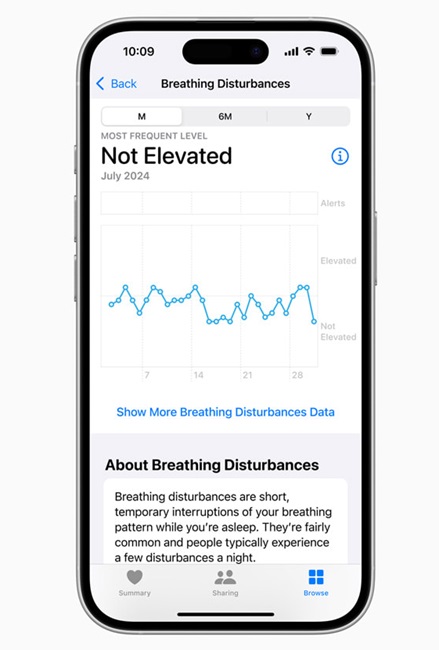
Alongside hypertension alerts, Apple is launching Sleep Apnea notifications in Colombia. This functionality observes breathing irregularities during sleep and alerts users if there are recurrent indications of moderate to severe sleep apnea.

Additionally, Apple is unveiling numerous assistive features for AirPods in various European nations, including the UK, Germany, Austria, Poland, Switzerland, Finland, Norway, Ireland, and Denmark. These features include a Hearing Test and a Hearing Aid with automatic Conversation Boost, designed to assist users in recognizing hearing challenges and refining their AirPods settings to suit personal requirements.

For further details about these features, you can visit Apple’s support page.

Read More
ExpressVPN Introduces Native App for Mac Users

### ExpressVPN Announcement: Upgraded Mac App and New iOS Feature

ExpressVPN has recently unveiled major updates, featuring a native Mac application alongside a new connectivity feature for iOS users. This update signifies a considerable enhancement in user experience on both platforms.

#### Improved on the Mac, Quicker on iOS

For years, the Mac application of ExpressVPN was mainly a modified iteration of its iOS version. However, the recent update has introduced a fully native Mac app crafted using Apple’s Catalyst framework. This shift allows for enhanced integration with macOS, leading to multiple upgrades:

– **Enhanced Visuals**: The updated app provides smoother graphics and a more appealing interface.
– **Fluid Multitasking**: Users will experience more fluidity in window resizing and multitasking, facilitating easier task switching.
– **Refined Experience**: Minor tweaks lead to a more polished and user-friendly experience, whether users are changing servers or operating the app in the background.

Alongside the Mac app, ExpressVPN has updated its iOS application with a feature named “Fastest Location.” This new capability enables users to connect to the optimal server with just a tap, based on real-time evaluations of speed, latency, and server proximity.

The Fastest Location feature is introduced with a redesign of the app’s Home Screen, improving usability and accessibility for users. By assessing various criteria, the app identifies the best server option at any time, ensuring a smooth and effective connection.

For further insights on these updates, users can refer to the official ExpressVPN blog or look at coverage from MacMagazine.

#### Accessory Offers on Amazon

Alongside the software enhancements, users might also discover various accessory offers on Amazon, enriching their overall VPN service experience.

For more information and to explore the newest features, check out the ExpressVPN blog.

Read More

What is Bicentennial Man centered around?

Comprehending Google’s Gemini AI Image Editor: Characteristics, Application, and Advantages of the ‘Nano Banana’ Alias

Welcome to Tech Talk, a weekly column exploring the devices we use and their functionalities. We strive to keep things straightforward so that everyone can grasp how and why the gadget in your hands operates the way it does. Occasionally, things may get a bit technical, as technology can often be complex and detailed. However, we can simplify it together!

You might not be interested in how all of this works, and that’s perfectly fine. Your tech gadgets are meant to be personal and enjoyable. But who knows, you might just pick up a new insight…

What is Nano Banana?

Nano Banana serves as a playful codename (similar to Android Ice Cream or Android Oreo) for Google Gemini’s imaging model, officially referred to as Gemini 2.5 (or Gemini 3 for the Pro version) Flash Image. It’s also a topic of frequent discussion online, with numerous blog posts mentioning it, as if everyone is already familiar with it. Now you are too.

Yet, this is one of those instances where knowing what it is isn’t the crucial aspect. It’s not the quirky name that people adore; it’s the capabilities it offers, how effortlessly you can utilize it, and the fact that the free version is impressive.

It surpasses most image generation AI tools due to its reliability. By that, I mean you can make numerous edits, and the elements you don’t modify retain their original appearance. You can tweak your images to enhance them, transform yourself into a robot pirate, or convert your dog into a pet chicken made out of lemon peels. It’s quite extraordinary or modest, depending on your preferences. Here’s how to embark on your journey.

How to use Nano Banana

The best aspect is its incredible ease of use. You can access the Google Gemini app on your smartphone, use Google Messages, or head to Gemini online, with consistent results across platforms. For my example, I’ll reference the web version since I’m currently at a computer typing this. The process remains identical, though.

I navigated to Gemini online and encountered a text input field. Just beneath that box was a small button labeled “Tools,” which I clicked and selected “Create Images” to kick things off. Then my “creative” instincts kicked in.

“Generate an image of a cat bowling. Illustrate it as a comic with the cat standing on two legs.” I requested. And it complied. Pro Tip: Being extremely precise in your prompt can save you a significant amount of time.

The output was essentially what I anticipated, and the entire process took approximately 10 seconds. From there, I had the option to save or share the image and provide feedback on Gemini’s performance.

You can engage in this kind of whimsical activity with most image generators. However, where Nano Banana truly excels is in its consistency. I proceeded to make a series of playful requests, such as dressing the cat in a cowboy hat and a green tuxedo, having the bowling ball radiate like an alien orb, and transforming the bowling pins into fried chicken legs. Nano Banana readily accommodated these modifications while the cat remained virtually unchanged from the original, though more cartoonish and vibrant since I specified that as well.

For the grand finale, I instructed Gemini to “Turn the cat into a 1/7 scale collectible figurine on a desk alongside toy packaging.” You’ve likely seen these images circulating on social media with that exact prompt. I believe the outcome is self-evident here, and I find it delightful!

Keep in mind, all of this began with my request for an image of a cat bowling.

I utilized Gemini to create the cat image, but you’re free to use virtually any picture of your choice. All of this can be done with a photo of yourself or your younger sibling. Gemini adheres to its guidelines to avoid generating anything deemed inappropriate, yet the same playful antics can still take place.

More crucially, you can leverage Nano Banana to make adjustments to your favorite photo. It can amplify colors, modify lighting and tone, and even dress you in a green tuxedo, all while appearing very realistic and natural. This is why it contains metadata stating it was created with AI; it can easily deceive anyone.

Nano Banana Pro elevates the experience further. A subscription to Gemini Pro is required, granting you access to the more advanced Gemini 3.0 Flash Image model. This allows your images to be converted into various languages, connects with Google Search for context-aware visuals, and permits the addition of up to 14 reference images for the final result. All fascinating features, but you might not find any of it essential enough to warrant payment.

You should definitely try Nano Banana if you haven’t yet. Now you know how to begin, and I assure you that you’ll have a great time, even if you’re not creating collectibles of yourself to showcase on Instagram. Those are incredibly cool.

Read More
Alexa Plus Functionality Enables Scene Skipping in Films on Fire TV

For the cinephiles.

(Image credit: Amazon)

Essential information

  • Amazon has unveiled a fresh Alexa Plus function for its Fire TVs, referred to as “jump to scene.”
  • This function allows users to describe a scene from a movie that they want the AI to generate by utilizing natural language and a host of descriptors like characters involved, film title, memorable quotes, and more.
  • In September, Amazon introduced an extensive range of new Fire TV series devices and made Alexa Plus available to users in Canada.

Notice

Read More

Google Eliminates Essential Home App Functionality, Disheartening Parents

**Google Eliminates the ‘Call Home’ Function from Nest Smart Displays**

Google has recently eliminated the “Call Home” button from its Home app, leading to inconvenience for numerous Nest smart display users. This feature, launched in 2019, enabled users to effortlessly call their smart displays directly from their phones without the need for extra phone numbers or apps. It was especially favored by parents who utilized it to check in on their children while away from home.

The removal of this feature has left users feeling irritated, as it was a key component of their daily habits. Google has not offered an official explanation for this modification, and support agents have merely recommended that users provide feedback. Speculation indicates that this could be part of a larger revamp of Google’s smart-home ecosystem, potentially connected to the new Gemini integration and modifications to the Home app.

At present, the sole alternative is to use Google Meet per device, which requires establishing unique Google accounts and navigating a tedious setup process. This option is far from the smooth experience that the “Call Home” button offered.

This alteration is reminiscent of previous occasions when Google has simplified its services at the cost of features users have become accustomed to, such as when Google Keep reminders were transitioned to Tasks. It remains unclear whether Google will bring back the “Call Home” feature in another format or if it has been permanently discarded. Until an official announcement is made, Nest users will have to adjust to the change or seek other smart-home alternatives.

Read More