
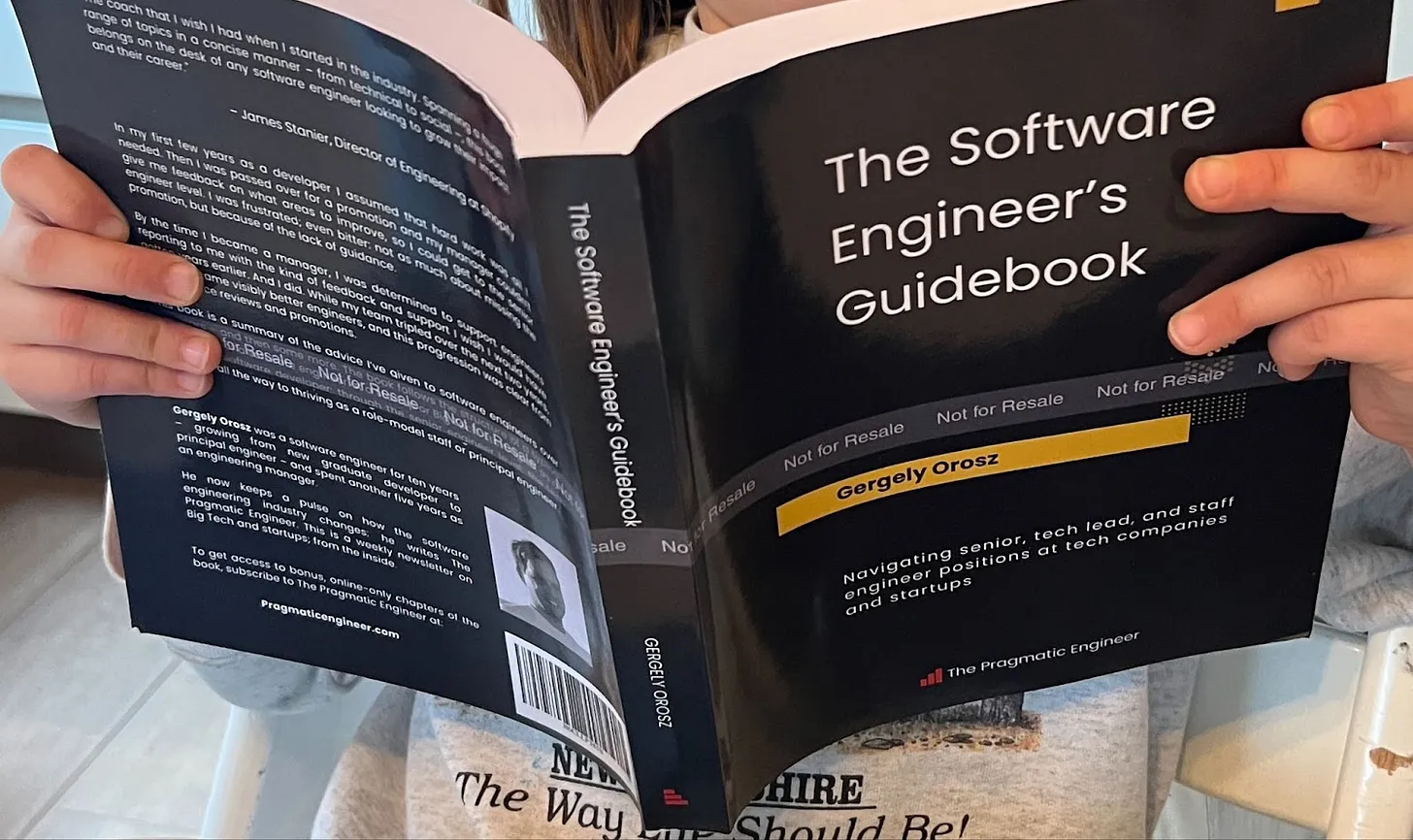

In 2019, I set out to write a book about software engineering. As a seasoned software engineer and manager, I had a clear understanding of the topic and figured it would take between six and 12 months to write and publish. Ultimately, it took four years to complete. Thankfully, it was well-received: feedback on The Software Engineer’s Guidebook has been overwhelmingly positive, and the book became a bestseller in two Amazon markets (the Netherlands and Poland) and ranked among the top 100 in most Amazon markets. In 24 months, about 40,000 copies were sold, and it was translated into German, Korean, Mongolian, and Traditional Chinese—with Japanese and simplified Chinese versions coming soon.
Many have asked why I chose self-publishing, and although it sounds intentional, it wasn’t my original plan. I initially wanted to partner with a top tech publisher for speed and visibility. When that didn’t materialize, I learned much about publishing, pitching a book, and selecting the right publishing route.
This article shares my journey of writing and publishing a successful book, including insights into working with a publishing house:
1. Tech book publishing landscape
2. Financials of publishing
3. Publishing process and the publisher’s role
4. My book pitch
5. Working with a publisher
6. Breaking up with a publisher
1. Tech book publishing landscape
Today, some reputable book publishers produce authoritative titles, while others don’t meet this standard. Publishers focus on specific subjects: some cover broad areas, while others specialize.
Here’s my mental model of the book publishing industry in 2025:
Highly reputable mainstream publishers
In tech book publishing, three standout publishing houses form a ‘big three’:
– O’Reilly: Known for highly-referenced books like Designing Data Intensive Applications, Tidy First, and The Staff Engineer’s Path. Their book covers feature distinctive animal images.
– Manning: Offers a broad range of tech titles, featuring historical figures on their covers.
– The Pragmatic Bookshelf: Also known as “The Prags,” they were founded by the authors of The Pragmatic Programmer and refuse DRM on ebooks.
High reputable “mainstream” publishers that are tough to pitch to
These publishers have strong reputations but are harder to pitch to due to fewer tech book publications. They include:
– Addison-Wesley: Known for classics like Clean Code and The Pragmatic Programmer.
– Pearson: Owns the Addison-Wesley imprint and recently publishes under the “Pearson” name.
– Wiley: Known for the “X for Dummies” series; publishes computer science textbooks.
– Springer: A massive publisher for whom tech books are a minor focus.
– Morgan Kaufmann: A well-known tech book publisher focusing more on academic topics now.
Highly reputable “niche” publishers
These focus on fewer topics with standout quality, such as:
– No Starch Press: High-quality content on specific technologies.
– IT Revolution: Titles for technology leaders, with bestsellers like The Phoenix Project.
– Artima: Focuses on Scala.
– CRC Press: Covers technology, engineering, math, and medicine topics.
– Stripe Press: Publishes works on technological, economic, and scientific advancements.
– MIT Press: Curates a collection of influential books for scholars.
Other mainstream book publishers
– Apress: A reputable publisher that covers a wide range of topics, open to pitches.
– Packt: Focuses on quantity over quality, offering limited support and feedback but open to serious proposals.
2. Financials of publishing
The financial matters arise once a publisher accepts a proposal and offers a contract.
Advance: $2,000 – $5,000. Authors receive an advance, typically paid in segments tied to milestones. Big publishers often offer $5,000, while smaller publishers offer around $2,000 for niche books. The advance is non-refundable.
Paperback royalty: 7-15% Royalties are earned on book sales from the net price. For example, a $40 book with a 10% royalty operates like this:
Royalties depend on sales channels, as Amazon’s 40% cut is standard. Most publishers offer 10-12.5% royalties, while Packt offers around 15-20%.
Ebook royalties: 10-25% Ebook royalties are typically higher, at around 25% for several publishers. However, Amazon’s 65% cut for Kindle sales over $10 impacts authors’ earnings.
Royalties are earned once the advance is earned back, an event called “earning out.” This process can generate passive income once a book continues to generate revenue.
The Prags’ unique approach
The Pragmatic Bookshelf handles royalty splits differently: offering a 50% profit split instead of a low-digit revenue percentage. Ultimately, this aligns numbers with traditional revenue models.
Real-world case studies with actual earnings
Martin Kleppmann, author of Designing Data Intensive