
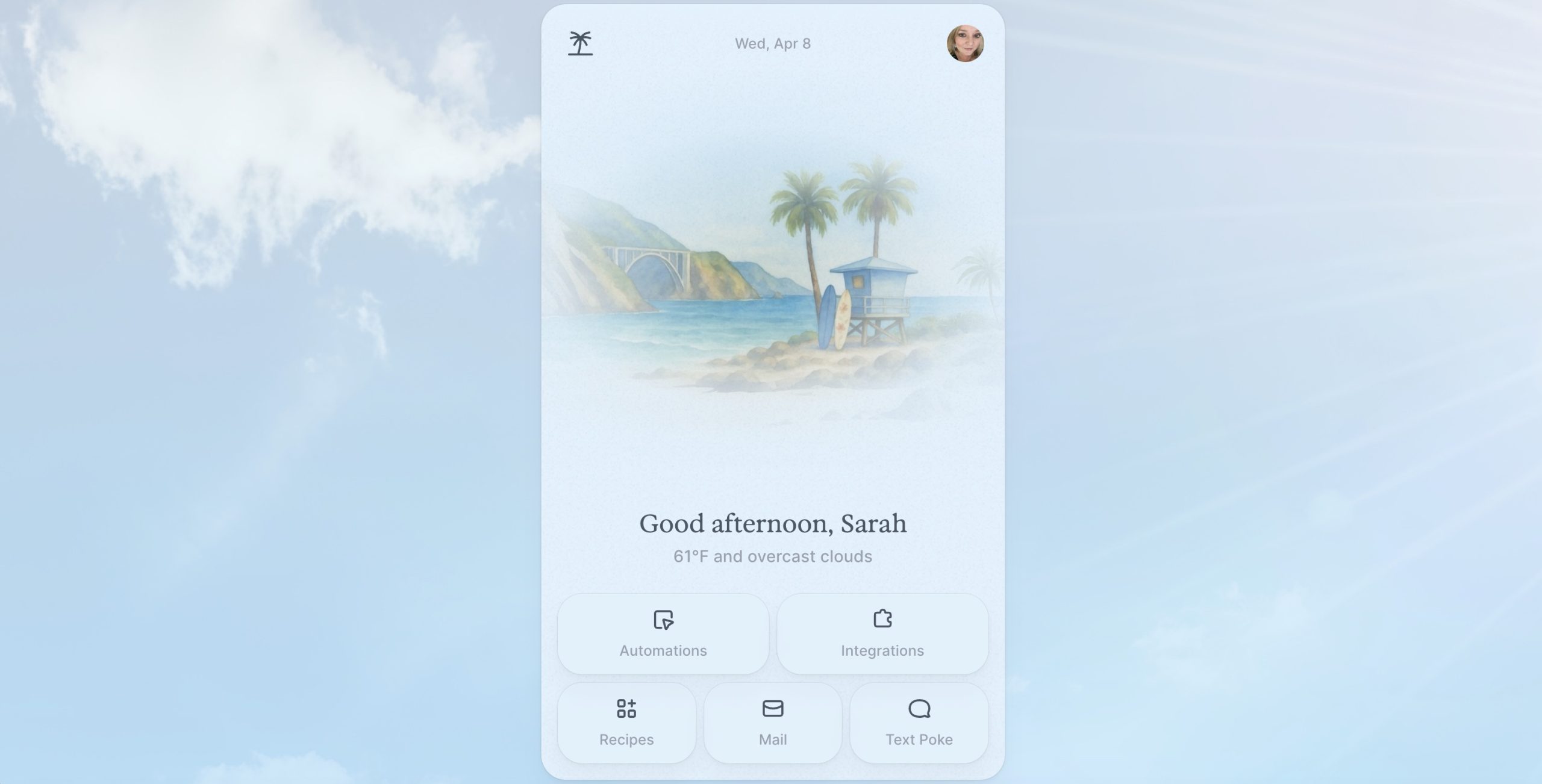

Is Poke an OpenClaw for the general public? This concept is introduced by a new startup offering access to an AI agent through iMessage, SMS, Telegram, and WhatsApp in selected markets.
Poke, the AI agent, was publicly launched in March, giving users a personal assistant that interacts via a familiar interface. Poke can assist with daily tasks like planning, calendar management, health tracking, smart home control, photo editing, and more through text messaging.
Instead of using a general AI chatbot like ChatGPT or Claude for inquiries or research, Poke is useful for quick actions and task automation to save time.
Examples include asking Poke to alert you to important emails, remind you about carrying an umbrella, track health goals, provide sports scores, send medication reminders, and update you on the day’s news. Users can even write custom automations in plain text and share them with friends.
Supported by Spark Capital, General Catalyst, and other angels, this 10-person startup recently raised an additional $10 million, adding to last year’s $15 million seed round, and is now valued at $300 million post-money.
Poke is arriving as demand for agentic AI systems rises, with OpenAI acquiring OpenClaw’s creator, and Nvidia’s CEO urging companies to develop an OpenClaw strategy amidst security concerns.
For those technically challenged, dealing with software installation, dependencies, and errors is intimidating, and systems like OpenClaw pose security risks due to deep system access.
For many, OpenClaw and similar systems seem inaccessible. Poke aims to change this.
Marvin von Hagen, co-founder of The Interaction Company of California, creator of the AI agent Poke, shares that Poke emerged from observing beta testers of a previous AI email assistant product, developed earlier.
People started using Poke for diverse purposes, beyond its initial email-focused role, asking for medication reminders, sports updates, and more. This led the team to pivot and enhance Poke with broader, more proactive, and personable functionalities.
Starting with Poke is straightforward. Simply visit Poke.com, click “Get Started,” and input your phone number. No app installation is needed as the assistant functions over text messaging.
Poke deploys the most suitable AI model for each task, choosing from major AI providers or open-source models.
Poke utilizes Linq to enable the assistant on messaging platforms like iMessage, SMS, and Telegram, though WhatsApp support is limited since Meta banned other general-purpose chatbots.
Regulators in the EU, Italy, and Brazil are challenging Meta’s decision, which could soon bring Poke back to these markets, depending on Meta’s pricing.
Poke offers a range of pre-made “recipes” for automating life or work, including health, productivity, scheduling, and more. These integrate with familiar apps and services, and developers can automate workflows with tools like PostHog, Webflow, and GitHub.
Poke’s security model involves multi-layer protections, regular testing, and permission limitations. Users can opt to share logs or analytics.
Users have created thousands of recipes, which Poke will add to its directory soon. Poke encourages recipe creation by compensating authors based on user sign-ups.
Initial use of Poke is free, with flexible pricing based on the AI agent’s use. Pricing for real-time data tasks, like email or flight check-ins, varies. Monetization is not the primary goal; growth and widespread adoption are prioritized.
Co-founded by Felix Schlegel, Poke has grown significantly, although exact user numbers are undisclosed. It has attracted prominent angels like the Collison brothers, Jake and Logan Paul, and others from OpenAI and DeepMind.
Investors include Spark Capital, General Catalyst, and notable figures from Vercel, PayPal, Dropbox, Hugging Face, and more.