
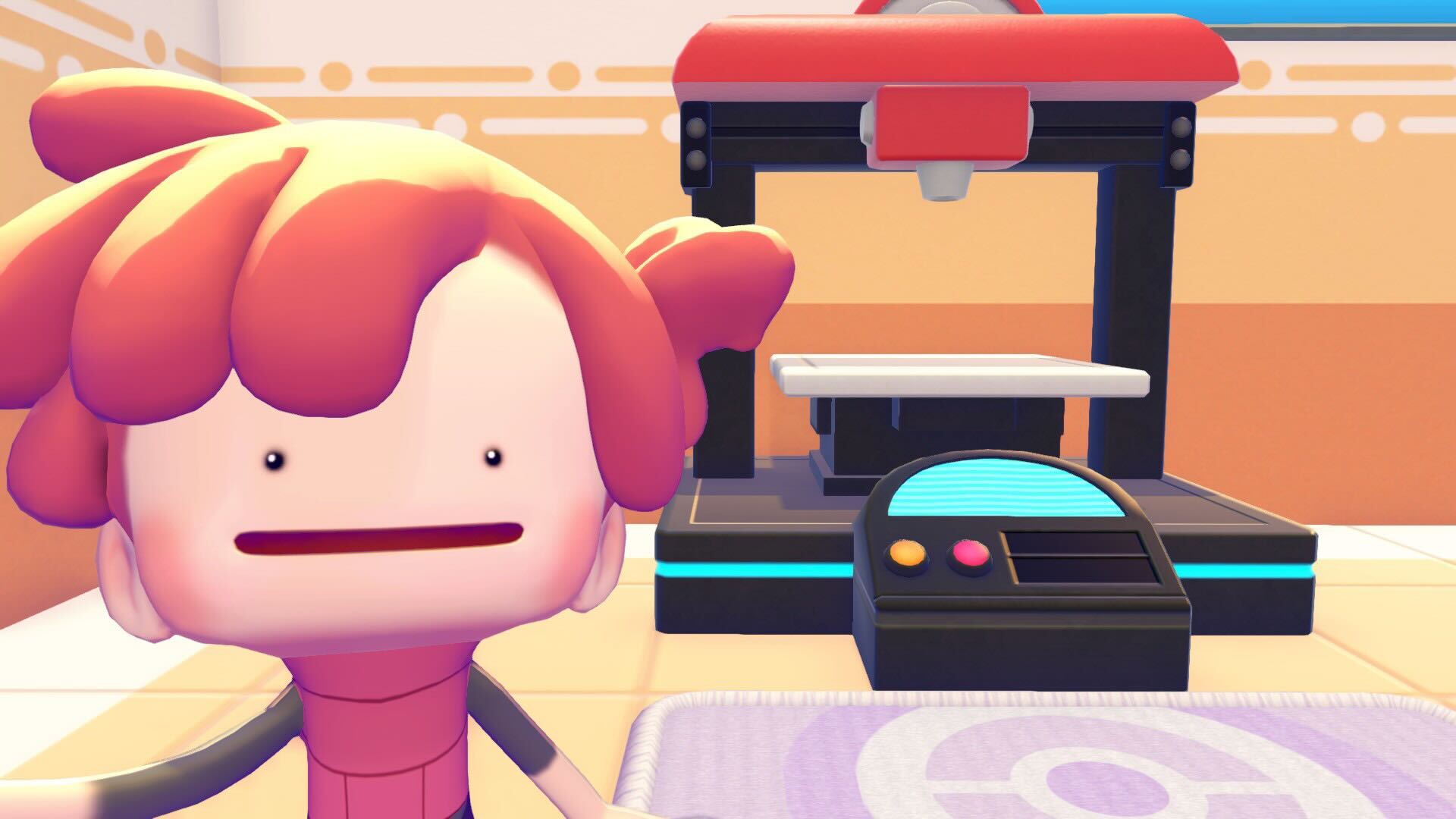

Pokémon has always incorporated advanced technology, but it wasn’t until Pokopia that I truly appreciated it. In Pokopia, a 3D printer stood out among the usual high-tech gadgets found in every Pokémon game. Discovering this machine within a restored Pokémon Center took me by surprise.
Before Pokopia, I hadn’t considered Pokémon tech much, having accepted its sci-fi elements for so long. This world was full of magical PCs storing living creatures, fossils being resurrected, and pokémon traveling through time — all as a matter of course. But in Pokopia, humans have vanished, and pokémon are slowly repopulating their abandoned habitats. Here, technology isn’t a given. Climate change has caused environmental havoc, leading to pokémon being stored in PCs indefinitely. However, these systems have limits; a collectible journal entry hints at the failure of such systems, explaining why pokémon are now emerging from storage. This fragility prompted a re-examination of Pokopia’s technology, illuminating Pokémon’s high-tech universe in a new way.
Pokopia retains sci-fi and fantasy elements, like a functional PC outside a crumbling Pokémon Center that tracks restoration efforts. Yet, everyday objects — lamps, TVs, vending machines — often require more electricity than electric-type pokémon can provide. This necessitates substantial power infrastructure beyond Pokémon technology.
In Pokopia, real effort is needed to use technology. Rebuilding involves creating homes for pokémon, be it a flowerbed or using human technology powered by electricity to build proper habitats. Ensuring a vending machine works to satisfy a pokémon’s request or lighting their home with power poles and generators demands careful planning and resources.
The fate of humans is best left unspoiled, but the story leans heavily on science fiction, blending post-apocalyptic scenarios with the mundane, like constructing a windmill for electricity. Pokémon fantasy mingles with regular, sometimes outdated tech. DJ Rotom, a stereo-possessing pokémon, needs physical CDs to play music, contrasting with advanced feats like storing living beings in computers.
This tech blend makes Pokopia feel timeless. How long have humans been gone? Where does this fit with main series games? Why use CDs in a world capable of digitizing life forms?
In this mix of sci-fi and everyday devices stands the 3D printer — cutting-edge yet not out of reach. By using the Pokédex camera, players can take reference photos to 3D print objects with rare materials. This concept, though advanced, is tangible.
Pokémon gadgets have paralleled real-life devices, beginning with handhelds and wearables that served functional roles. The original Pokédex echoed a ’90s PDA with a pokémon database; Gold and Silver’s Pokégear had flip-phone functions; Diamond and Pearl’s Pokétch was akin to an early smartwatch. Recent Rotom phones resemble smartphones, albeit with unique features provided by a pokémon.
Such devices are expected in Pokémon, alongside tech made possible by pokémon and speculative fiction wonders. Yet, finding a relatively current item like a 3D printer was unexpected.
Perhaps similar Pokémon tech existed over the past 30 years, but the 3D printer in Pokopia connected past tech advances to present context. It placed Pokopia years after CDs, suggesting some technologies didn’t endure a climate disaster. Without the internet for streaming, CDs gain renewed importance.
High-tech PCs and 3D printing materials are as valuable as CDs and power lines in Pokopia’s world-rebuilding efforts. The Pokémon universe thrives on everyday and fantastical elements, which became evident when its world was stripped bare, revealing previously unseen aspects.