

All style, some substance.
CEO Carl Pei says Nothing won’t release a flagship phone this year. So instead we have the 4A Pro, a $499 phone that looks and feels higher-end than last year’s flagship Phone 3, helped in large part by a new metal design.
Compare the Phone 4A Pro to its immediate rivals, the Pixel 10A and iPhone 17E, and it looks impressive: a larger, brighter, and faster display; more cameras; and Nothing’s unique design, including the Glyph Matrix rear display. But dig deeper, and the 4A Pro’s compromises are revealed.
Nothing earns points for style, but unless you’re particularly enamored of the bigger screen and bolder look, Apple and Google’s phones have the 4A Pro beat on substance.
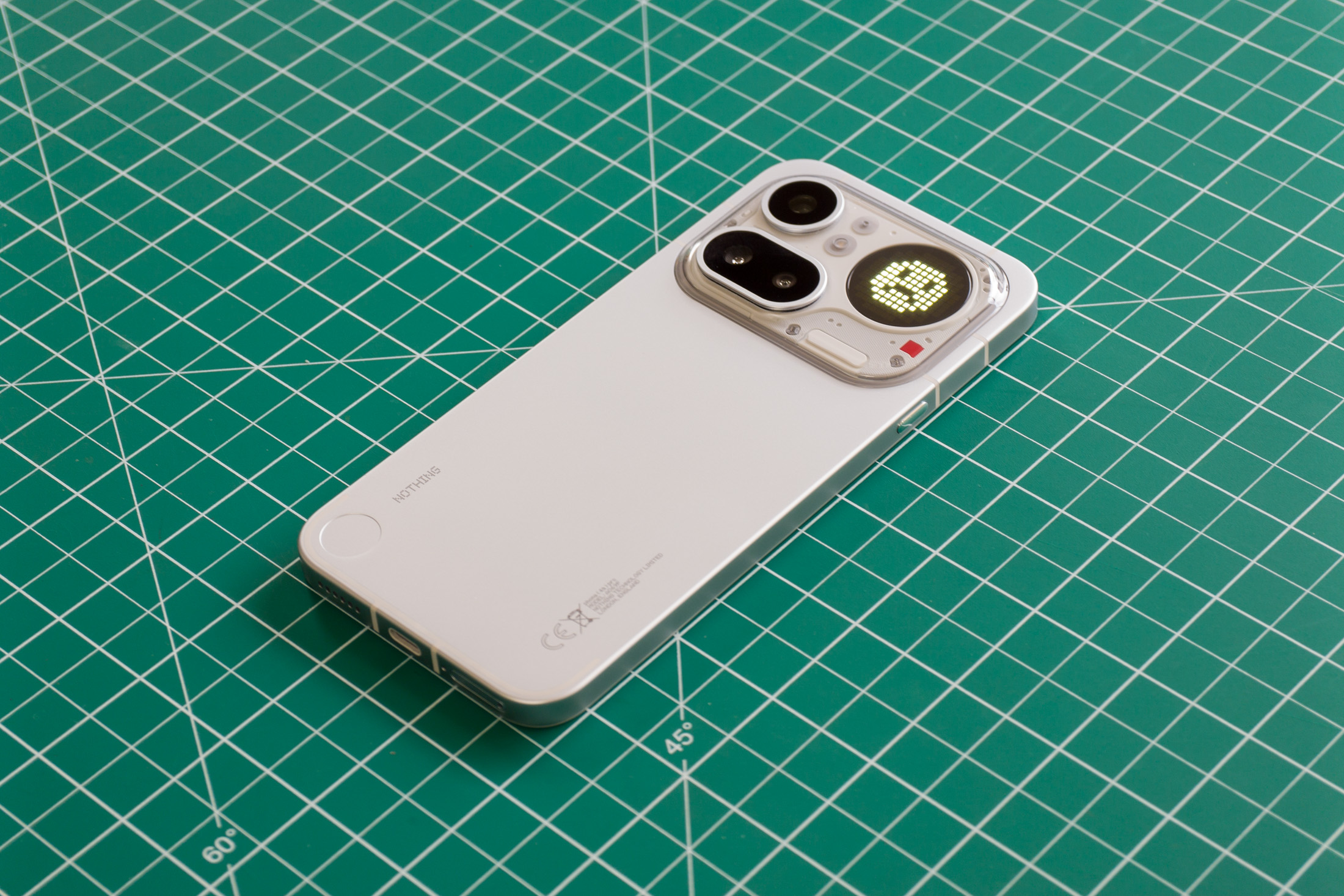
Every Nothing phone until now has had a consistent aesthetic: transparent plastic revealing a (usually white or black) design that implies the internal construction of the phone without actually revealing much of it, with visible screws and abstract lights to complete the effect. The 4A Pro is different.
It’s mostly metal, with an aluminum unibody design — available in silver, black, or a very subtle pink — that stretches everywhere except the camera. That’s the one island of transparency: a curved cuboid that squeezes in all the plastic detailing, metal screws, and Glyph lights needed to remind you that this is still a Nothing phone.
The shift to metal has two obvious effects. Firstly, it makes the 4A Pro a little more boring, and thus presumably a little more appealing to the mainstream market. Perhaps that’s why this phone is launching in the US, while the all-transparent 4A isn’t. But it also makes the 4A Pro feel high-end. That’s partly because this is the thinnest Nothing phone yet, at 8mm, but mostly because I’m hardwired to think that metal feels fancier than plastic.
The Glyph Matrix display is, of course, the biggest giveaway that this phone came from Nothing. This is a larger and brighter dot matrix screen than the version introduced on last year’s Phone 3, though it’s much lower resolution, with only 137 LEDs, compared to 489. The 4A Pro also lacks the capacitive button built into the back of the 3. Combined, that makes this a better looking but substantially simpler Glyph display: it can still show the time, or battery life, or display basic icons to correspond to notifications, but can’t be used for the array of games and mini-apps the previous phone managed.
Nothing’s other design flourishes are all software. Its Android skin is still unique, especially if you lean into the option to make the most of the OS monochromatic. This looks great, but good luck trying to find that app you want in a rush. The 4A Pro runs on Android 16, which Nothing has bolstered with quality-of-life features like separate ringtones for different SIM cards, lockscreen customization with widgets, and an even darker dark mode. Given all that, it’s a shame Nothing is only promising to give the phone three years of Android OS updates, though it will at least receive six years of security patches.
There are of course AI features aplenty, including a wallpaper generator and AI news summaries. Nothing’s Essential Space, activated by a dedicated button, lets you save images and audio notes to generate reminders and calendar entries. It’s part AI assistant, part dedicated app to store event tickets, flight info, and task reminders all in one place. This has been improved by cloud storage, so it can now sync across Nothing devices, which could be handy if you’re upgrading from another Nothing handset. Nothing’s Essential Apps are also supported, though we’ve found vibe coding our own widgets to be more fun than functional.
The 4A Pro is Nothing’s slimmest phone yet, but it’s also its biggest. That won’t appeal to everyone, but for some, the 6.83-inch display will be the main reason to buy the 4A Pro over midrange rivals. It’s not just big, it’s also unusually bright, hitting 5,000 nits at peak brightness, and delivers a fast 144Hz refresh rate. The brightness is the bigger boost here, making this easy to use even in direct outdoor light.
Outside the display, the specs are solid, but few are standout. The Snapdragon 7 Gen 4 chip is fast enough, but will lag well behind the iPhone 17E’s A19. The 5,080mAh battery is good enough for a full day’s use and then some, but is no bigger than the Pixel 10A’s. An IP65 rating suggests good protection from the elements, but Apple and Google’s phones both have IP68 ratings, with better water resistance. They also both support wireless charging, which the