
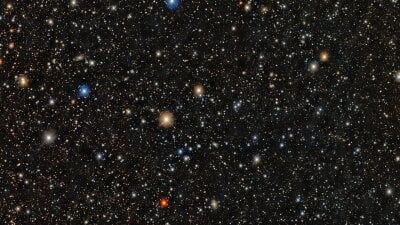

Astronomers have identified a pristine example of a star composed solely of materials from one of the earliest stars. This primitive star was discovered in Pictor II, a dwarf galaxy orbiting the Large Magellanic Cloud, itself a satellite of the Milky Way. The star, named PicII-503, appears to have formed following a weak supernova of one of the original stars of the universe. PicII-503 supports the theory that small early galaxies like Pictor II contributed to the chemical development of larger galaxies, such as the Milky Way, as they absorbed these early galactic relics. This reveals an unseen stage of cosmic history, even to advanced instruments like NASA’s James Webb Space Telescope.
The star, approximately 600,000 light-years away in the constellation Pictor, shows unusually low levels of iron and calcium—a fraction of what is found in the sun—while being relatively rich in carbon. This composition suggests it was formed from gas enriched by a single weak early star explosion, implying that lighter elements like carbon were dispersed into space, while heavier ones like iron remained trapped in the dying star’s core. The study, published in Nature Astronomy, posits that PicII-503 is likely over 10–12 billion years old. It was discovered using the Dark Energy Camera on the Víctor M. Blanco Telescope in Chile. Stellar discoveries like this serve as cosmic archaeology, providing insights into the universe’s early chemical processes and where additional ancient stars may be found, particularly on the outskirts of galaxies.