

The advent of reusable rockets has revolutionized the space industry over the past decade, and now a new startup, helmed by a former SpaceX professional, aims to innovate similarly with satellites.
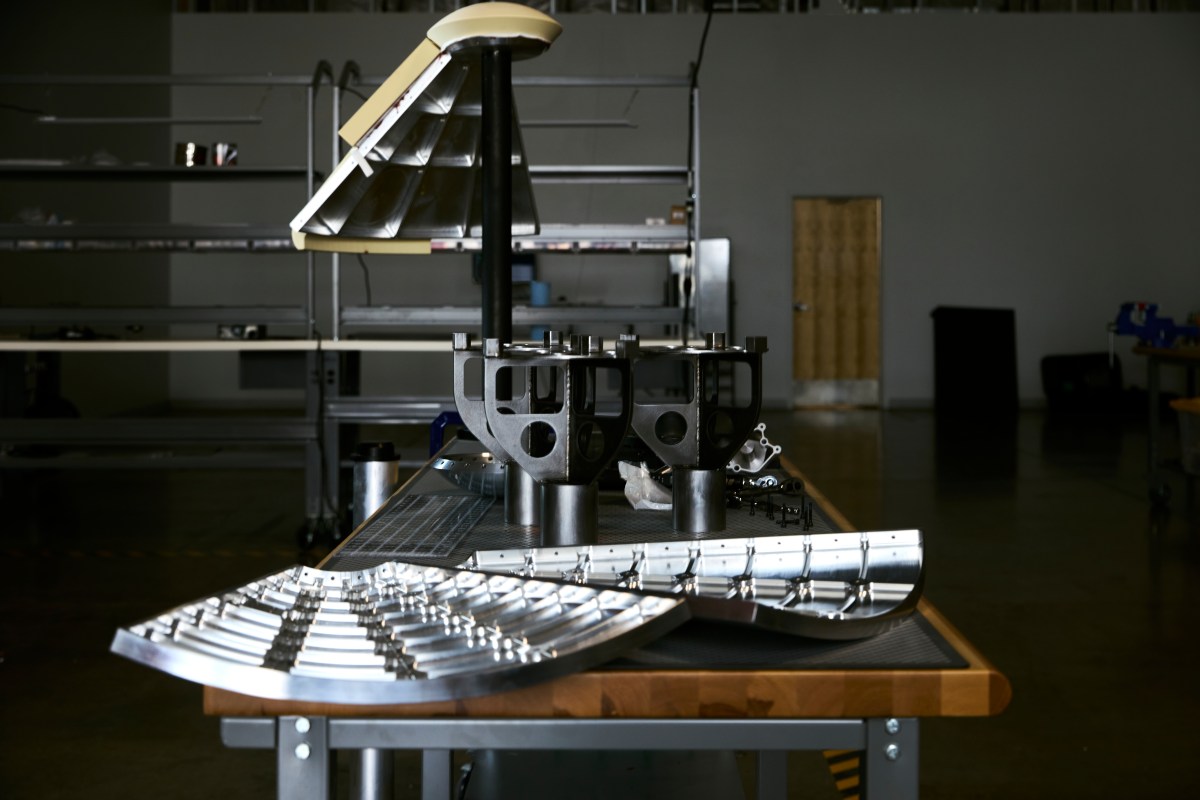
Brian Taylor, notable for his work in developing satellites for SpaceX’s Starlink and Amazon’s Leo, established Lux Aeterna in December 2024. The venture seeks to create satellite structures equipped with an integrated heat shield, enabling their safe return to Earth with payloads intact.
Emerging from stealth last year, Lux Aeterna recently announced a $10 million seed round led by Konvoy, with contributions from Decisive Point, Cubit Capital, Wave Function, Space Capital, Dynamo Ventures, and Channel 39. The company’s valuation remains undisclosed.
This funding will drive the development and construction of Lux Aeterna’s Delphi spacecraft, which is slated for a confirmed launch on a SpaceX rocket in early 2027. This mission will demonstrate the technology by allowing customers to test hosted payloads, which will be retrieved at Australia’s Koonibba Test Range in collaboration with Southern Launch.
Returning objects from space involves entering Earth’s atmosphere at high speeds, generating intense heat, requiring spacecraft to be shielded with protective materials, thus increasing weight and launch costs. Typically, such reentry is reserved for human-carrying vessels like the Space Shuttle (one of which was lost due to reentry conditions) or SpaceX’s Dragon spacecraft. SpaceX’s attempts to land its Starship rocket have highlighted these challenges online.
Startups like Varda Space and Inversion are addressing this issue on a smaller scale by developing reentry capsules for space experiments, returning samples for analysis, or potentially delivering cargo swiftly on Earth. Varda has completed five missions, retrieving four capsules; Inversion aims to launch its Arc vehicle this year.
Developing technology for safe payload returns is vital for futuristic ventures such as testing new materials, microgravity manufacturing, or asteroid mining. The US military has also shown interest in orbital logistics and component testing for hypersonic weapons.
Lux envisions a bolder goal: making communication and Earth observation satellites reusable. Currently, these satellites have a lifespan of five to ten years before atmospheric destruction or relocation to a graveyard orbit. Taylor envisions a “dynamic upgrade capability” allowing existing satellites to be brought back and updated with new technology, thus enhancing longevity and sustainability.
However, economic practicality is crucial, as the benefits of reusable satellites must surpass the costs of launching, returning, and refurbishing them. Regulatory hurdles also exist; since obtaining US reentry licenses poses difficulties, Lux is proceeding in Australia. Varda’s initial commercial spacecraft landing in the US was delayed while ensuring public safety, with subsequent missions redirected to Australia.
Taylor anticipates regulatory progress won’t hinder operations in the next few years and foresees the FAA evolving alongside the reentry industry to increase return frequencies.
“Our investors are convinced it’s time for a radical shift in orbital operations,” Taylor stated. “This involves not just reentry and retrieval but also extending reusability to larger segments of the satellite industry.”