
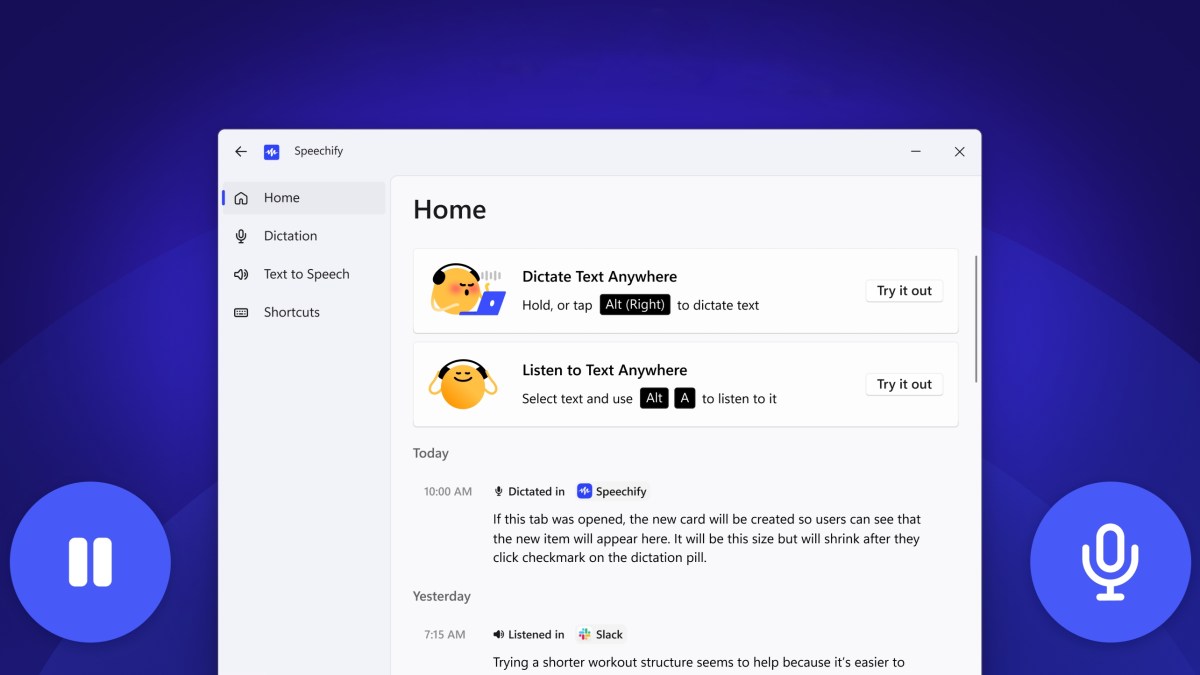

Speechify, a voice AI company, has introduced a native Windows app using locally stored models for dictation across apps and reading articles, documents, or PDFs with its voice library. The app competes with Wispr Flow, Willow, and Superwhisper in the dictation and transcription space across platforms.
The Windows app processes voice entirely on-device for Copilot+ PCs with NPUs from AMD, Intel, and Qualcomm, as well as other Windows 11 PCs with Intel and AMD GPUs. The app includes three on-device models: neural text-to-speech, real-time voice activity detection, and Whisper-powered transcription. Users can opt for cloud-based models or switch during app usage.
With over 50 million users, Speechify enables VITS Neural to generate audio at seven-speed presets for reading documents or web pages aloud, utilizing the Silero open-source model for voice activity detection.
Cliff Weitzman, founder and CEO of Speechify, stated, “Over a billion people on this planet use Windows. With this Windows launch, we’re ensuring that reading and writing is accessible, regardless of the device or work preference. Especially in the enterprise sector, given the demand for Speechify on PCs.”
Recently, Speechify launched a meeting transcription service similar to Granola, initially limited to browser-based meetings, but could expand to native apps for any platform or browser.
Until recently, Speechify focused on text-to-speech applications such as reading articles and emails, and podcast generation from documents. The company is now aiming to be a comprehensive voice app by offering dictation, meeting transcription, and a voice assistant.
TechCrunch event, San Francisco, CA | October 13-15, 2026.