

Every new technology creates a new environment for work, but how AI will shape this is uncertain. One scenario is that interfaces may vanish completely.
This is the vision of Josh Sirota, founder of the startup Eragon, launched in August and now backed by a $12 million raise at a $100 million valuation to develop an agentic AI operating system tailored for enterprises.
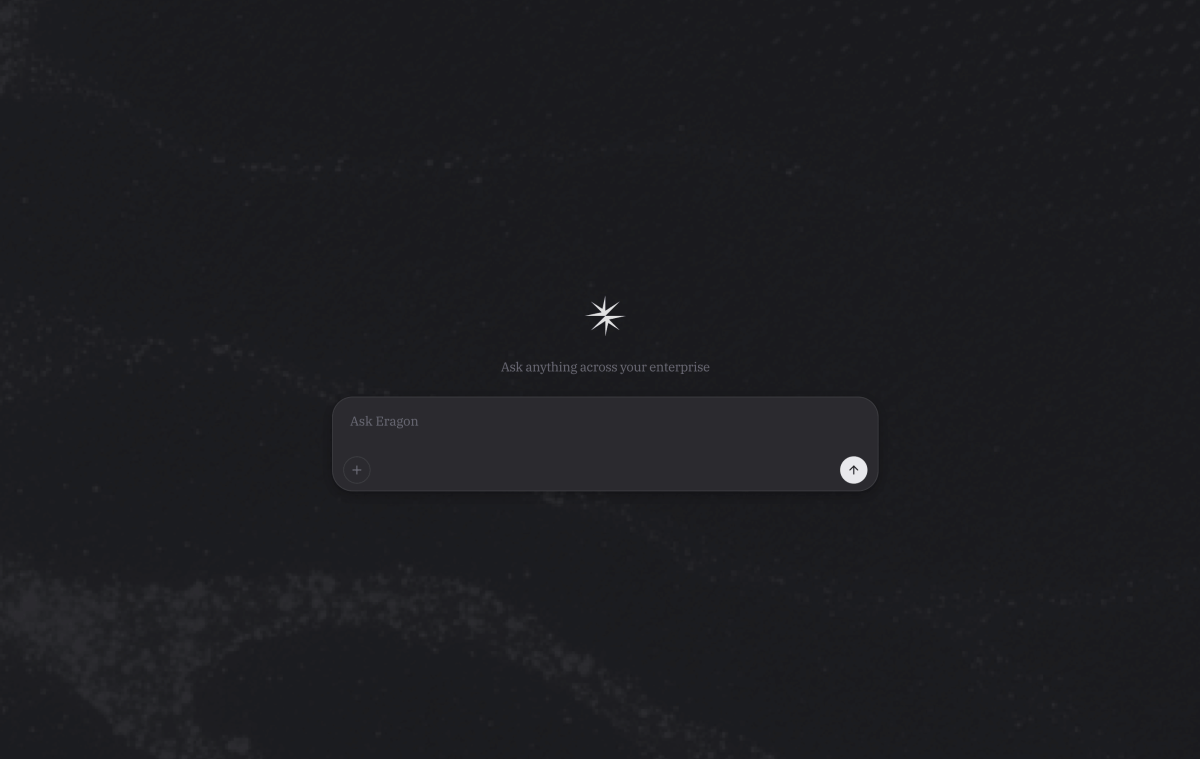
Sirota’s thesis is simple: “Software is dead.” Traditional interfaces like buttons, dialog boxes, and menus are obsolete, and all business operations will soon rely on prompts. Eragon seeks to deliver a comprehensive business software suite — encompassing tools like Salesforce, Snowflake, Tableau, and Jira — via a language model interface.
Sirota’s background with Oracle and Salesforce’s market teams and his migration to San Francisco to create Eragon with a modest team underscore his concept. The company is based in a live-work loft near the Giants’ stadium, which Sirota shares, showcasing personal touches like a Moët bottle, Mac minis, and the book Eragon, the namesake for the company in line with other companies like Palantir and Anduril drawing inspiration from fictional universes.
His experience with implementing major corporate software led investors to back him, recognizing his “founder-market fit.” Supporters include Arielle Zuckerberg of Long Journey Ventures, Soma Capital, Axiom Partners, and angel investors Mike Knoop and Elias Torres.
Sandhya Venkatachalam from Axiom sees huge potential for Eragon to integrate seamlessly into modern team operations and decision-making. Eragon boasts notable technical talent like Berkeley PhD student Rishabh Tiwari and MIT PhD Vin Agarwal who are collaboratively advancing the company’s tech infrastructure.
At Eragon’s workspace — a well-used white sofa — Sirota demonstrates their internal application of their product. Eragon actively refines open source models like Qwen and Kimi utilizing client data and links to company emails and resources. For new client onboarding, as he shows with Dedalus Labs onboarding, a straightforward natural language command prompts the software to auto-generate user credentials, spin up a new Eragon cloud instance, and initiate the onboarding sequence.
Sirota claims Eragon will enable executives to request deal analysis or supply chain improvements, then automate agent assignment for action. Want a dashboard? Eragon will create it upon request.
The demonstration is promising, but potential issues exist with complex queries or auditing lapses. Sirota used Eragon for automated invoice approvals, processing invoices directly from his inbox, prompting the thought of submitting one for a test (though the reporter refrained).
AI agents introduce notable security concerns; still, the company is addressing practical challenges in current workplaces. Eragon is being deployed in multiple large companies and several startups. Nico Laqua, CEO of insurance startup Corgi, which raised $180 million after a Y Combinator run, praised Eragon as the top enterprise AI application available.
“Most data needs to remain secure within our cloud environment,” said Laqua. “Eragon customizes cutting-edge models with our data and operates them securely in-house,” representing Eragon’s commitment to maintaining client data on private servers and protecting model weights, the crucial parameters defining AI functions.
Sirota anticipates models fine-tuned on long-standing corporate data becoming valuable assets. Although leading labs provide powerful models, Sirota believes Eragon will thrive as long as companies need to use APIs without owning configurations.
He likens AI software’s rise to the personal computer revolution: while cutting-edge labs provide centralized services, corporate uptake requires local, customizable tools. Businesses will demand tools and models for specific uses that they can control.
Nvidia CEO Jensen Huang echoed this sentiment days later at GTC, Nvidia’s developer conference, emphasizing agentic AI tools as the future of white-collar work: “Just like Windows enabled personal computers… every SaaS company will become Agentic-as-a-Service.”
Huang’s remarks align with Nvidia’s new initiative, NemoClaw, designed to enhance OpenClaw agents’ integration into secure enterprise systems. This suggests Sirota’s path is promising but also highly competitive, facing challenges from leading labs to model builders.
Undeterred, Sirota envisions Eragon as a billion-dollar enterprise by year’s end. Aware that 95% of AI corporate trials fail due to a lack of understanding among senior managers about their employees’ daily tasks, Eragon intends to revolutionize their toolkit.