Leak Indicates Minor Adjustments for Pixel 11 Pro Fold, No Significant Redesign Anticipated

It’s likely time for us to start hearing some conjectures regarding Google’s upcoming foldable, wouldn’t you agree?

What you need to be aware of:
– Speculations have emerged, hinting at the design of Google’s Pixel 11 Pro Fold.
– It seems the device might feature a somewhat slimmer profile and minor alterations to its camera housing, integrating its LED flash and microphone into the assembly.
– Previous rumors indicate Google could enhance the battery repairability of the Pixel 11 Pro Fold, as a patent revealed a “metal frame” and springs for securing it, instead of adhesive.

The week is off to a rapid start with a report claiming to have uncovered renderings of Google’s Pixel 11 Pro Fold.

Social media insider OnLeaks allegedly discovered the renderings for Google’s Pixel 11 Pro Fold and partnered with Android Headlines to share the information. According to the insider’s findings, the next book-style foldable from Google appears to be gearing up to launch with a comparable design. The cover display looks largely the same in these pictures of the phone in a (potential) Moonstone colorway. It appears that consumers can still expect generously rounded corners and a centered punch-hole selfie camera.

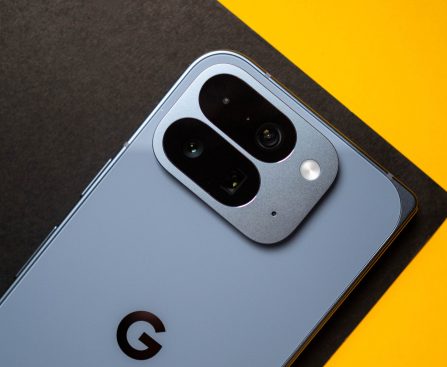
Within the device, the images indicate a selfie camera located to the right, tucked into the corner. This maintains consistency with past Fold models. However, subtle modifications emerge as the insider “reveals” the rear panel of the Pixel 11 Pro Fold. Google may adapt its raised camera housing by widening it to accommodate the phone’s LED flash and a microphone, as stated in the report.

Moreover, the Pixel 11 Pro Fold’s pill-shaped camera housing appears slightly elevated—at least for the lenses. The lenses of the 10 Pro Fold are flush with the housing; however, OnLeaks suggests that these could be somewhat raised, providing a tiered appearance. Finally, Google’s aiming for a slimmer profile for its upcoming foldable. Allegedly, the Pixel 11 Pro Fold will be thinner than its predecessor, reducing from 10.8mm to 10.1mm.

Early days:
Rumors regarding the Pixel 11 Pro Fold have been quite scarce, yet a report from last year indicated that we might expect a design shift. Top executives from Google were interviewed, confirming that changes to Pixel designs could occur in 2026 and 2027. What has been speculated for the Pixel 11 Pro Fold aligns with this (if accurate). However, the company also mentioned a greater emphasis on its software and AI capabilities within its Pixel lineup, rather than aesthetics.

A more focused leak on the Pixel 11 Pro Fold from January suggests Google may have addressed its battery problems. Specifically, this leak discussed improvements in the foldable’s battery repairability, potentially made possible by a “metal frame” that will support its batteries, rather than the previous glue approach. This was revealed in a patent, so it should be taken with caution.

Android Central’s Perspective:
Google’s foldable already possesses a rather sleek, attractive design—in my view. Naturally, we’d like to see some changes, simply because it’s a new phone being released, so there has to be some differences, right? I feel that—despite being rumors—the changes look promising. Moving certain camera elements into the housing streamlines the space. Regarding the thinner aspect, that perhaps was to be expected. Google aims to keep up with its rivals (consider Samsung). I believe that will work fine, as long as Google doesn’t compromise on what makes its Fold valuable.
Amazfit Smartwatch Priced Below $100 Now Offered at a Reduced Rate on Amazon

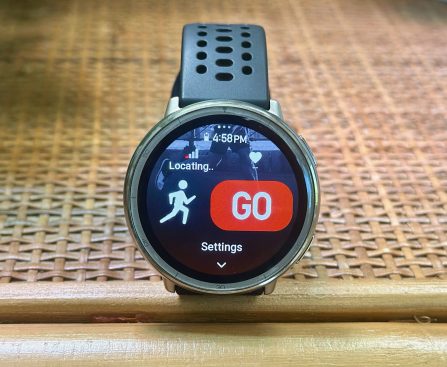
The Amazfit Active 2 is an economical smartwatch that merges a sporty, functional design with remarkable features, making it an excellent option for price-sensitive buyers. Currently listed on Amazon for $79.99, reduced from its original price of $99.99, this smartwatch delivers impressive value.

A standout feature of the Amazfit Active 2 is its vibrant AMOLED display, which offers 2,000 nits of brightness, ensuring visibility even in well-lit conditions. The device accommodates over 160 sport modes, appealing to a diverse range of fitness fans. It also provides advanced health monitoring capabilities, including heart rate tracking, skin temperature assessment, and an altimeter.

For outdoor enthusiasts, the Amazfit Active 2 includes GPS functionalities, though it does not feature dual-band GPS, which could be a factor for some users. The smartwatch promises up to 10 days of battery life, although this may diminish with extensive use of its features.

The Amazfit Active 2 is especially recommended for those in search of a basic fitness smartwatch with a bright display, thorough health tracking, and a sporty look. However, it may not be ideal for users needing longer battery life for extended outdoor activities or those who prefer a more compact, fitness band-like design.

In summary, the Amazfit Active 2 sets itself apart as the top Amazfit smartwatch under $100, presenting a robust array of features for its price. While it may not encompass all the sophisticated capabilities of higher-end models, it offers a dependable and stylish choice for newcomers to smartwatches or individuals seeking fundamental features without overspending.

Guide for Viewing Google I/O 2026: Essential Information and Watching Details

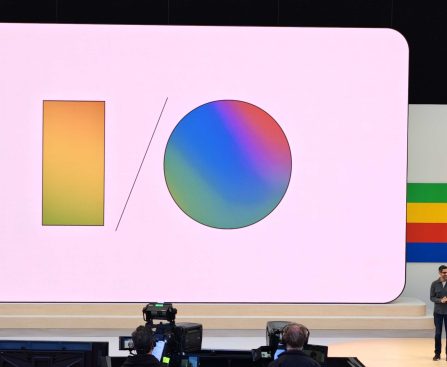
Google I/O 2026 is set to begin on May 19 — here’s how to watch it live.

Google I/O stands out as one of the most significant events hosted by the company every year. While the major hardware launches wait for the Made by Google Pixel event later in the year, I/O is the platform for everything else to shine. This is where we learn about Android, Workspace, AI, Gemini, and all the software upgrades that influence Google’s ecosystem.

For 2026, Google has confirmed that I/O will span two days, May 19 and 20. The main keynote will commence at 1 p.m. ET, followed by several developer sessions and workshops throughout the event.

The Android Central team will be present on-site to witness all the happenings and deliver the latest updates directly from the venue.

That being said, this year’s I/O is predicted to be significant, with major updates anticipated across Google’s services and platforms. If you’re curious about how to view I/O 2026 live and what announcements to look forward to, here’s what we know so far.

When is Google I/O 2026?

This year’s Google I/O begins on May 19, with the main keynote commencing at 10 a.m. PT / 1 p.m. ET. As in recent years, Google initially teased the dates through an online puzzle that involved Gemini 3 in some manner, before officially confirming them shortly thereafter.

The keynote will again take place at the Shoreline Amphitheatre in Mountain View, California. And similar to past years, Google will stream the entire event live for those unable to attend in person. For those wishing to be there in person, registration is open to watch the keynote live alongside developers and partners, with complete details provided below.

How to register and watch the Google I/O 2026 keynote/sessions

Along with confirming the dates, Google has opened registration for I/O 2026. Developers who wish to attend can sign up on the official I/O website at no cost.

It’s important to note that this follows a lottery or invitation-style approach, so signing up doesn’t guarantee a seat at the keynote. Even if you’re not chosen, registering will keep you informed about all developments, including schedules and session specifics, as the event approaches.

However, registration isn’t necessary to view the keynote live. Like in previous years, Google will stream the entire event via the official I/O website and its YouTube channel, making it available to anyone globally.

Although the YouTube listing for I/O 2026 isn’t currently live, we anticipate it will appear as we near May 19. This page will be updated once Google launches the livestream and will embed it here for your convenience.

What to expect from Google I/O 2026?

Regarding expectations from Google I/O 2026, the event is gearing up to be among Google’s most vital conferences in recent years. Not solely due to Gemini or AI, but because after many years, Google is rumored to be developing multiple operating systems that could finally take the spotlight.

Android 17 will undoubtedly be a significant topic of discussion. In addition to some of the beta modifications already visible, I anticipate Google will clarify a more defined roadmap for large-screen devices, foldables, and desktop-style Android computing.

No substantial UI overhauls are anticipated, although there are whispers that Google might experiment with more iOS-like blur and glass effects across different parts of the OS.

Besides Android 17, Android XR is expected to have ample presentation time. Samsung has already introduced the Galaxy XR headset, but with more XR hardware anticipated this year, Google will likely showcase how Android XR operates across headsets and smart glasses.

Google is also reportedly working with Samsung on its own smart glasses, which are slated to launch this year, so we might see our first look at a commercial product during the keynote.

Of course, Gemini will be a key focus of the discussion. Google is anticipated to share updates not just regarding the chatbot but also about deeper integrations across Search, Chrome, Workspace, along with Android experiences.

Google Pixel Watch 4 Reaches All-Time Low Price on Amazon, Outperforming Black Friday Offers

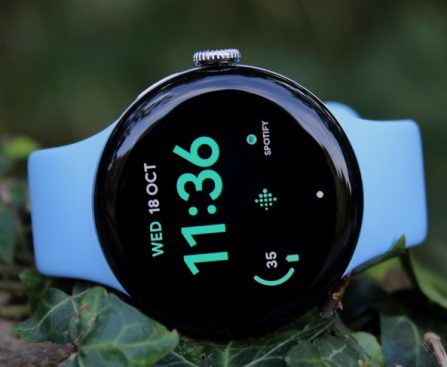
One of the most visually appealing smartwatches ever made has just received a unique discount. The Google Pixel Watch 4, celebrated for its elegant design and cutting-edge features, is now offered at an unprecedented 17% discount on Amazon. This price reduction exceeds previous discounts encountered during Black Friday and October Prime Day, and there’s no need to be a Prime member to enjoy the savings.

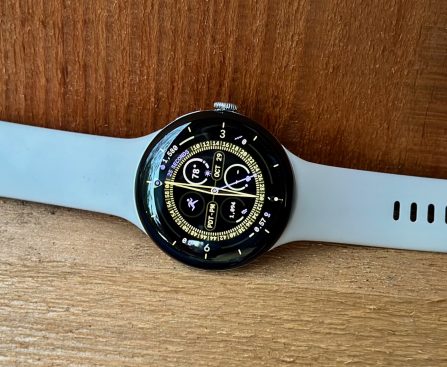
The Pixel Watch 4 serves as a fashionable accessory, a Gemini AI powerhouse, and a fitness smartwatch all in one. It earned a 4.5/5-star rating when it launched and has only seen improvements since its introduction. The watch boasts a water droplet-inspired design and an AMOLED display with 3,000 nits of brightness. Powered by an enhanced Snapdragon chipset, it provides precise GPS tracking, up to two days of battery life, and the latest health and fitness monitoring software from Fitbit. Furthermore, it features one of the most effective integrations of Gemini, offering users convenient features and voice commands.

While the Pixel Watch 4 ranks as our second favorite Android watch, after the Galaxy Watch 8, it continues to be a preferred option for Pixel phone users. The Galaxy Watch 8 presents a slightly more streamlined design with a durable sapphire glass display, but both watches operate on Wear OS 6 with Gemini, making them outstanding choices based on personal preferences and phone compatibility.

This unique discount on the Pixel Watch 4 presents an excellent opportunity for those seeking to invest in a premium smartwatch with advanced functionalities and an elegant design.

“Galaxy S26 Characteristics to Mitigate Eye Fatigue While Scrolling at Night”

It’s not enjoyable to be blinded by your phone in a dimly lit room. Samsung introduced several new features with the Galaxy S26 Ultra that will enhance that experience significantly.

Have you ever been immersed in a film, playing a game, or merely scrolling through Instagram videos, when suddenly, your pleasure is interrupted by flashing lights on the screen?

Whether it’s a nightclub scene from the latest John Wick film or an energizing scene in an anime, flashing lights can be quite painful, and they might even pose the risk of inducing seizures in vulnerable individuals. Luckily, Samsung’s newest phones come equipped with a feature that dims the display when it detects flashing lights on the screen.

Activating this new “dim strobing” option is an excellent approach to minimize discomfort when watching a video, particularly if you’re using your phone at night or in a darker environment. I evaluated the new feature across multiple video applications, including YouTube, Netflix, Instagram, and Peacock, to illustrate how it functions, what apps it supports, and whether it’s necessary.

Halting the strobe

Flashing lights can be exceedingly uncomfortable even for those not susceptible to epileptic seizures. Samsung does not promote this “dim strobing” feature as a preventative measure against epilepsy; rather, it is mainly intended to provide comfort enhancements instead of addressing a medical issue.

The “dim strobing” setting does not modify or address the phone’s relatively low-frequency PWM dimming in any capacity. If you are sensitive to PWM dimming or LED flicker, you will need to opt for a phone with a higher PWM rate, such as the OnePlus 15.

It’s also crucial to mention that Samsung’s “dim strobing” feature operates only within a limited selection of apps. There is no list from Samsung regarding supported apps, and through my testing, only YouTube seems to dim when the phone identifies strobing. Instagram and TikTok did not dim when I accessed a strongly strobing video, and I couldn’t find any films with sufficient strobing to activate the feature on Netflix, Peacock, or the Google TV app.

Despite the small number of compatible apps, this feature can prove immensely beneficial in easing discomfort associated with flashing lights. Here’s how to enable it:

1. Access system settings by choosing settings from the app drawer, or by pulling down on the right side of the status bar and tapping the gear icon at the top right.
2. Scroll down and select Accessibility.
3. Choose Vision Enhancements from the list.
4. Scroll about halfway down the list and tap the toggle slider next to Dim strobing.

Additional accessibility settings to consider

While still in accessibility options, there are a few more settings worth enabling to make the display as comfortable as possible. If you, like me, typically find the Galaxy S26 Ultra’s (or any Samsung phones’) display too bright, enabling “Extra dim” can make a significant impact.

Extra dim was improved in Android 16 to incorporate a customizable strength slider, allowing you to maintain a brighter setting during the day and reduce it considerably at night for increased comfort. This feature lowers the peak brightness of the display without changing the pulse width of the dimming cycle, ensuring it dims properly without worsening the strobing.

In my trials, activating Extra Dim decreased the peak brightness by 80%, and activating Privacy Display further diminished that by another 74%. These two features alone can render the phone significantly more comfortable for anyone who finds the brightness excessive, and they are very simple to enable!

1. Access system settings by choosing settings from the app drawer, or by pulling down on the right side of the status bar and tapping the gear icon at the top right.
2. Scroll down and select Accessibility.
3. Choose Vision Enhancements from the list.
4. Scroll about halfway down and tap the words Extra Dim.
5. Tap the toggle next to On, then adjust the slider to your preference.
6. Tap the toggle next to Extra Dim Shortcut to add the Extra Dim toggle to your quick settings.

Now that both Extra Dim and the shortcut have been activated, it’s time to personalize your quick settings toggles for easy access.

1. Swipe down on the right side of your status bar to open the Quick Toggles menu, located at the top and containing icons and the clock.
2. Tap the pencil icon to modify the buttons.
3. Tap Add a control at the bottom of the screen.
4. Scroll down to display and ensure the Privacy Display button is activated.
5. Scroll all the way down to Accessibility and tap the Extra Dim icon to enable the button.
6. Navigate back and drag the Extra Dim and Privacy Display buttons to your preferred locations in your quick toggles menu.

Samsung to Allow Galaxy Users to Develop Apps Using Prompts

**Samsung May Finally Allow You to Create the One UI Features You’ve Always Desired**

Samsung is said to be investigating an innovative feature that could transform user interaction with their Galaxy devices. The company is looking into the implementation of “vibe coding,” a no-code approach that enables users to generate custom apps or alter existing ones through straightforward prompts. This information was revealed by Won-Joon Choi, Samsung’s Head of Mobile Experience, during a discussion with TechRadar.

**What is Vibe Coding?**

Vibe coding is a notion popularized by OpenAI co-founder Andrej Karpathy. It permits users to guide AI in constructing or adjusting software applications without needing to write any code. Instead, users can express their desired functionalities in everyday language, and the AI manages the coding task. This method could empower users to personalize their Galaxy phones far beyond existing options, such as themes and icon packs.

**Potential Applications**

Envision requesting your Galaxy device to develop a tailored workout tracker that connects with your smartwatch or alters an app’s interface to better fit your requirements. Vibe coding could actualize such possibilities, providing a degree of personalization that was once exclusive to those with technical skills.

**Why Samsung is Interested**

Samsung’s fascination with vibe coding corresponds with its strategy to evolve from conventional smartphones to AI-enhanced devices. The company aims to equip users with tools to modify their phone’s functionalities to match their preferences, thereby improving the overall user experience. This initiative could establish Samsung as a pioneer in user-centric innovation.

**Challenges and Considerations**

Although the promise of vibe coding is thrilling, Samsung recognizes the obstacles that lie ahead. Ensuring the security and dependability of AI-generated code is vital. Moreover, the feature remains in the research stage, with no immediate intentions for rollout.

**Conclusion**

Samsung’s foray into vibe coding could democratize app development, empowering users to customize their devices like never before. This feature might transform Galaxy phones into highly individualized tools, catering to personal needs and preferences. As Samsung advances its research, users are keenly anticipating the chance to shape their mobile experiences through simple, intuitive prompts.

Samsung Galaxy Z Fold 7 and Flip 7 Set to Get One UI 8.5 Beta Update Shortly

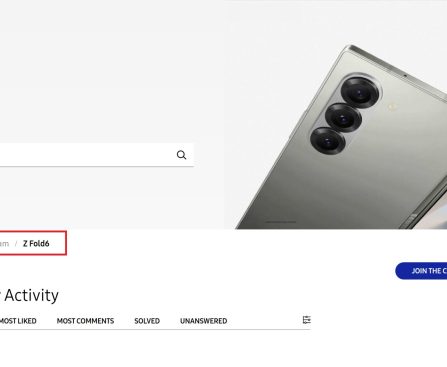
Samsung is preparing to broaden its One UI 8.5 beta to the Galaxy Z Fold 7 and Z Flip 7, following its deployment on the Galaxy S26 and the ongoing beta for the S25 series. Internal testing firmware for these foldable devices has been identified, suggesting that a public beta test is on the way. Samsung has reportedly established beta community pages, a common precursor to initiating public beta sign-ups. The beta is anticipated to commence around mid-March, with a stable version likely available in April.

The One UI 8.5 update, built on Android 16 QPR2, was initially launched with the Galaxy S26 series. Now, Samsung is gearing up to extend this update to additional devices, beginning with its newest foldables. The Galaxy Z Fold 7 and Z Flip 7, which debuted in July 2025 with One UI 8, will be receiving their first significant software update with One UI 8.5.

This update is not a complete Android upgrade but features numerous enhancements aimed at elevating user experience. Key modifications include a customizable Quick Panel, interface updates in Samsung applications, enhancements for one-handed usage, and new AI tools. Furthermore, Samsung is evaluating foldable-specific enhancements, such as a low-volume button for the Flip 7’s cover display during calls.

Samsung generally initiates its beta programs with the most recent Galaxy S flagship before extending to other high-end devices. The company typically establishes beta community pages just prior to launching beta sign-ups in the Samsung Members app. If Samsung adheres to its normal timeline, the beta for the Fold 7 and Flip 7 could kick off in mid-March, with the stable version rolling out in April.

Although Samsung has yet to formally announce the beta for the Fold 7 and Flip 7, the existence of test firmware and beta preparations indicates that the rollout is approaching.