
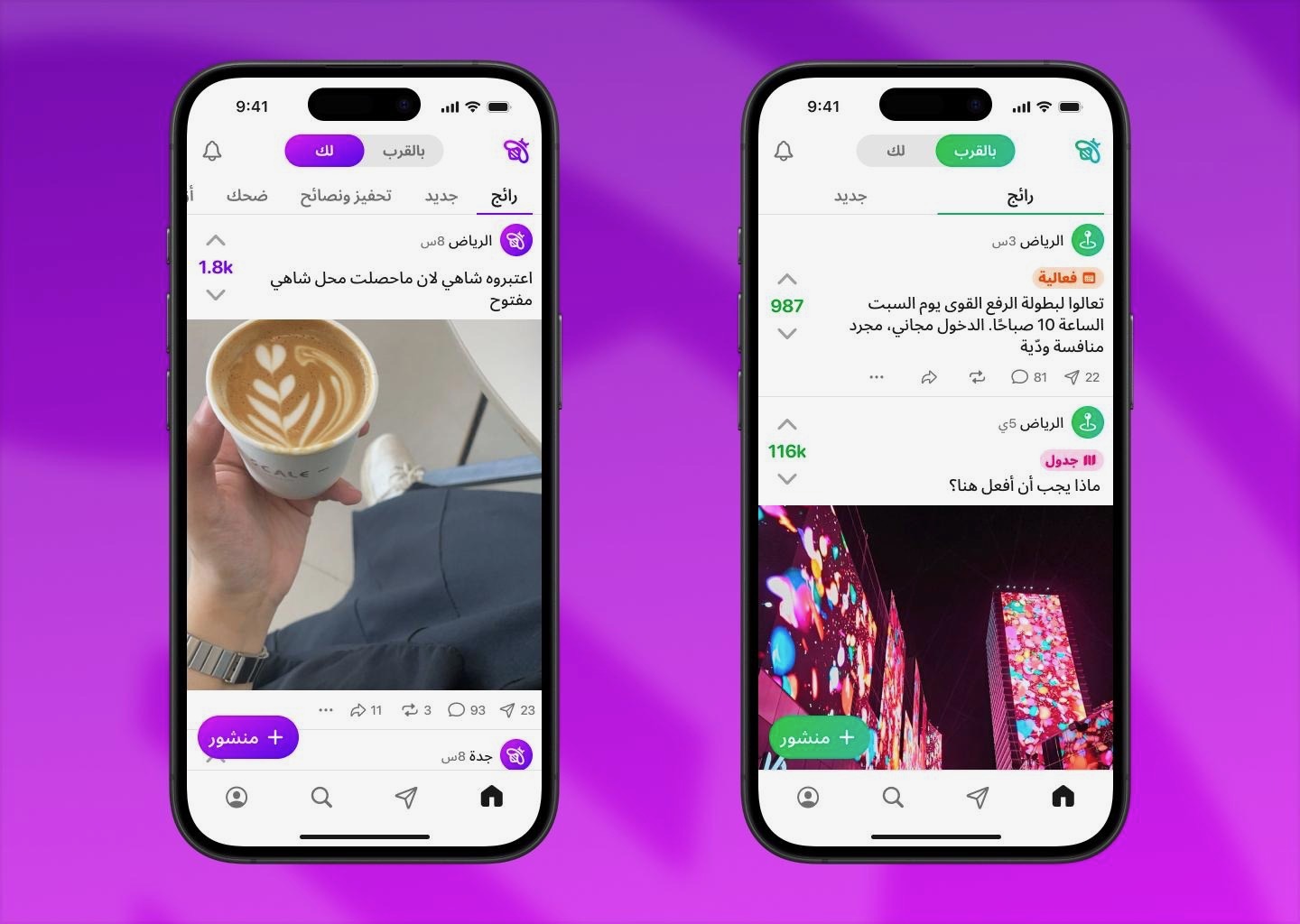

Fizz, an anonymous social app initially launched on college campuses, is expanding globally. Its Global Fizz feed is helping the app reach beyond college communities and has introduced its first overseas launch in Saudi Arabia.
After a quiet launch in Saudi Arabia in March, CEO Teddy Solomon was surprised by the app’s success. Within two days, Fizz topped the App Store charts and remains number one in the news category. Over a million messages were sent by users in the past week, Solomon informed TechCrunch.
“We’ve always aimed to be a generational social product, beyond just a college app, and now we’re executing that vision,” Solomon stated.
Fizz had not previously disclosed its international plans.
Co-founders Solomon and Ashton Cofer started Fizz in 2022 while attending Stanford, eventually dropping out. They raised $40 million and launched on 700 campuses. The focus is on the Global Fizz feed, which allows everyone, not just students, to join location-based communities. Users can choose anonymity when posting. It’s akin to Reddit’s main feed but lacks the topic-specific communities like subreddits.
At a Dubai conference, Solomon saw expansion potential into the Middle East. Soon, Fizz’s marketing analyst Michael Fonseca moved to Saudi Arabia to network and understand the culture, laying the groundwork for Fizz’s international entry.
“Mike was welcomed with open arms,” Solomon remarked, noting that Saudi Arabia has changed recently. The country is “booming” in terms of business and social apps like Snapchat, WhatsApp, and TikTok.
Saudi Arabia’s image shift is part of the 2016 Saudi Vision 2030, led by Crown Prince Mohammed bin Salman, to reduce oil dependency. This plan includes modernizing the country’s image and investing in Western tech companies, alongside launching initiatives like the AI company Humain.
Despite changes, Saudi Arabia remains an absolute monarchy with limited free speech. In 2024, government criticism resulted in harsh sentences, as demonstrated by Manahel al-Otaibi’s 11-year prison term for advocating women’s rights on social media.
Operating within Saudi Arabia poses challenges for Fizz due to potential government scrutiny. Solomon acknowledges the risks but remains confident in Fizz’s guidelines, stating moderation will be strict and aligned with regional and national rules.
Fizz has not received funding from Saudi entities nor communicated with the government.
Fizz has heavily invested in Arabic natural language processing for moderation and recruited many volunteer moderators from Saudi Arabia. The company employs a similar approach on college campuses by combining AI moderation with insights from volunteer moderators who understand campus culture intricacies.
“There’s a strong care for their community and pride in their country. They like the platform, want to keep it safe, and take pride in contributing,” Solomon said.