
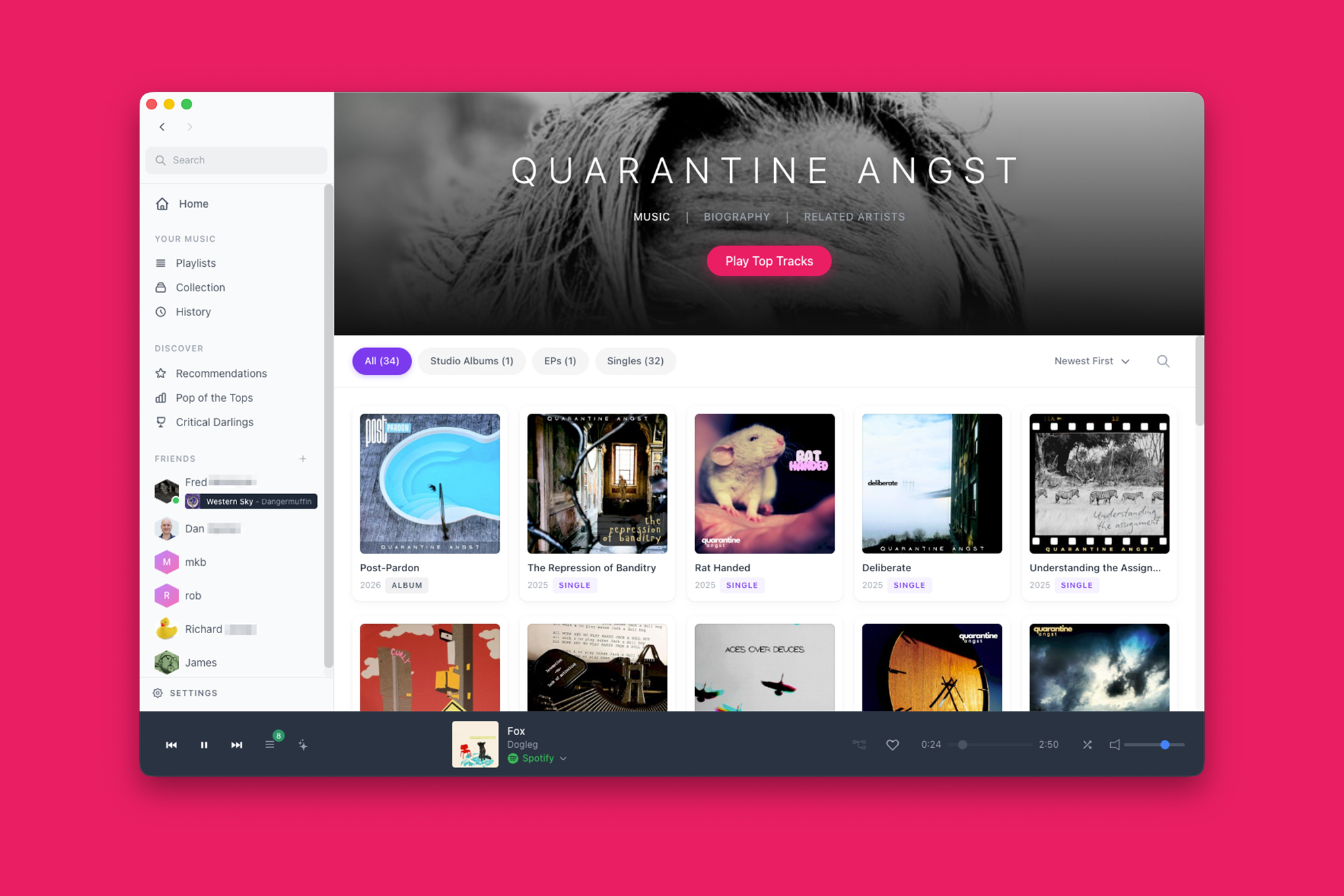

The new music app Parachord aims to connect Spotify, Apple Music, and Bandcamp using AI. Wouldn’t it be great to exchange music recommendations with friends regardless of their streaming service? What if DJs’ online feeds could become playlists or AI refined your music suggestions to include only songs you haven’t played? Parachord seeks to solve these issues by freeing music metadata from various subscription silos. It envisions a world where songs can be universally played and shared, irrespective of service. Currently, the app is in its formative stage, gradually progressing toward beta.
Parachord’s concept has long been on the mind of J Herskowitz, a music tech veteran associated with Spotify, LimeWire, and AOL Music, who previously built a similar app. In 2011, he and a team created Tomahawk, which utilized a plug-in architecture to access music libraries from platforms like Rdio and Beats Music. Despite its innovative nature, a lack of a clear business model led to Tomahawk’s end in 2015. Yet, as an open-source project, Tomahawk’s code remains available on GitHub. Herskowitz recently revisited it, aided by AI, to rebuild it into Parachord without hiring a developer.
The music landscape has evolved drastically over the years. While some streaming services vanished, a few like Spotify came to dominate, making it challenging for niche projects without broad appeal. Parachord targets users who buy songs on Bandcamp or follow bands closely. Herskowitz now acknowledges this is a niche market and even questions if anyone else shares his passion. Nonetheless, he’s undeterred. Technically, he can now develop an app just for his taste.
Vibe-coding, emerging in productivity apps, also presents opportunities for media. Earlier, developers experimented with innovative ways to engage with music and video online. Although most efforts were more passion projects than viable businesses, today’s technology offers a reprieve for niche projects.
However, major media services are now more restrictive. Parachord users must generate individual API keys to integrate with platforms such as Spotify. This reliance on personal keys means fewer resources are needed. Herskowitz highlights that Parachord respects music listening as a deeply personal experience, free from external constraints. Although Parachord began as a personal project, Herskowitz remains optimistic about finding new business opportunities beyond mainstream streaming services, envisioning niche experiences atop existing paid content.