

VFX supervisor Ashley Bernes had to think big to make the show’s heroine feel small.
In Manuel Gonzales’ 2013 short story “The Miniature Wife,” a woman begins to change after her husband accidentally shrinks her to the size of a coffee mug. Her new size makes her physically vulnerable and hampers her ability to communicate with full-sized people. However, her small stature also reveals an unexpected strength that surprises her husband.
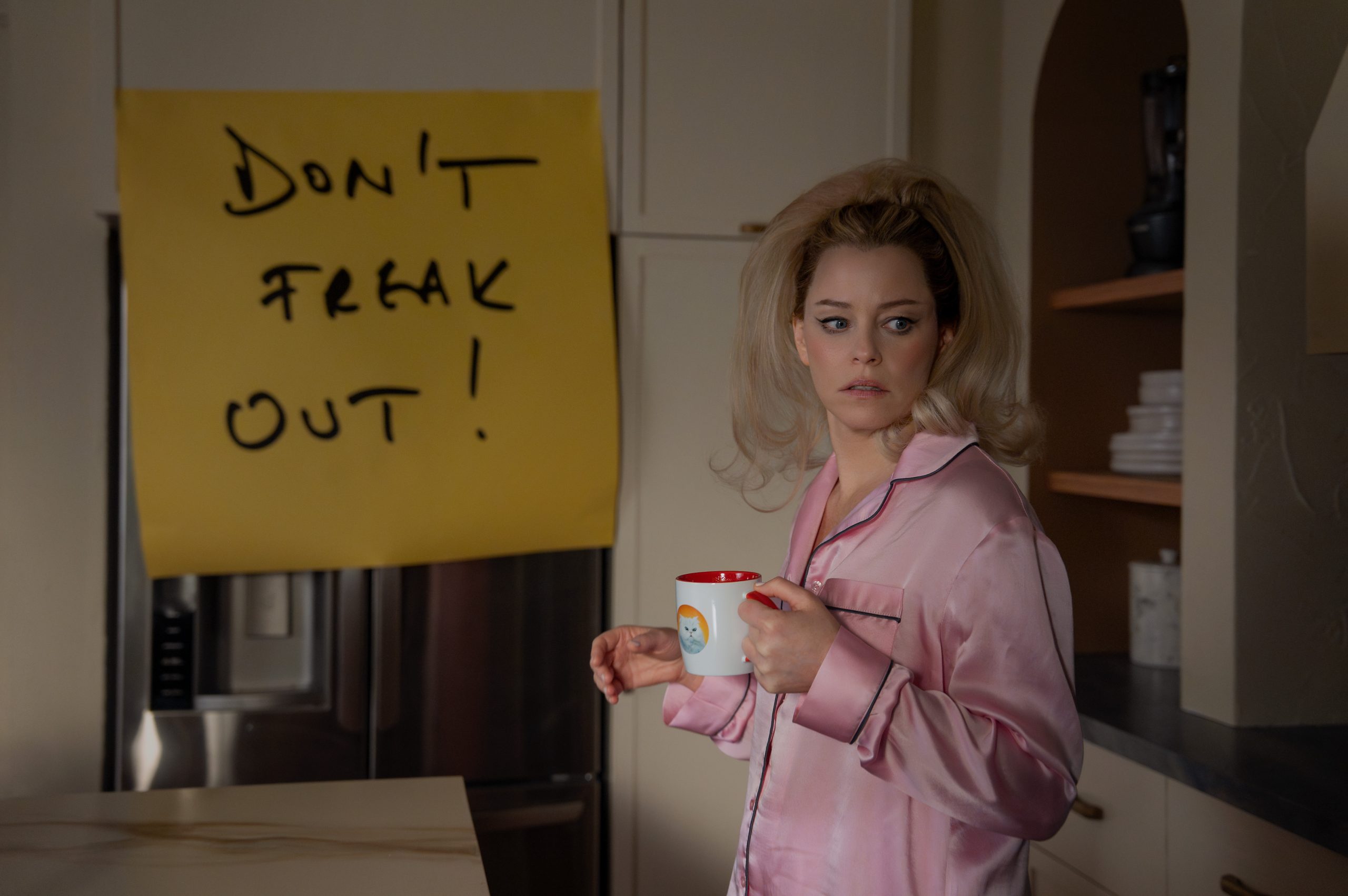
Peacock’s adaptation of The Miniature Wife, starring Elizabeth Banks and Matthew Macfadyen, mirrors these dynamics while exploring themes like tech bro chauvinism and delving into the wife’s internal thoughts. The series also emphasizes how mundane objects can become frightening when one is only a few inches tall. VFX supervisor Ashley Bernes was tasked with creating a menacing world of ordinary things.
Bernes spent months collaborating with a team of artists to portray the show’s core concept in a way that balanced fantasy with real-world physics. Bernes believed the project benefited from a blend of practical, in-camera techniques and complex VFX post-production, emphasizing the need for strong communication among the show’s creative teams well before production began.
“There’s no case where those things aren’t critical, but with a project like this, there is no ‘fix it in post’ because it just can’t work like that,” Bernes said. “This is a show that has about 3,000 VFX shots, and we were working with up to five different VFX vendors at times.”
Lindy Littlejohn (Banks) is startled when she awakens in a dollhouse after her husband Les (Macfadyen) shrinks her. It’s only when she ventures into their full-sized living room that she realizes her predicament. While the carpeted floor is soft, it’s a significant drop from the tabletop, and she knows she could die if she falls.
To ease viewers into the show’s fantasy and humor, Bernes ensured Lindy’s dollhouse was a functional set with physical interaction possible for Banks. While VFX depicted size differences, Bernes aimed to avoid excessive reliance on CGI.
“When we’re inside the dollhouse, that is a real set that we built based on the dimensions and specs of a real toy,” Bernes told me. “We actually scanned objects from a real dollhouse, enlarged them, and created life-size versions for filming.”
As much as The Miniature Wife is a dramedy, it also features action as Lindy escapes her dollhouse and explores her surroundings. Her initial exhilaration gives way to fear upon encountering mundane, yet monstrous, items like houseflies and a vacuum robot.
Crafting these shots presented challenges to Bernes and his team, who wanted to avoid comparisons to Honey, I Shrunk the Kids and Ant-Man. They ensured viewers could grasp Lindy’s perspective by maintaining consistent artistic rules.
“We understand the premise that there is a miniaturization process that has happened, but how miniature is she?” Bernes explained. “Ultimately, we landed on a scale of 12:1 meaning that she is approximately 5.5-6 inches, and all of the props and sets were very regimented with this 12:1 scale. That’s a scale where things are still pretty recognizable. We’re seeing weaves in the fabric and oversized dust bunnies on the ground, but we still know what they are.”
For some action-heavy scenes, such as Lindy riding a toy train, Bernes grounded his work further in reality, blending digital and practical effects to reflect actual physics.
“The realities of this scale relationship makes it so that, in the big world of 1:1, when you move a camera one foot, that means you have to move it 12 feet in the small world,” Bernes said, describing the train scene setup. “Now picture yourself tracking with a train. So we’re having to move hundreds and hundreds of feet at the same speed as the big world, which means 12 times faster.”
Despite the many VFX shots, Bernes and his team avoided using generative AI to speed up processes. Though Bernes acknowledges AI’s potential, he believes it can’t yet replace human creativity due to the intricate control required.
“Is generative AI a tool that enables us to rapidly prototype ideas and then go to a more traditional visual effects vendor with a clearer idea of what we want to do?” Bernes said. “For sure. But there is not a single VFX frame in this show that was made with generative AI. This is all the result of artists and hundreds of visual effects workers putting things together themselves.”
The Miniature Wife premieres on Peacock on April 9th.