
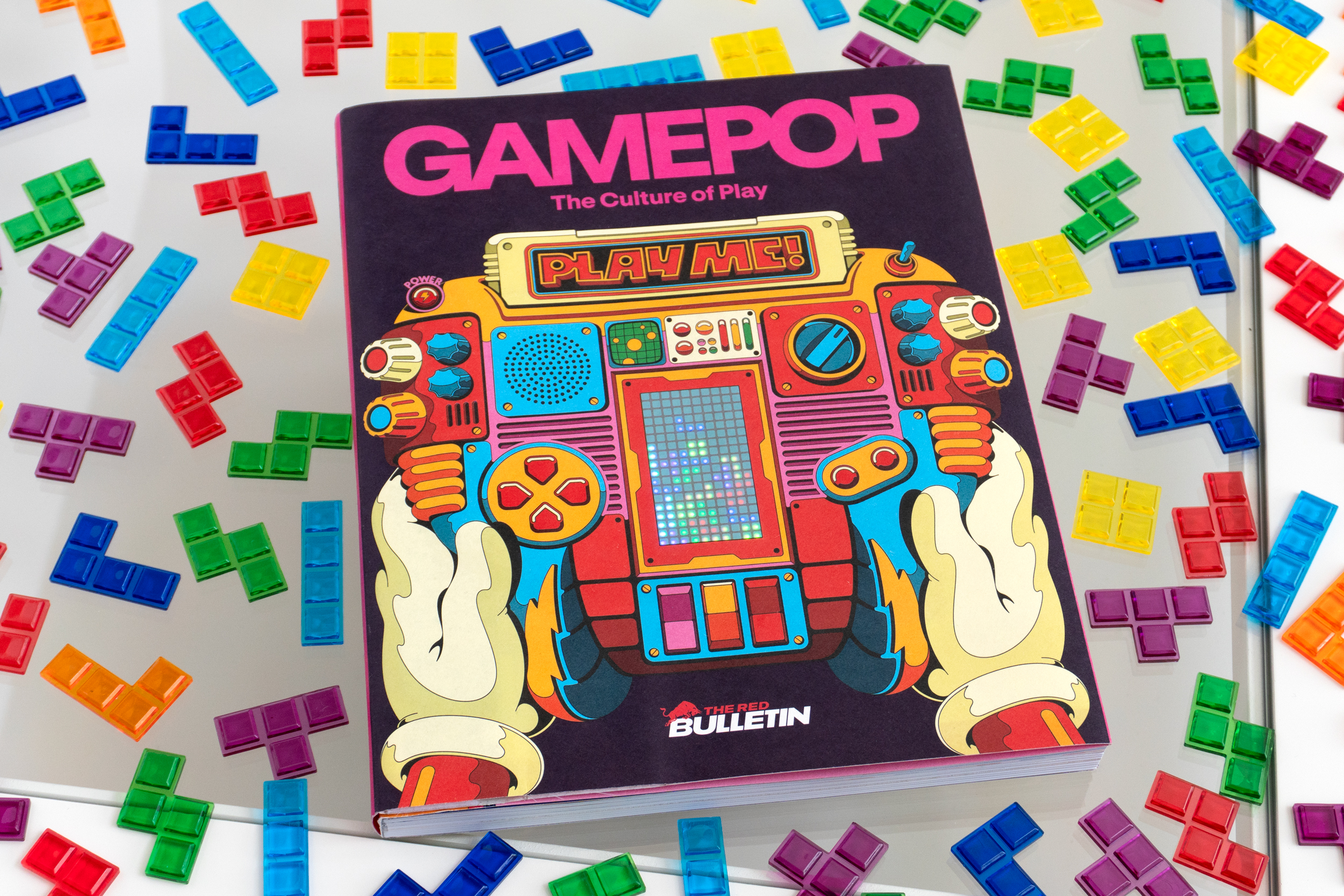

The cover features a playable, paper-thin Tetris game.
Tetris has been adapted into various unique formats, including a McDonald’s plastic chicken nugget, a fake 7-Eleven Slurpee cup, and a wristwatch. However, the most intriguing iteration yet is encased in paper.
Last year, the Tetris Company and Red Bull collaborated on a gaming tournament that transformed the 150-meter-tall Dubai Frame into the world’s largest Tetris installation using over 2,000 drones as pixels. Coinciding with this event, Red Bull published a 180-page gaming edition of The Red Bulletin, with some copies featuring a technical marvel: a playable Tetris game on the cover.
Red Bull Media House enlisted Kevin Bates, known for creating a Tetris-playing business card in 2014 and launching the Arduboy in 2015. Over a decade, Bates developed portable Tetris-playing devices, leading to the GamePop GP-1 Playable Magazine System. This device uses existing technologies to redefine portable gaming. Bates spent most of last year developing it but hasn’t revealed the full details of his partnership with Red Bull.
To ensure durability, Bates utilized a custom matrix of 180 RGB LEDs mounted on a flexible circuit board within thin paper layers. The display and batteries add thickness, but it remains surprisingly flexible. Though flexible circuits have been around for decades in various electronics, Bates highlighted their increased accessibility in recent years, allowing him to showcase his skills with this creation.
The GamePop GP-1 isn’t as advanced as folding phone displays but is notably more durable, having undergone rigorous testing. It lacks mechanical buttons, instead using touch sensors printed in the circuit board’s copper layer, offering a tactile response through its flexibility.
Though lacking some modern Tetris features, the game is engaging and responsive, with sound effects optimized for battery efficiency, offering one to two hours of gameplay. Despite exclusive techniques in its construction, overall production costs remain undisclosed. Hidden within the magazine’s spine is a rigid PCB housing a 32-bit microprocessor and coin-cell batteries, with USB-C recharging capability via a discreet port.
Red Bull produced 1,000 magazine copies, with only 150 featuring the playable cover. These special editions weren’t publicly sold, being reserved for competitors, magazine subjects, influencers, and select media.
While not set to change the print industry or lead to rollable smartphones, the project showcases an inventive use of existing technology in gaming.