

Kooky cartoons, omertà tactics, and Boyd Holbrook unite in a gangster story unlike any other.
American marijuana farmers sit at the center of “Cornbread Mafia.”
If the story of the Cornbread Mafia weren’t true, it might seem like something straight from the Coen Bros. playbook. The unbelievable tale of “dirt-poor dirt farmers” from Kentucky who built “the largest homegrown marijuana operation in the U.S.” parallels the outlaw energy and Southern-fried comedy of films like Raising Arizona and O Brother, Where Art Thou?.
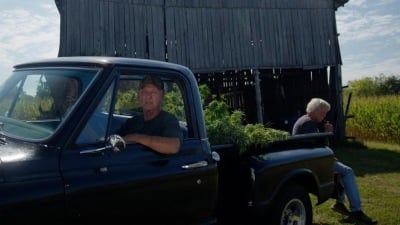
Documentarians Evan Mascagni and Drew Morris introduce this criminal organization with humor in the film Cornbread Mafia. It begins on lush farmland, where brothers Joe Keith Bickett and Jimmy Bickett pull up in a truck overflowing with marijuana. Joe introduces himself and his brother but bungles the script. They’ll redo the take, only for a cell phone to ring, interrupting Joe’s flow.
This amusing start invites audiences to laugh with the Bickett brothers as their extraordinary story unfolds. By highlighting the artifice within documentary filmmaking, Mascagni and Morris subtly suggest that every story is shaped by its storyteller. What unfolds might not be the whole truth, but it captures the Cornbread Mafia’s truth—outrageously entertaining and thought-provoking.
Cornbread Mafia uses talking-head interviews to piece together the group’s history with the Bickett brothers, notorious associates, and an occasional lawman. Their stories are wild, involving car chases, heists, tiger cubs, and a character named Susie, who proclaims, “I think rats should die.”
The Cornbread Mafia was inspired by the Italian mob’s omertà, prioritizing community over police intervention. It began in the 1970s, with farmers buying small amounts of pot from Mexico, eventually realizing the potential if they grew their own. A baggie of marijuana was $30, while a pound of tobacco was $1.50. So, with seeds from purchased dime bags, they cultivated a fortune.
Johnny Boone’s ingenuity not only expanded their operation but led to the creation of the marijuana strain Kentucky Bluegrass.
Cornbread Mafia charts a gangster story with its highs and lows, from fugitives to folk heroes. It delves into contemporary politics and activism without overshadowing the narrative’s rollicking fun.
The filmmakers use animation for educational value and whimsy instead of traditional reenactments for these larger-than-life tales and complex explanations of the American justice system and the war on drugs. Boyd Holbrook’s voiceover weaves transitions and provides context.
The animated approach might seem to undercut the seriousness of the mafia’s actions. Still, Cornbread Mafia treats them not as villains but as rebels who overcame poverty and built an industry. Like bootleggers of the past, they used wit, resources, and community to thrive until federal intervention arrived.
The film explores sentencing laws equating non-violent drug offenses with severe crimes, showcasing the tragic truth linking to the Cornbread Mafia. Yet the film’s vibrant approach matches its subjects’ spirited energy, making for a lively documentary dance.
Cornbread Mafia presents these figures not as criminals but as rebels, inspiring awe and outrage. It invites audiences into the enthralling outlaw legacy of America.
In summary, Cornbread Mafia is a sensational true crime documentary, rejuvenating standard interview formats and reenactments with engaging subjects sharing their stories with joy and frankness. Cornbread Mafia isn’t just eye-opening and provocative—it’s a fantastically good time.