

The phrase “atoms, not bits!” encapsulating Silicon Valley’s shift towards physical manufacturing over digital products gained momentum last week as Jeff Bezos reportedly aims to create a $100 billion fund to automate factories.
Automating factories isn’t just a hardware challenge. It increasingly relies on advanced software and AI, reshaping how companies develop manufacturing infrastructure.
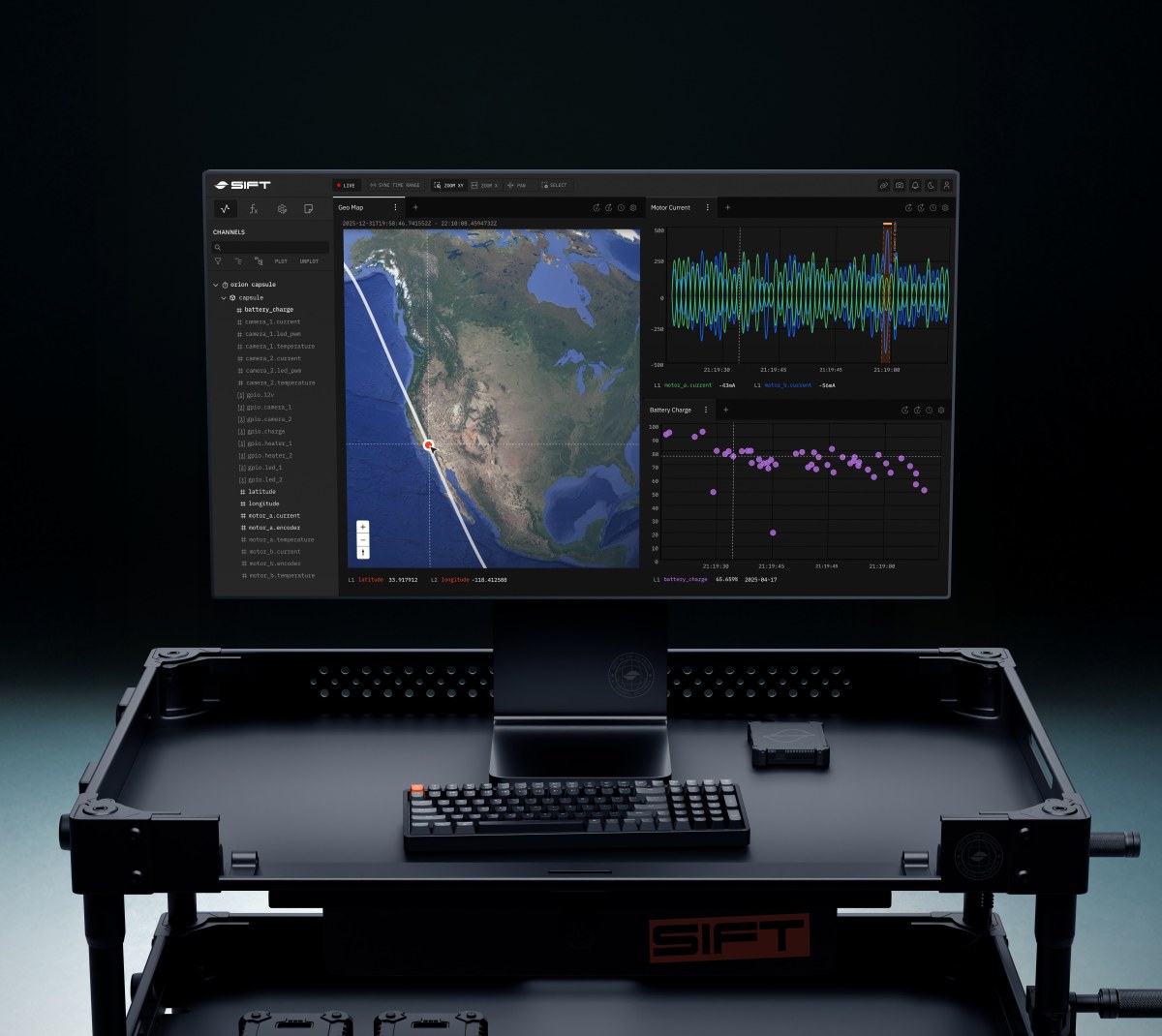
Karthik Gollapudi, CEO of Sift Stack, based in El Segundo, California, which aids in the design and manufacture of complex machines, notes that these shifts have influenced his company’s direction in recent months.
Sift Stack was founded in 2022 by Gollapudi and CTO Austin Spiegel after their work at SpaceX on software handling massive telemetry data during manufacturing and launches.
Companies building advanced machines often use standard databases or custom Python scripts, but Sift Stack identified an opportunity to offer a top-tier solution. Their client base includes United Launch Alliance and other defense contractors, as well as startups in robotics and power grid management.
With the introduction of AI data analysis tools, Sift Stack had to adapt. Their once-unique customized workflows now must meet industry standards, while their expertise in data infrastructure management has increased in value.
“Our five-year vision is materializing this year,” Gollapudi told TechCrunch.
Today’s software-centric machines require intensive data management, with some vehicles using over 1.5 million sensors streaming data in various formats simultaneously.
Sift Stack aims to organize and make this data machine-readable for AI applications. Gollapudi highlighted the importance of data accessibility for AI in making manufacturing decisions or analyzing test data.
Jeff Dexter, VP of software at Astranis, a satellite company utilizing Sift Stack, emphasized that data infrastructure is crucial for companies conducting up to 10 million automated tests daily.
“It eventually costs millions just to store the data,” Dexter said. “Technology like Sift alleviates concerns about data volume.”
Gollapudi also shared that Sift Stack raised $42 million in a 2025 Series B round at a $274 million post-money valuation, led by StepStone with participation from GV (Google Ventures), Riot Ventures, Fika Ventures, and CIV.