
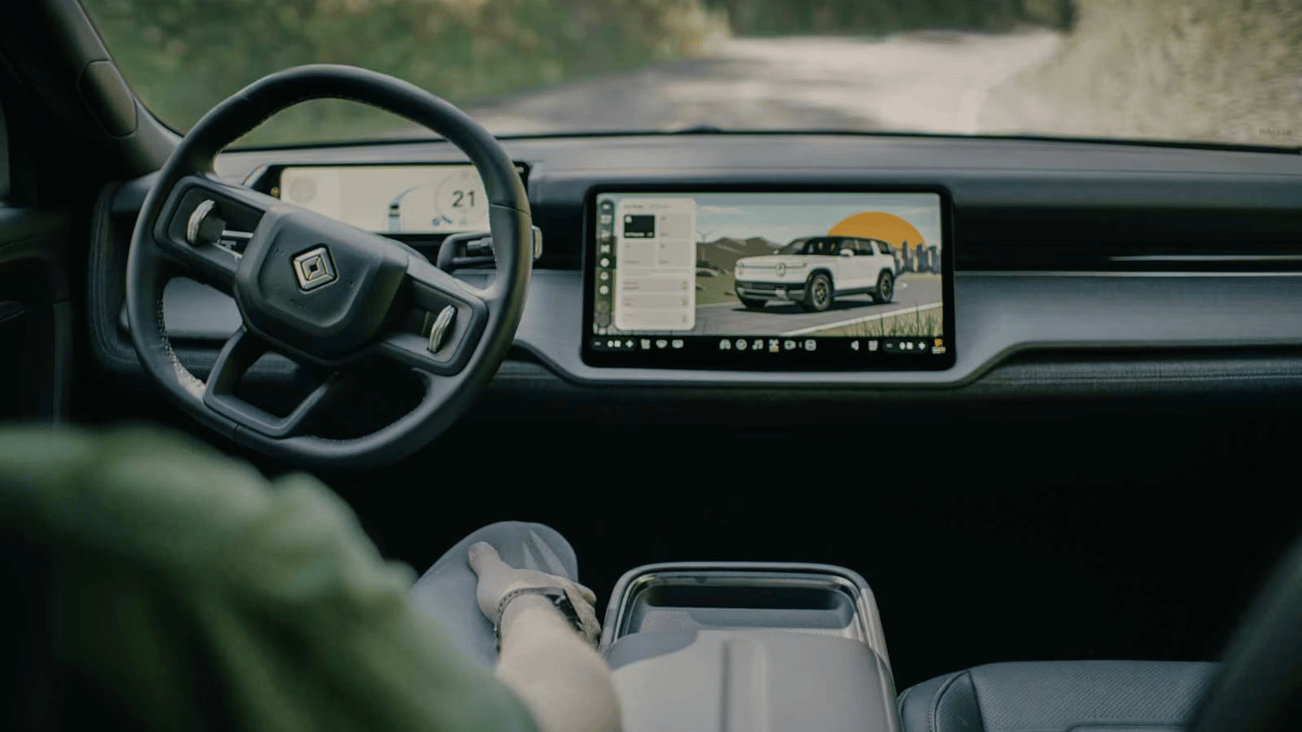

The partnership utilizes Rivian’s in-house chip and autonomous stack as a robotaxi platform, with commercial deployments planned for San Francisco and Miami in 2028.
Uber has been establishing robotaxi partnerships steadily, but its deal with Rivian stands out. Unlike agreements with Waymo, Avride, or Zoox, where Uber serves as a platform for external autonomous vehicle technology, this collaboration involves a car manufacturer creating its own technology stack.
Rivian and Uber announced a potential $1.25 billion investment from Uber by 2031, contingent on Rivian reaching specific autonomous performance targets. An initial $300 million has been committed, pending regulatory approval. Uber will acquire 10,000 fully autonomous Rivian R2 vehicles initially, with the option to buy up to 40,000 more starting in 2030. The total of 50,000 is a ceiling, not a guarantee.
The commercial service intends to start in San Francisco and Miami in 2028, expanding to 25 cities in the US, Canada, and Europe by 2031. The vehicles will be exclusively available through Uber, with timelines reliant on milestones, as disclosed by Rivian.
A key aspect of the deal is Rivian’s autonomous architecture, introduced at its Autonomy & AI Day in 2025. It showcased the RAP1 processor, a custom 5nm chip with AI compute capabilities, made by TSMC. Two RAP1s drive the Gen 3 Autonomy Compute Module, processing substantial sensor data using RivLink.
Rivian’s platform, with a unique AI compiler and vertical integration akin to Tesla, strengthens its autonomy capabilities. The Gen 3 platform includes cameras, radars, and LiDAR, expected in R2 models by late 2026. The robotaxi program relies on these advances, pending hardware validation.
Uber CEO Dara Khosrowshahi praised Rivian’s integrated approach. Rivian’s full-stack development contrasts with deals such as those involving Lucid and Nuro, where Uber merges technologies from separate entities. Rivian’s initiative offers capital and a chance to demonstrate its platform.
Rivian CEO RJ Scaringe highlighted the partnership as pivotal for achieving Level 4 autonomy. He noted the potential for rapid progress in Rivian’s autonomy efforts.
Rivian had significant liquidity by the end of 2025, supporting its development costs under the partnership. This arrangement complements Uber’s broader strategy of diverse robotaxi collaborations with various companies worldwide.
The timeline for Rivian’s software to reach Level 4 remains uncertain. The company’s 2025 roadmap outlined autonomous driving milestones but didn’t set exact dates for reaching advanced capabilities.