
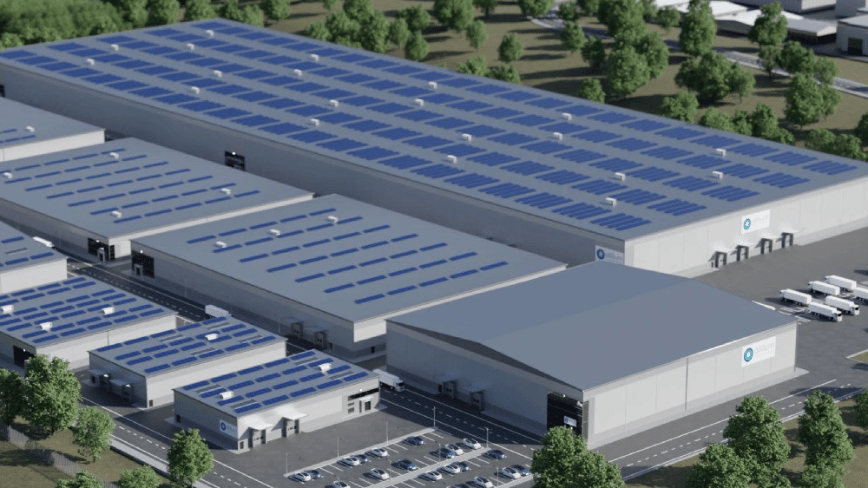

**Brief Overview:** Altilium, a UK clean tech firm, has received £18.5 million from the government’s DRIVE35 Scale-Up Fund to establish ACT3, the UK’s first commercial facility to reclaim essential minerals from decommissioned EV batteries in Plymouth, Devon. This plant will process 24,000 electric vehicle batteries annually using the company’s unique EcoCathode™ process, creating battery-grade materials with up to 74% less carbon emissions compared to newly mined materials and generating 70 new jobs. Another DRIVE35 grant is funding a joint research venture with luxury carmaker JLR and Warwick Manufacturing Group to create EV battery cells with both recycled cathode and anode materials for the first time in the UK.
**The Fund and Its Impact**
The £18.5 million is sourced from the DRIVE35 Scale-Up Fund, a project initiated by the Department for Business and Trade with the Advanced Propulsion Centre UK and Innovate UK. This fund is part of the UK government’s larger £2.5 billion strategy to boost domestic EV supply chain and battery production capacity. When private investment in European climate technology hit a five-year low in early 2025, these governmental grants have become vital for companies creating the infrastructure necessary for the energy transition.
Altilium, which previously secured over £17 million in private funds from partners like Marubeni Corporation and Mizuho Bank, called this grant a turning point. “This funding marks a pivotal moment for Altilium and for the UK’s battery ecosystem,” said Dr. Christian Marston, COO and co-founder. “By scaling our recycling technology and building the UK’s first commercial facility of its kind, we are closing the loop on battery materials and enhancing the growth, productivity, and competitiveness of the UK automotive supply chain.” The grant is also poised to attract more private investment from current and potential stakeholders.
**Output of the ACT3 Facility**
ACT3 will be located in Plymouth, Devon, where Altilium already has the UK’s only hydrometallurgical pilot plant for recycling EV batteries. The building is ready; equipment installation will start in summer 2026, targeting commissioning by the end of 2027. Once running, ACT3 will recycle 24,000 end-of-life EV batteries annually using Altilium’s EcoCathode™ hydrometallurgical method, which retrieves over 95% of cathode metals and more than 99% of graphite from battery scraps. Outputs include crucial intermediate materials for battery cell production: nickel mixed hydroxide precipitate, lithium sulfate, and graphite, key for future cathode and anode production. An independent lifecycle assessment shows these recycled materials have up to 74% lower carbon emissions versus their mined counterparts.
The plant will create 70 new jobs in Plymouth. Altilium is not the sole entity expanding this model commercially: Tozero inaugurated Europe’s first industrial battery recycling facility in Germany in March 2026, indicating the continent’s recovery capacity is growing alongside the volume of decommissioned batteries.
**Urgency of the Supply Chain Case**
The strategic rationale behind ACT3 is clear. Indonesia leads globally in supplying nickel mixed hydroxide precipitate, while China processes most of the world’s lithium and graphite for battery production. British car manufacturers forming EV supply chains face compounded risks from geopolitical disruptions, price fluctuations, and export controls China enforced on graphite in late 2024 and extended to numerous lithium-battery inputs through 2025. Trade tariffs exacerbated existing worries regarding hardware and materials supply chain security across European industries in 2025, bolstering the political and commercial arguments for domestic alternatives. Altilium’s recycling plants provide a pathway out of that dependence. European battery firms can differentiate from Asian producers based on sustainability, recyclability, and regulatory adherence, not just unit cost. The recycled British battery materials’ origin and carbon credentials present a valuable proposition enabling firms to do so. Altilium’s recycled materials offer verified lifecycle assessment data illustrating a 74% decrease in emissions, a growing concern as automotive customers face their own challenges in decarbonizing supply chains.
**Future Plans and Collaborations**
ACT3 is the initial phase in a two-part domestic expansion. The proposed ACT4 facility in Teesside, north-east England, will process 150,000 end-of-life EV batteries annually and produce 30,000 tonnes of cathode active materials each year, which could meet approximately 20% of UK battery material demand by 2030. Collectively, the Plymouth and Teesside plants would represent the UK’s most substantial attempt to build domestic battery material recovery infrastructure.
The second DRIVE35 grant, announced simultaneously, funds a collaborative research project with JLR and Warwick Manufacturing Group. Building on a previous Advanced Propulsion Centre program that demonstrated the UK’s initial battery cells made from recycled cathode active materials, the new project extends to include recycled graphite for anodes. “With the inclusion of recycled graphite in this new project