

On Friday, Ultrahuman launched a new smart ring featuring extended battery life and a redesigned structure as the Bengaluru-based wearable company aims to restore its U.S. business, which suffered disruption last year due to a patent dispute with competitor Oura.
The third-generation Ring Pro from Ultrahuman boasts up to 15 days of battery life, significantly more than the four to six days offered by the Ring Air. It is priced at $479 and will be available for global pre-orders, except in the U.S., with shipments starting in March.
Following a patent dispute in October 2025, the U.S. International Trade Commission ruled in Oura’s favor, preventing Ultrahuman from importing new inventory into the country, although existing retail stock was still sold. The U.S. represented about 45% of Ultrahuman’s 700,000 daily active users worldwide, according to co-founder and CEO Mohit Kumar.
In August 2025, Ultrahuman initiated a separate patent infringement lawsuit against Oura in the Delhi High Court, a case that is still pending.
To circumvent Oura’s patent, Ultrahuman redesigned the Ring Pro, and Kumar mentioned that the device has been submitted for clearance to the U.S. Customs and Border Protection to ensure it can legally be imported into the country.
Despite the U.S. setback, Ultrahuman is operating with an annualized revenue run rate of roughly $150 million, Kumar stated. The company reported $64 million in operating revenue for the financial year ending March 2025. The startup is profitable post-tax, although facing potential margin pressures due to litigation costs, tariffs, and redesign efforts.
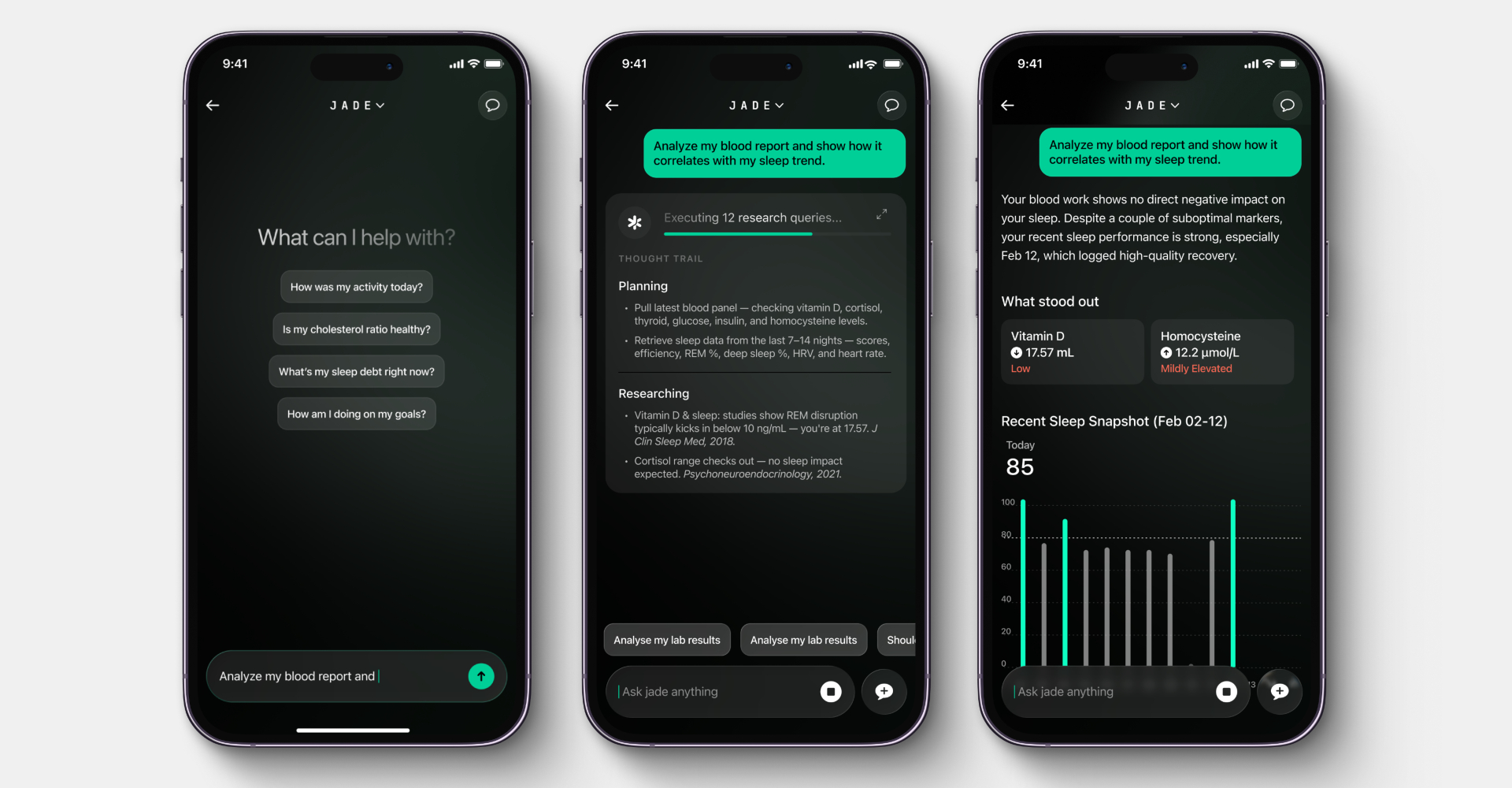
Alongside the new ring, Ultrahuman launched Jade, a real-time “biointelligence” system that analyzes user health data from its devices and services to provide personalized insights and recommendations.
Kumar said Jade aims to offer real-time, actionable guidance rather than just retrospective health summaries.
The Ring Pro introduces a redesigned heart-rate sensing architecture to improve signal quality during sleep and features a new dual-core processor for enhanced data accuracy and on-device computing. The device can store up to 250 days of health data and weighs about 5% to 6% more than the Ring Air, introduced in July 2023 at $349.
Ultrahuman has also unveiled a Pro Charger, offering up to 45 days of battery life to facilitate on-the-go charging, faster updates, and diagnostics through direct case connectivity. The charger is compatible with Qi wireless charging, used by many modern smartphones.
Women represent about 68% of Ultrahuman’s user base, up from approximately 65% a year earlier, reflecting strong engagement with the startup’s women’s health features.
Ultrahuman offers various subscription-based services, including PowerPlugs, a coaching and recovery program, the Blood Vision metabolic panel, Ultrahuman Home, and continuous glucose monitoring. Subscriptions account for around 16% of Ultrahuman’s revenue, while Blood Vision contributes roughly 5% to 6%, according to Kumar.
Key growth markets for Ultrahuman include the UK, Canada, Australia, and India, with India comprising about 8% to 9% of total revenue following investments in local customer support.
Global smart ring shipments surged nearly 80% year-over-year in 2025 due to demand for compact wearables with superior sleep tracking and longer battery life, said Anshika Jain, a senior analyst at Counterpoint Research. Oura leads the market with over two-thirds share, while Ultrahuman secures the second position.
Future market leaders will be identified by sensor accuracy, AI-driven insights, and seamless ecosystem integration, Jain noted.
IDC data indicated a 30% year-over-year increase in global smart ring shipments in Q3 2025, reaching almost 1 million units partly due to demand for screenless fitness trackers, said Navkendar Singh, Associate Vice President at IDC India. Ultrahuman captured roughly 25% of the market during that period, according to IDC.
Founded in 2019, Ultrahuman has raised approximately $55 million and counts Alpha Wave Incubation, Blume Ventures, Steadview Capital, and Nexus Venture Partners among its investors.
Kumar mentioned that Ultrahuman is expanding production capacity to meet the demand for the Ring Pro in the upcoming months.