
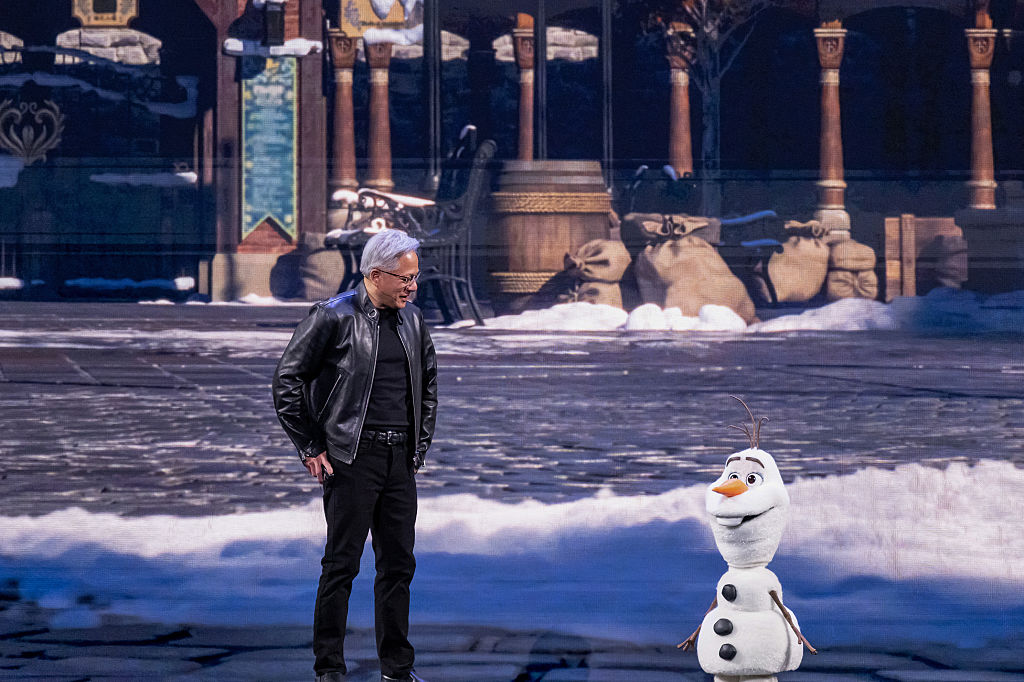

Nvidia’s GTC conference showcased a variety of highlights: projections for trillion-dollar sales, advanced graphics tech that enhances video game realism, bold claims about the necessity of an OpenClaw strategy, and a robot version of Olaf from Disney’s “Frozen.”
In the recent Equity podcast episode, TechCrunch’s Kirsten Korosec, Sean O’Kane, and I summarized CEO Jensen Huang’s keynote and discussed Nvidia’s future implications, with Olaf’s mic being cut off as a humorous focal point.
Despite the demo’s minor hiccup, Sean expressed concerns over the focus on engineering challenges rather than social implications. He questioned, “What if a kid kicks Olaf over?” emphasizing potential brand impact.
For a deeper dive, read our edited conversation below.
Anthony: Jensen Huang declared the need for every company to adopt an OpenClaw strategy, a grand statement highlighting a transitional period for OpenClaw. Its founder recently joined OpenAI, evolving it into an open-source project. With Nvidia’s investments, its continuity is likely, but only time will tell if it was a visionary statement.
Kirsten: Nvidia’s launch of NemoClaw, an open-source project with the OpenClaw creator, illustrates potential pathways and partnerships. The need for an enterprise strategy is highlighted by the risks of inaction.
Sean: The endgame for Nvidia is an Olaf robot, ultimately envisioned as their path to becoming the first $100 trillion company.
Anthony: How could I forget?
Kirsten: Anthony, skip to the end of the two and a half hours to watch. Olaf’s demonstration showcased Nvidia’s robotics prowess, though questions remain about its spontaneity. The mic was cut due to Olaf’s ramblings, adding an entertaining twist.
Sean sees robotics as intriguing yet presenting social challenges, exemplified by Disney’s history with park automatons, as detailed in a video by Defunctland.
Kirsten counterpoints, suggesting job creation through robot maintenance roles, such as a human overseer at Disneyland, could result from such engineering experiments.