
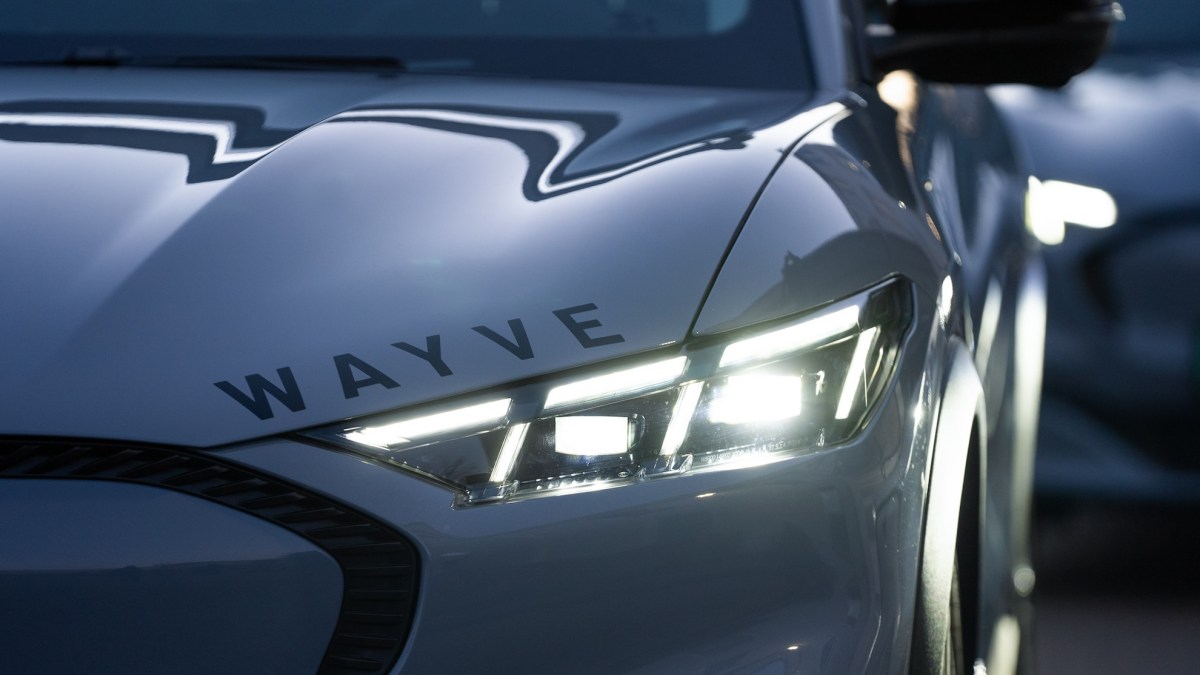

Wayve’s self-driving technology has drawn a variety of investors in its recent $1.2 billion funding round, including three automakers, top venture and institutional firms, and returning supporters Microsoft, Nvidia, and Uber. The total could reach $1.5 billion with an extra $300 million milestone-based support from Uber, linked to robotaxi deployment starting in London.
The U.K. startup, now valued at $8.6 billion, is attracting interest from Big Tech, legacy automotive, and the investor community eager to capitalize on the automated driving industry.
Wayve offers a unique approach to automated driving, according to founder and CEO Alex Kendall in a TechCrunch interview. It’s considered a “contrarian” option both technologically and in its business model. Wayve was the first to utilize end-to-end deep learning for autonomous driving and is taking a contrarian strategy in commercialization.
Launched in 2017, Wayve uses a self-learning approach, employing an end-to-end neural network requiring no high-definition maps, using data alone to teach vehicles to drive. This method is applied to two products: an “eyes on” assisted-driving system and an “eyes off” fully automated-driving system suitable for robotaxis or consumer vehicles in certain environments.
Wayve’s pitch highlights its technology’s independence from specific sensors or maps, capturing data from existing vehicle sensors and directing driving decisions. Its software is compatible with chips that OEM partners already have in their vehicles.
Since 2018, Wayve has worked closely with Nvidia, an investor. Wayve’s Gen 3 platform, unveiled last fall, uses Nvidia’s Drive AGX Thor, enabling advanced driving-assistance and Level 4 driverless features for city streets and highways.
While similar to Tesla’s approach, Wayve’s business model differs. It doesn’t operate its hands-off system or build vehicles with its software—unlike Tesla. Instead, it markets its “embodied AI” to automakers and tech firms like Uber, aiming for the vast addressable market opened by generalizable AI.
Wayve works with customers like Nissan and Uber. Nissan will use its software to enhance driver-assistance systems starting in 2027. Uber plans commercial trials with Wayve’s software this year, hinting at a broader partnership.
Uber CEO Dara Khosrowshahi expressed pride in deepening Uber’s partnership with Wayve, with plans for global deployment across more than 10 markets, emphasizing Wayve’s approach built for scale, safety, and effectiveness.
The funding round was led by Eclipse, Balderton, and SoftBank Vision Fund 2, joined by new investors like the Ontario Teachers’ Pension Plan, Baillie Gifford, British Business Bank, Icehouse Ventures, and Schroders Capital. Automakers Mercedes-Benz, Nissan, and Stellantis, planning to use Wayve’s technology, also participated.
Though Nvidia took part after previously considering a $500 million strategic investment, the exact details of its investment were not disclosed.
Updated to include more information on the $300 million in additional funding from Uber.