
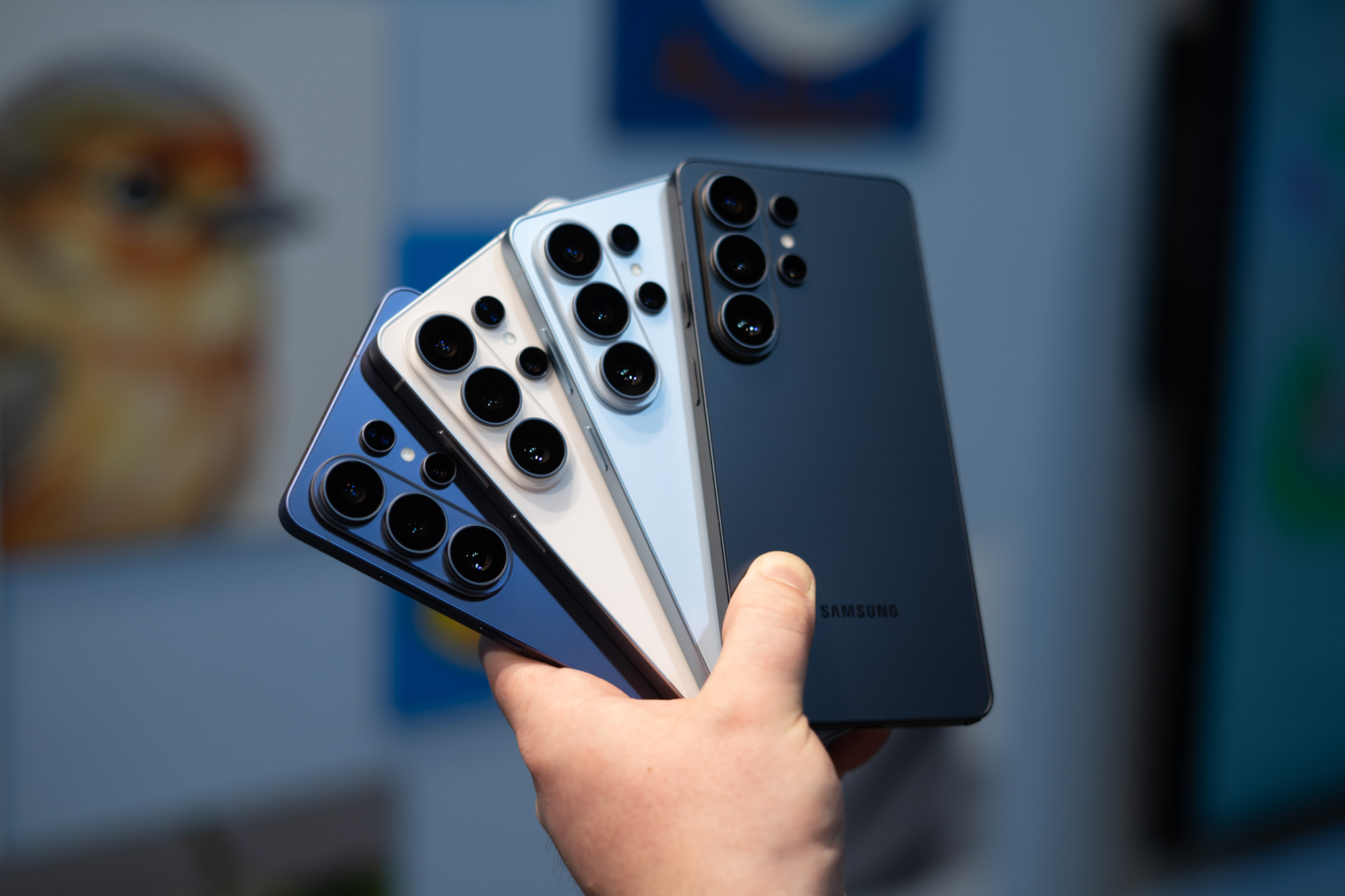

It’s the issue of the case.
Magnet rings have altered my daily routine. I grip, mount, and snap various accessories on and off my phone effortlessly. Samsung even offers intriguing options like folding magnetic mirrors. However, unlike Apple and Google, Samsung does not incorporate magnets directly into the phone.
Why is that the case? I questioned Samsung’s Won-Joon Choi, the head of R&D and operations in the mobile division. He argues that the thickness added by magnets is not worth the tradeoff since most people use cases anyway.
He explained, “About 80 or 90 percent of people are using a case, and cases with magnets are very popular these days.”
Samsung prefers to utilize any extra space to either expand the battery or make the phone thinner.
Despite this, Samsung is still exploring the use of magnets internally. Choi noted that research is ongoing to ensure no internal sacrifices are made, and once achieved, integration will occur.
Personally, I disagree with Choi’s reasoning. I prefer more battery life and built-in magnets, even at the cost of thinness, as current phones are adequately thin, except for the foldables.
If Samsung embraced a consistent magnet placement like Apple’s, it might enhance the functionality of my Galaxy S25’s magnetic accessories, preventing them from rotating. Currently, my phone lacks internal magnets, so I rely on case manufacturers.
However, Samsung’s rationale is understandable. Why compromise if consumers are opting for cases regardless? Perhaps the question should turn to Apple and Google for their differing decisions.