

The internet personality has been chasing ICE on the streets of Minneapolis, but fellow locals are divided on whether he’s helping or hurting the cause.
I met Will Stancil a couple of days before he was removed from his neighborhood Signal chat. We were at an event hosted by Rep. Ilhan Omar in Uptown Minneapolis, celebrating locals who had resisted ICE in various ways. Stancil’s presence surprised acquaintances who knew him from his work on school desegregation but not his controversial online persona. Despite his clashes with leftists and white supremacists on social media, some previously opposed to him now view him as an antihero due to his confrontations with ICE.
Stancil, youthful in appearance, was speaking with former NYC comptroller Brad Lander when I approached him. Lander was in town to observe the local response to a federal presence, and Stancil invited him on one of his “commuting” patrols — a term used locally for ICE monitoring — and extended the same offer to me. Stancil’s openness to media attention led to his removal from the Signal group, where many prefer to avoid press coverage. He has interacted with reporters from major outlets like CNN, The Atlantic, and The Guardian.
Stancil’s goal in commuting is to document ICE’s misconduct. Recording with his phone while agents are armed, he captures arrests, or “abductions,” and the aggressive reactions of agents being filmed. Despite being pepper-sprayed and tear-gassed, he shares the incidents online. Critics accuse him of seeking publicity, perhaps planning another political run — he unsuccessfully ran for State House in 2024. They also criticize his poor operational security, potentially putting others at risk.
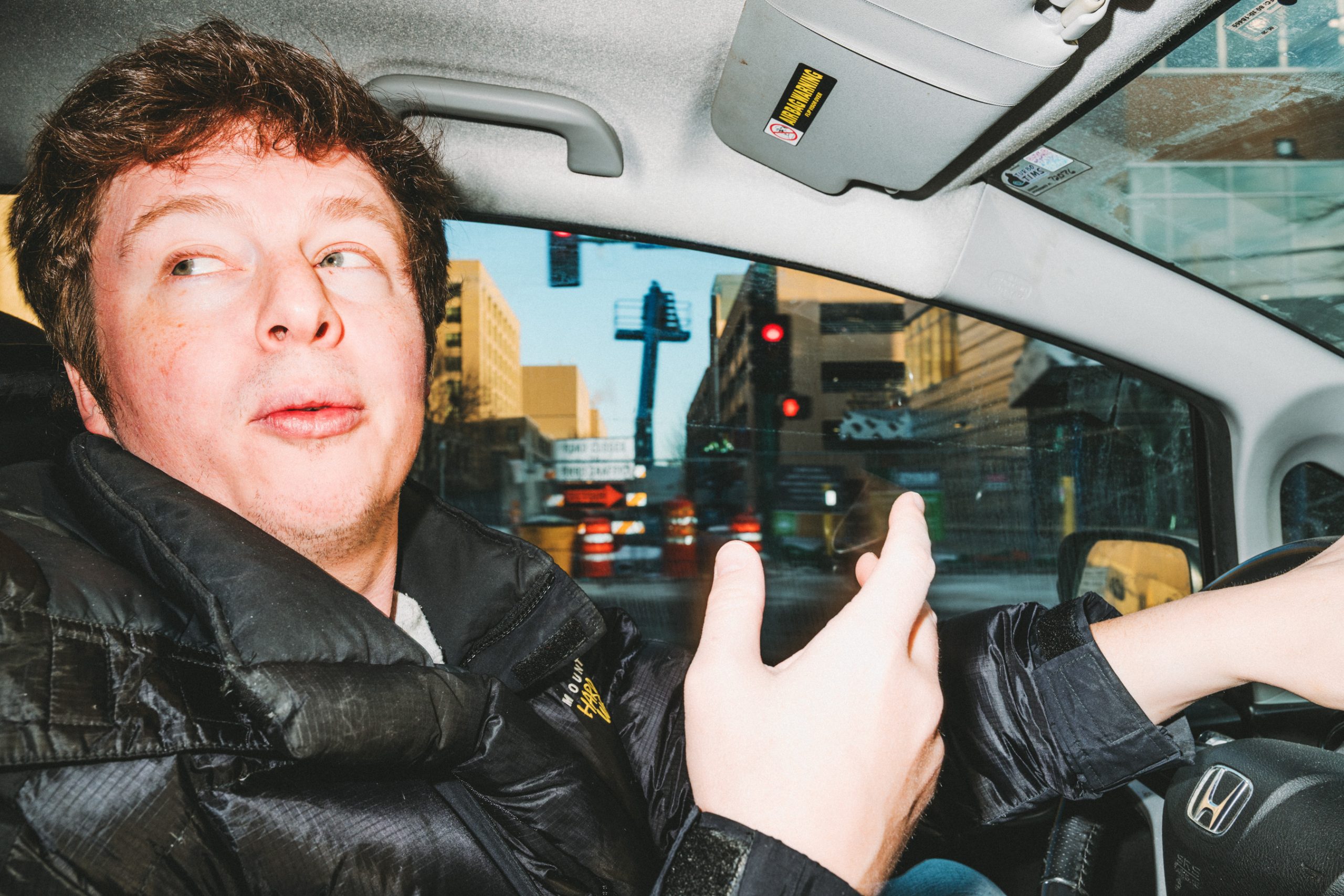
Ahead of my ride-along in his Honda Fit, Stancil was expelled from the Signal chat but joined a less restrictive group after signing a press agreement. Early the next morning, I met him along with Jack, my photographer. As we drove through a waking city, Stancil wanted to discuss the Signal chat ban.
“I was told I broke the no-press rule, but it was never mentioned to me before,” he said. His appeal was met with a shrug emoji, frustrating him. He criticized the clandestine nature of some local organizers, emphasizing the effectiveness of widespread participation.
Navigating unfamiliar routes, Stancil’s erratic driving, a product of the pursuit, demonstrated a shift from the usual local adherence to traffic laws. ICE was known for reckless driving, which commuters, including Stancil, began emulating to keep up.
Despite a slow day without significant ICE encounters, Stancil recounted past experiences and described a Chevy Silverado, suspected to be an ICE vehicle, as his “white whale.” He lamented a pervasive sense of paranoia among Twin Cities residents, noting federal accusations against activists.
In person, Stancil reflects his online persona: intense but amiable. Online discourse about his group chat removal continues, with opinions split over his public approach. Some locals don’t mind the media attention, while others see it as a safety risk. A recent altercation with masked individuals highlighted tensions around his visibility and approach.
Stancil views ICE watches as a flawed necessity borne from broken traditional mechanisms, noting the inefficiency of massive-scale neighborhood patrols. Yet, despite slow days, the search for ICE continued, culminating in spotting (but not catching) the elusive Silverado.