

World Labs, founded by Fei-Fei Li, has received a $200 million investment from Autodesk, part of a larger $1 billion funding round including backers such as AMD, Emerson Collective, Fidelity, and Nvidia. Originally emerging from stealth in 2024 with $230 million at a $1 billion valuation, World Labs hasn’t disclosed if the latest round increased its valuation, but previous reports suggested it was targeting a $5 billion valuation.
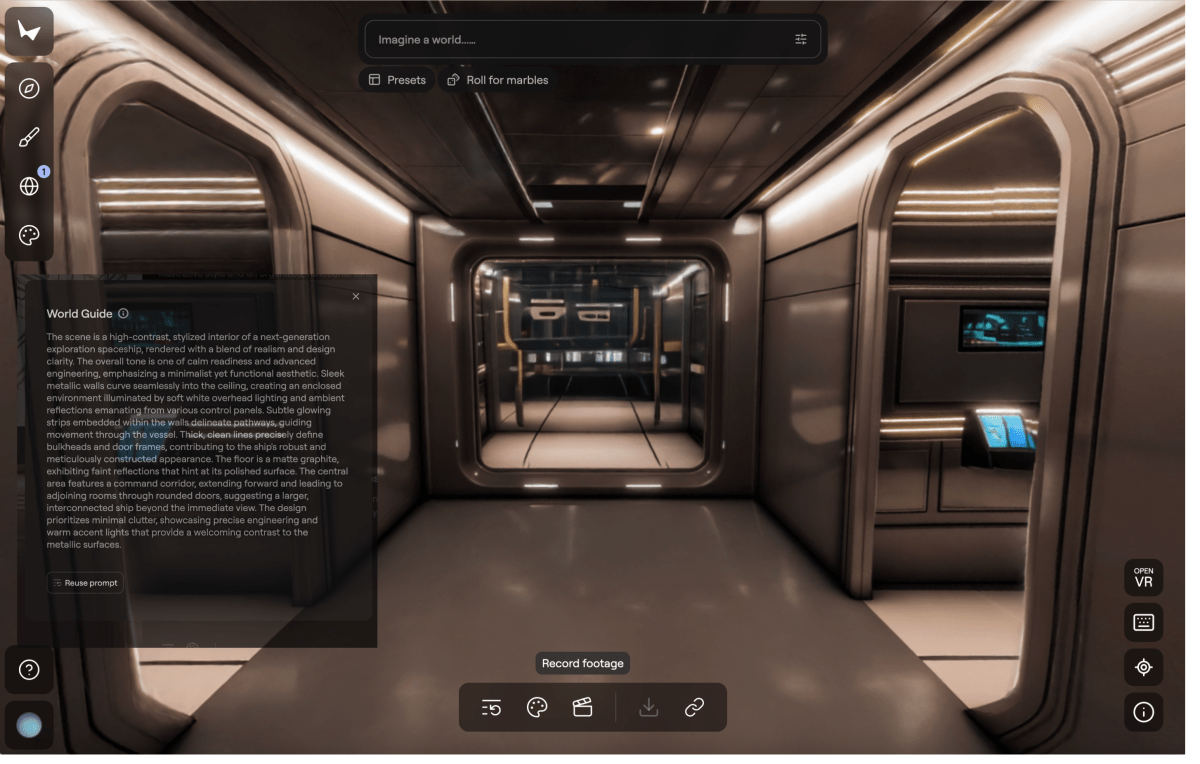
The partnership between World Labs and Autodesk focuses on integrating World Labs’ AI systems, which handle immersive 3D environments, with Autodesk’s tools, starting with entertainment applications. Autodesk’s investment signals commercial potential for World Labs, whose first product, Marble, launched in November and allows users to create and edit 3D environments.
Autodesk, a leading 3D CAD software developer, sees this investment as a natural extension into advanced spatial AI, aligning with its core focus on the built environment. Fei-Fei Li highlighted a shared purpose in enhancing human creativity with physical AI.
As part of the partnership, Autodesk will advise World Labs, and both will collaborate on research and model development. Autodesk’s chief scientist, Daron Green, mentioned it’s early days in the partnership, but anticipated potential synergies, with customers possibly starting designs in World Labs and refining with Autodesk’s technology.
Initially, the collaboration will focus on media and entertainment, with companies like Google DeepMind and Runway also targeting gaming and interactive entertainment as market-entry strategies. Autodesk, already working with major media firms, sees its technology close to world models, representing a physical understanding.
This partnership supports Autodesk’s broader AI integration into its software portfolio. The company is developing “neural CAD,” an AI model capable of generating 3D models with real-world functionality, pushing toward spatial intelligence. World Labs’ models could expand this capability toward comprehensive digital representations.
Green foresees future integration of AI systems to enhance design quality for customers, while Li emphasized that true AI utility requires an understanding of worlds, integrating geometry, physics, and dynamics.