

A new AI feature on Instagram uses influencer posts to promote lookalike products without their consent. This could affect you too.
In late February, Puck reported on a peculiar situation: An influencer with over a million followers was unintentionally advertising products on Instagram. Certain posts by Julia Berolzheimer featured a “Shop the look” button that, when clicked by followers, offered similar items to what she wore.
Her role involves promoting products to her followers, so links to items aren’t unusual. What was surprising was her lack of involvement in placing these links—Instagram added them without permission. The product links redirected followers to lookalikes, not the items she endorsed and from which she earned commissions.
“My followers were being shown cheap knockoffs and random items from brands I’ve never heard of, attached to my image,” Berolzheimer wrote on Substack, stating she only learned of the “Shop the look” button after others informed her.
“This is a limited test intended to aid users in exploring products aligned with their interests when viewing posts or reels,” Matthew T Torres, a Meta spokesperson, explained via email. “We’re testing and gathering feedback on this experience, including considering different labels. Meta doesn’t take a commission on these items, and refinements will continue based on feedback.”
Though Meta claims this feature is experimental, its implications are clear. From a business standpoint, it harms influencers if their identity and content are used to promote unverified products—followers purchase items based on trust in creators. It might also interfere with an influencer’s revenue: Berolzheimer’s commission stream is disrupted by this new platform.
This issue also extends beyond influencers like Berolzheimer—everyone could unknowingly become part of an ad. Perhaps it’s already happened to you.
Social-first commerce is often linked to influencers with affiliate links and ads. Yet, now anything can be co-opted to market products, turning many social media feeds into shopping recommendation engines.
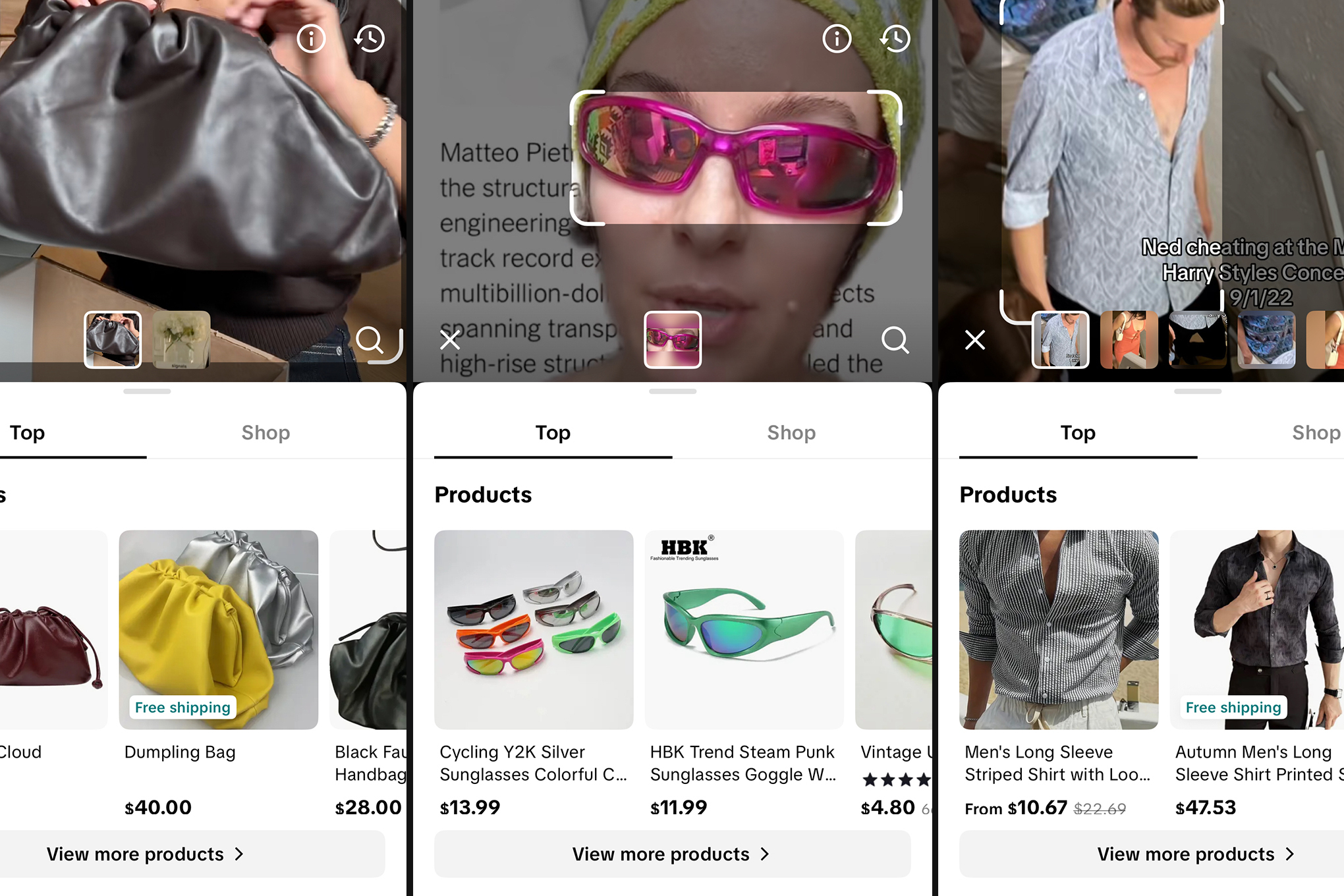
In September, I reported TikTok’s testing of a similar feature criticized in Instagram’s case. TikTok’s version worked similarly: On pausing a video, a “Find similar” button appeared automatically. TikTok’s AI scanned the content and suggested products on TikTok Shop mirroring items in the original video. It recommended me cheap sunglasses lookalikes; a Ms. Rachel video directed me to similar dresses. Alarming was its use on videos from Gaza, converting the tragedies into TikTok Shop promos. Users were unaware of the links, with opting out discreetly hidden in settings.
Back then, TikTok claimed to be addressing the issue—but the feature persists. Recently, while scrolling, a “Find similar” button appeared on a clothing video from an account with 400 followers.
Conventional wisdom suggests brands hire influencers for access to their large audiences built on trust. Yet, the influencer role has sometimes shifted to gig work: Micro- and nano-influencers with modest followings work side gigs. Marketers increasingly enlist everyday users for organic-looking content. A segment known as UGC (user-generated content) hires creators not for their audiences but for creating videos or photos. Gig platforms like Fiverr are inundated with UGC offers, some starting at $20. Odd cases occur, such as when Kate Lindsay found a photo of her and her husband used to sell picture frames.
Initially, the creator economy’s promise was that anyone could achieve fame, money, and influence. In reality, it required luck and privilege to succeed—but recommendation algorithms have upended that. Starting in 2020, during the pandemic, the surge of influencers unveiled new advertising avenues, with endless labor for promoting. Instagram’s “Shop the look” or TikTok’s “Find similar” highlights that everyone is an influencer now, like it or not.